

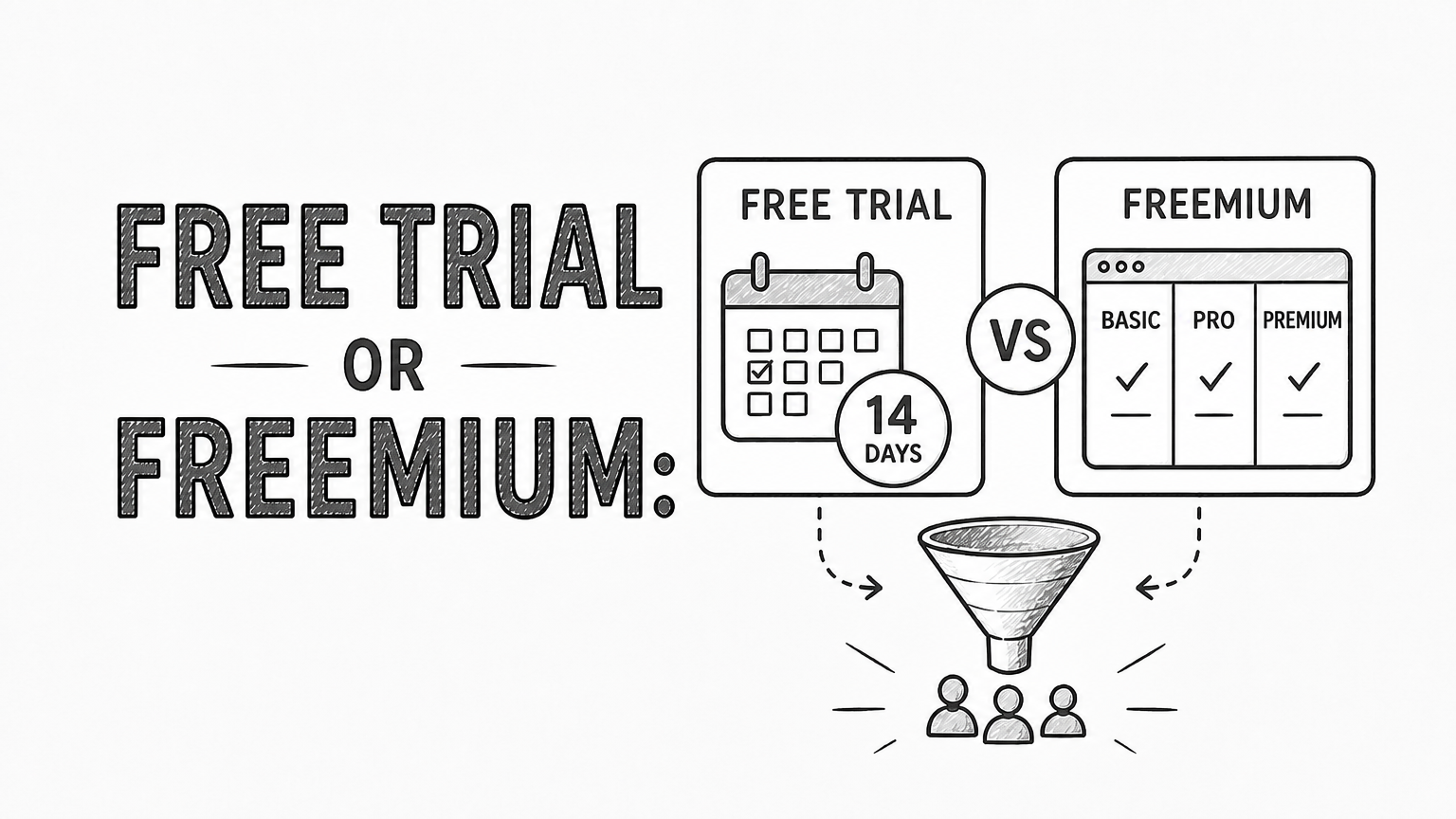
Choosing between a free trial and a freemium model looks simple until it starts affecting pipeline, activation, and revenue. Then it gets expensive fast.
Most teams ask the wrong question. They ask which model gets more signups. That is only the top of the funnel. What actually matters is this: which model brings in more qualified leads, activates them faster, and moves more of them to paid. If you care about conversion efficiency, not vanity growth, the answer is rarely universal.
For developers, data teams, and growth marketers, the free trial versus freemium debate is really a question of product complexity, time-to-value, and buyer intent. Some products win by creating urgency, others win by removing friction completely. This guide breaks down how each model works, where each converts best, and how to choose the one that fits your motion.
What free trials and freemium models actually do
A free trial gives users access to a paid product for a limited period. Usually 7, 14, or 30 days. The message is clear: you get the real thing, but only for a short window.
A freemium model gives users ongoing access to a limited version of the product. No deadline. The limit may be based on features, usage, seats, data volume, integrations, or support.
That sounds like a packaging decision. It is not. It shapes user behavior from day one.
A free trial creates urgency, users know the clock is ticking, so they are more likely to explore high-value features quickly. This can improve activation if your product is easy to set up and the value is obvious inside the trial window.
Freemium does the opposite, it lowers risk and widens the top of the funnel. People can adopt the product casually, test it in real workflows, and expand usage over time. That often drives more signups, but not always more sales-ready leads.
The real conversion question
When people search for answers on free trial versus freemium, asking which model converts more leads, they often mean one of three things: more raw leads, more product-qualified leads, or more paying customers.
Those are different outcomes, and each model tends to optimize for a different one.
Freemium often wins on lead volume because the barrier to entry is low. No deadline. Sometimes no credit card. Minimal commitment.
Free trials often win on buyer intent because users enter with a stronger reason to evaluate. They are not browsing, they are trying to decide.
The best model depends on the conversion stage you care about most.
Free trial vs freemium: Which converts more leads in practice?
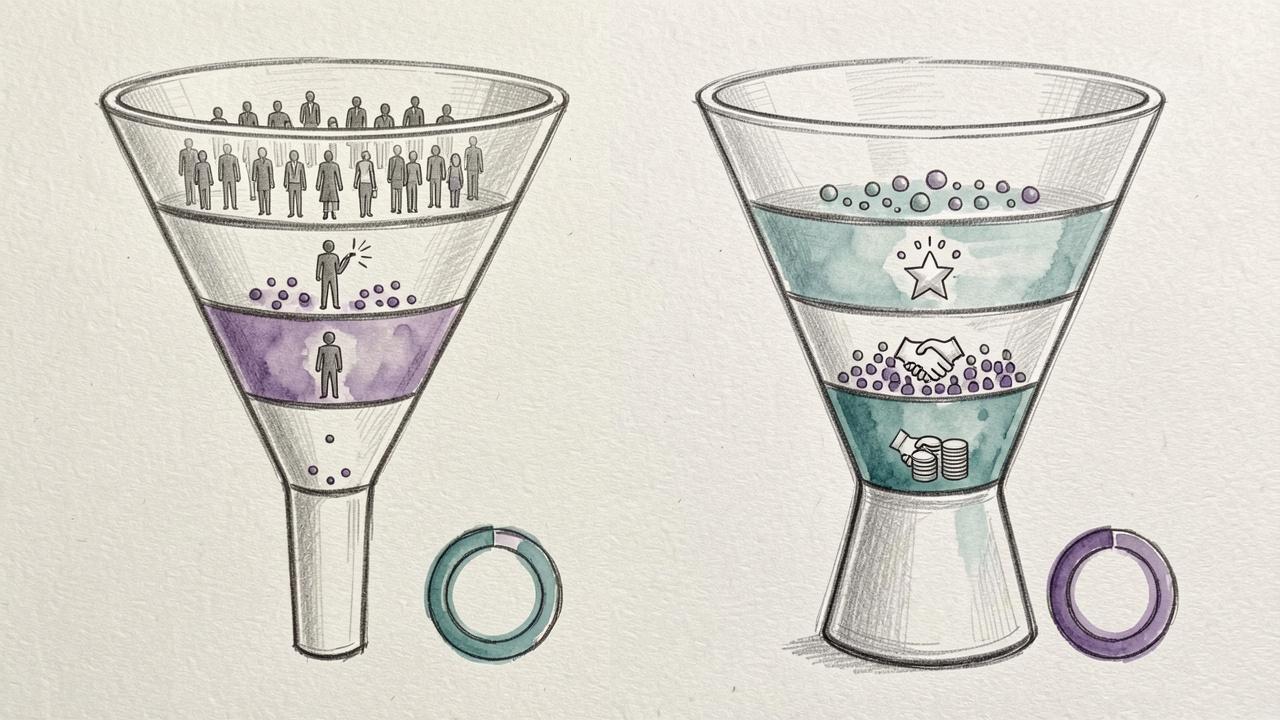
The short answer is this, freemium usually generates more leads at the top of the funnel, while free trials often convert a higher percentage of those leads into paying customers.
featured 1d4c7690-cfc8-435a-9143-5ffd9da99c2f
That pattern shows up across B2B SaaS because of intent. Freemium invites broad exploration. Free trials attract narrower, more motivated evaluation. One widens the funnel, the other sharpens it.
If your team is reporting on signups, freemium can look stronger. If your team is reporting on revenue conversion, free trials often look stronger. If your team is measuring efficient pipeline creation, the right answer depends on who the user is, how fast they can activate, and whether the product delivers value before internal complexity slows everything down.
Lead quantity versus lead quality
Freemium tends to bring in more users who are curious, early-stage, or lightly committed. That is not a flaw. In product-led growth, those users can become future champions, internal evaluators, or expansion opportunities. But many never become active enough to matter.
Free trials usually attract fewer users, but a larger share of them are in active buying mode. That means the sales and lifecycle teams spend less effort sorting weak intent from real opportunity.
This is where many startups get tripped up. They celebrate freemium signup growth, then discover that support, onboarding, and infrastructure costs are climbing faster than paid conversion. Volume without qualification is not growth, it is load.
Time-to-value decides a lot
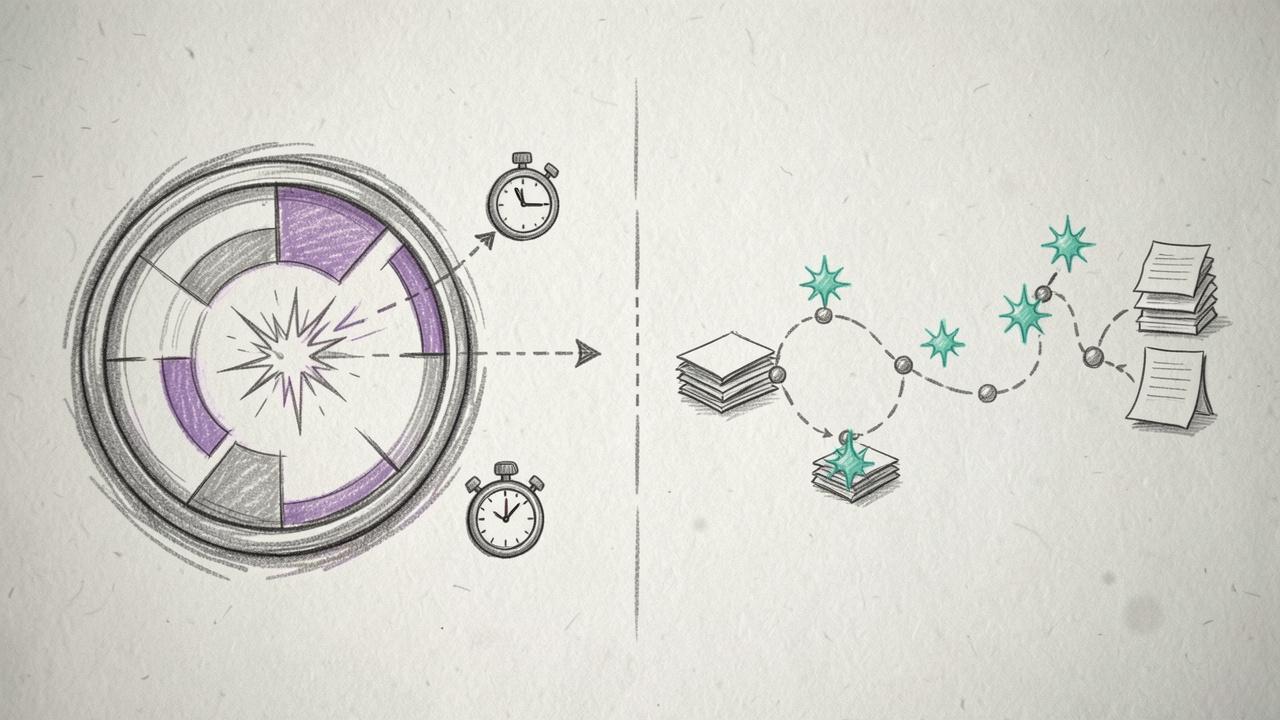
If your product shows value in one session or one day, a free trial can work extremely well. Think analytics tools with immediate dashboards, developer products with fast setup, or workflow software that solves a visible pain in hours.
body 1 c223cf56-3736-41fd-8534-8e72ed93fd9f
If your product needs repeated use, collaboration, or historical data to become meaningful, freemium often has the edge. Users need time. A rigid countdown can expire before the product becomes sticky.
That is why collaboration tools, note apps, communication platforms, and some infrastructure products often lean freemium. The product becomes more valuable as it becomes embedded.
The economics behind the model
Freemium is not free marketing, it is a cost structure. Every non-paying user consumes some combination of support, storage, compute, onboarding, and internal attention.
If your marginal cost to serve a free user is low, freemium becomes much more viable. If every active account creates meaningful cost, a broad free tier can punish your unit economics.
Free trials control that risk better. They compress evaluation into a defined period and create a natural forcing function. That makes them especially attractive for higher-cost products or products where human-assisted onboarding matters.
Where free trials usually convert better
Free trials perform best when the product has a clear painkiller value proposition and the user can experience that value fast.
High-intent categories
Products in crowded but urgent categories often do well with trials. Buyers already know they need a solution. They are comparing options, not deciding whether the problem exists.
Examples include observability tools, sales engagement software, paid analytics platforms, security tooling, and workflow automation systems with measurable ROI. In these categories, urgency helps. The trial nudges users to test quickly and make a decision.
Strong onboarding paths
A free trial is only as good as its onboarding. If setup is confusing, the countdown works against you. Users feel pressure before they feel value.
But if your onboarding is tight, a trial can be powerful. You guide the user to the “aha” moment early, reinforce value with usage milestones, and create a natural conversion event at the end of the window.
For data and developer products, this often means reducing implementation friction. Import sample data. Offer one-click integrations. Prebuild dashboards. Generate a working result before asking the user to configure everything from scratch.
Sales-assisted or hybrid motions
Free trials also fit hybrid go-to-market models well. Product-led entry, sales-assisted conversion. The trial gives the account a live environment, and the sales team works with real usage signals instead of cold form fills.
That creates better conversations. You are not asking, “Are you interested?” You are asking, “I saw your team connected two sources and invited three users. Do you want help rolling this out across the org?”
That is a much stronger lead.
Where freemium usually converts better
Freemium shines when habitual use matters more than immediate evaluation. It is particularly effective when the product spreads through individuals or small teams before budget enters the conversation.
Bottom-up adoption products
Products with natural user-led expansion often benefit from freemium. A single user starts, a team joins, usage deepens, and limits get hit. Then the upgrade becomes obvious.
That pattern is common in collaboration software, internal tooling layers, productivity products, and some API or developer platforms where experimentation starts small but can scale fast.
The free tier acts like a distribution engine. It lets you get embedded before procurement or management gets involved.
Longer learning curves
Some products are valuable, but not instantly. A user may need to integrate data sources, connect systems, run workflows for a week, or build team habits around the tool.
In those cases, a time-boxed trial can expire before the real value appears. Freemium gives users room to adopt the product at the speed of their internal process.
That flexibility often leads to better long-term retention, even if short-term monetization is slower.
Network effects and collaboration
If the product gets better when more people use it, freemium can be hard to beat. The free tier removes friction for invitations and team adoption. That creates internal expansion and eventually commercial pressure to upgrade.
A trial limits that spread because users know access will disappear. Freemium encourages behavior that compounds.
Free trial vs freemium comparison table
Factor | Free Trial | Freemium |
Primary strength | Drives urgency and faster evaluation | Drives broad adoption and lower-friction signup |
Best for | High-intent buyers, fast time-to-value products | Habit-forming products, collaborative tools, bottom-up growth |
Typical lead volume | Lower | Higher |
Typical lead quality | Higher intent, more sales-ready | More mixed intent, wider qualification spread |
Conversion to paid | Often higher percentage | Often lower percentage, but can scale with volume |
Onboarding requirement | Must be sharp and fast | Must support gradual discovery |
Cost to serve free users | More controlled | Can become expensive at scale |
Sales fit | Strong for hybrid PLG plus sales motions | Strong for self-serve expansion and product-led acquisition |
Risk | Users run out of time before value | Users stay free forever without upgrade pressure |
Best upgrade trigger | Trial expiration plus proven value | Usage caps, collaboration needs, premium features |
The key aspects that determine which model converts more leads
The model does not convert on its own. The surrounding system does. Positioning, onboarding, pricing, usage limits, and lifecycle messaging all shape the result.
Product complexity
Simple products can get away with urgency. Complex products usually cannot. If users need technical setup, stakeholder buy-in, or workflow change before they can evaluate properly, freemium often gives them the runway they need.
That said, complexity does not automatically mean freemium. It may mean a longer free trial, a guided proof of concept, or a hybrid approach with sandbox access followed by a structured evaluation.
User intent at signup
Ask a hard question: why is the user here right now?
If they are solving an active problem with budget behind it, a free trial aligns well. If they are exploring, learning, or experimenting, freemium is often a better fit.
Many teams ignore this and force one motion on every persona. That creates friction. Your developer champion may want a free tier to test safely. Your VP buyer may want a trial of the full platform to move fast.
Different users can justify different entry points.
Value metric and upgrade trigger
Freemium works best when your limits align with value, not random restrictions. Useful restrictions.
If users upgrade because they hit a meaningful cap, such as more seats, more runs, more storage, better automation, or advanced governance, the model feels fair. If the free plan is so limited that it never becomes useful, it fails as both product experience and lead generation.
Free trials need a different trigger. Since expiration is the forcing event, the user must experience enough value before the clock runs out. That requires deliberate activation design.
Internal team capacity
Freemium creates operational demand. More signups, more support, more abuse prevention, more onboarding edge cases, more analytics work to identify qualified accounts.
If your startup does not have the systems to nurture and qualify a massive top of funnel, freemium can flood the team with weak leads.
Free trials are narrower and easier to operationalize. They tend to fit leaner go-to-market teams that need cleaner signals and faster monetization.
Common mistakes teams make
The biggest mistake is copying the pricing model of a famous SaaS company without copying the conditions that made it work. Freemium worked for them because they had low marginal cost, strong product virality, and obvious upgrade moments. That does not mean it will work for you.
Another mistake is treating signup conversion as the north star. A spike in free users is meaningless if activation is poor and paid conversion stays flat. Track the full path, not just entry.
Teams also underestimate the role of onboarding. A free trial with weak onboarding underperforms because urgency turns into pressure. A freemium plan with weak onboarding underperforms because users drift without discovering value. Different failure modes. Same result.
One more mistake is making the free experience too generous or too stingy. Too generous, and users never upgrade. Too stingy, and they never adopt. The right line is not ideological, it is empirical.
How to decide between free trial and freemium
Start with your funnel math, not your preferences.
Questions worth answering first
Use these questions to pressure-test the model:
How quickly can a new user reach value?
What does it cost to support a free user?
Do users adopt individually or through teams?
Is buyer intent high at signup, or mostly exploratory?
What specific event naturally triggers an upgrade?
If you cannot answer those clearly, you are not ready to choose the model confidently.
Match the model to your motion
If your product is easy to launch, your ideal customer has active intent, and the ROI is obvious fast, start with a free trial. It creates momentum and forces focus.
If your product spreads through usage, needs time to become sticky, or depends on team adoption, freemium is often the better starting point. It gives the product room to do the selling.
If your motion is mixed, you do not always need a binary choice. Many strong SaaS companies use both. A limited free plan for individual adoption, and a full-featured trial for higher-intent teams. Different doors for different buyers.
Test what matters, not just what is easy
Do not just compare signup rate. Compare activation, product-qualified lead rate, sales acceptance, paid conversion, retention, and cost to serve.
A useful experiment tracks at least these metrics:
Metric | Why it matters |
Signup-to-activation rate | Shows whether users get to first value |
Activation-to-PQL rate | Indicates quality, not just traffic volume |
PQL-to-paid conversion | Reveals monetization efficiency |
Time to conversion | Helps forecast payback and pipeline speed |
Free user support cost | Protects unit economics |
90-day retention | Catches false-positive conversions |
Without this view, you can easily optimize the wrong stage.
How to get started with the right model
You do not need a perfect long-term answer on day one. You need a model that fits your current product maturity and go-to-market capacity.
If you start with a free trial
Keep the trial long enough for real evaluation, but short enough to preserve urgency. For many B2B products, 14 days is a good baseline. Complex products may need 21 or 30.
Then obsess over first-session value. Remove every step that delays proof. Show outcomes early. Configuration can come later.
Your lifecycle messaging should reinforce progress, not just countdown reminders. Point users to milestones. Highlight wins. Surface team invites, integrations, and usage benchmarks that correlate with conversion.
If you start with freemium
Make the free plan genuinely useful. It should solve a real problem, not just tease the product. But it also needs a clear edge where paid value begins.
The best freemium plans create natural upgrade pressure through growth. More teammates. More data. More automation. More governance. More scale.
Watch for free-user stagnation. If people sign up and linger forever without deepening usage, the free tier is attracting interest but not creating buying momentum. That usually means the limits, onboarding, or expansion path need work.
If you are unsure, use a hybrid approach
A hybrid model often works well for startups serving both technical users and business buyers.
For example, you can offer a small free tier for self-serve experimentation and a full free trial for qualified accounts that want to evaluate the complete product. This lets developers test safely while giving decision-makers a realistic path to purchase.
The key is clarity. Users should understand which path fits them and why. Confusing access models hurt trust and suppress conversion.
What high-performing teams measure after launch
Once the model is live, the work really starts. You need to know not just who signed up, but who reached value, who expanded usage, and who showed buying signals.
For growth and data teams, product instrumentation matters here. Track activation events, feature depth, workspace creation, collaboration, usage caps reached, and upgrade triggers touched. Then segment by acquisition source, persona, company size, and use case.
For developer-focused products, also watch implementation friction. Time to first API call. Time to successful output. Error rate during setup. Sandbox completion. If technical onboarding stalls, both free trials and freemium will underperform for different reasons.
The strongest teams do not debate free trial versus freemium in the abstract. They look at conversion paths by segment and adapt the model to reality.
Which converts more leads? The honest answer
If by “more leads” you mean more signups, freemium usually wins.
If you mean more qualified leads and often more efficient paid conversions, free trials frequently win.
If you mean the best overall growth system, neither model wins by default. The winner is the one that matches your product’s time-to-value, your user’s buying intent, and your company’s ability to support and monetize free usage.
That is the real answer to the free trial versus freemium question. It is not about ideology, it is about fit.
Your next step is simple. Map your user journey from signup to paid. Identify where value appears, where friction shows up, and what event should trigger conversion. Then choose the model that strengthens that path instead of fighting it.
Learn more about SaaS Lead Generation.
Written by
Bastian W.
Content Manager / ManyPI