

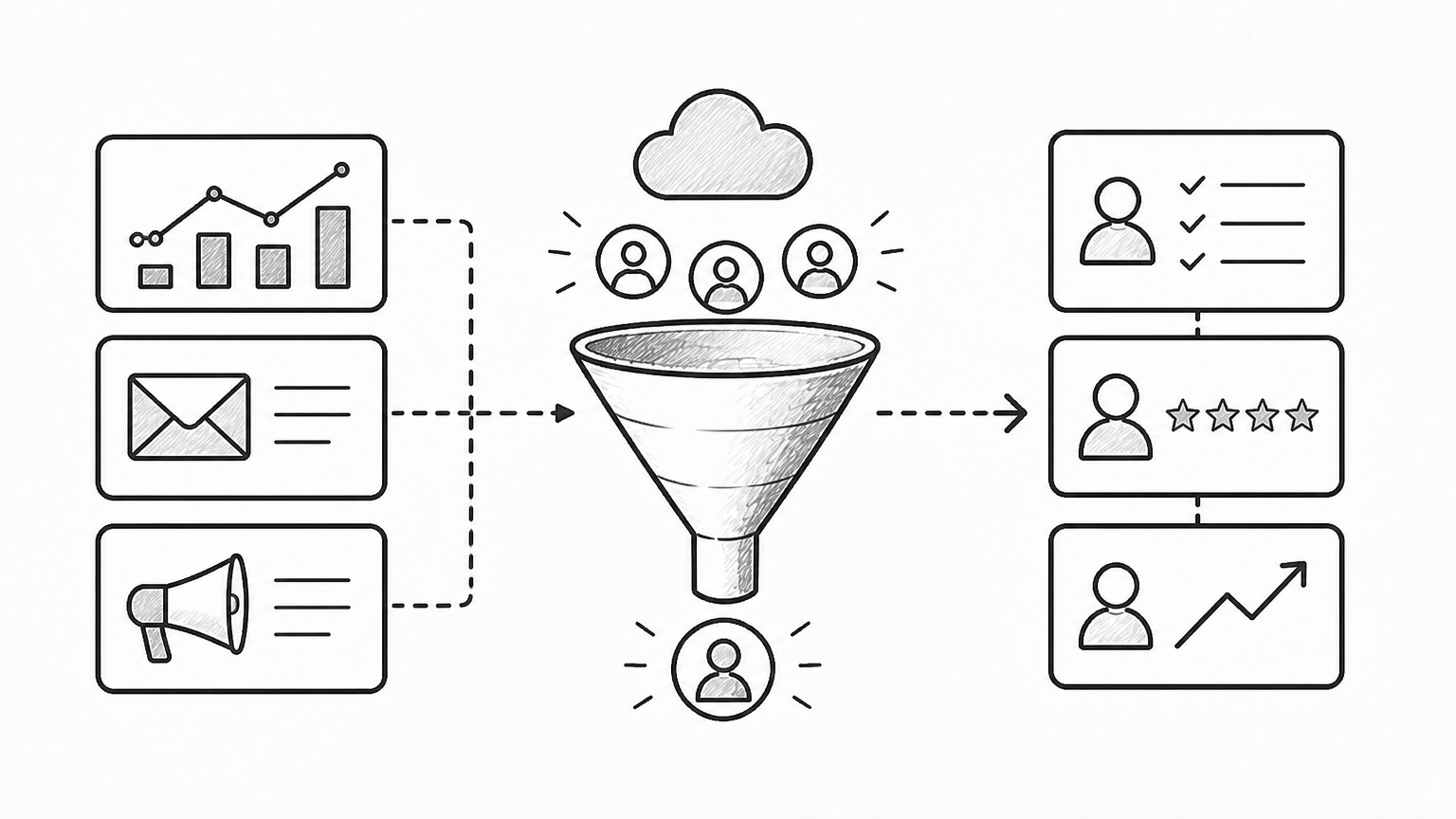
Pipeline problems rarely start at the bottom of the funnel. They start much earlier, when your SaaS lead generation engine attracts the wrong people, loses the right ones, or leaves demand sitting idle because marketing, sales, and product are not working from the same playbook.
That is why a complete guide to SaaS lead generation matters. Not a shallow checklist. Not recycled advice about “posting on LinkedIn” or “running ads.” You need a system that fits how SaaS actually grows, long consideration cycles, multiple stakeholders, product-led touchpoints, and constant pressure to prove ROI.
If you sell to developers, data teams, or growth leaders, the bar is even higher. Your audience is skeptical. They do research. They compare options. They ignore generic outreach. To win, you need relevance, timing, and a process that turns interest into qualified pipeline, not just form fills.
What SaaS lead generation really means
SaaS lead generation is the process of attracting, capturing, qualifying, and moving potential buyers toward a sales conversation or product signup. In practice, it sits at the intersection of content, outbound, product experience, data, and sales execution.
For SaaS companies, lead generation is not just about collecting contact information. It is about identifying people with a real problem, matching them to a clear use case, and helping them reach conviction fast. That means your messaging has to be sharp, your targeting disciplined, and your funnel must remove friction at every stage.
A good lead generation system also reflects your growth model. A product-led SaaS company will generate and qualify leads differently than a sales-led enterprise platform. A startup selling to engineering teams needs a different motion than a horizontal tool aimed at SMB marketers. Same goal. Different mechanics.
Why SaaS lead generation is different from general B2B lead generation
SaaS buyers do not just buy a service. They buy an outcome that unfolds over time. They want to know how quickly they can get value, how hard implementation will be, whether the product fits their workflow, and what switching costs look like.
That changes how leads should be generated and nurtured. You are not simply convincing someone to take a call. You are often helping them evaluate a new system, justify budget, assess security, and picture adoption across a team. The lead generation process has to do more than spark interest. It has to reduce risk.
The subscription model adds another layer. Closed-won is not the finish line if poor-fit customers churn. Strong SaaS lead generation does not just create volume. It creates retention-shaped demand, prospects who are likely to activate, expand, and stay.
The core stages of a SaaS lead generation funnel
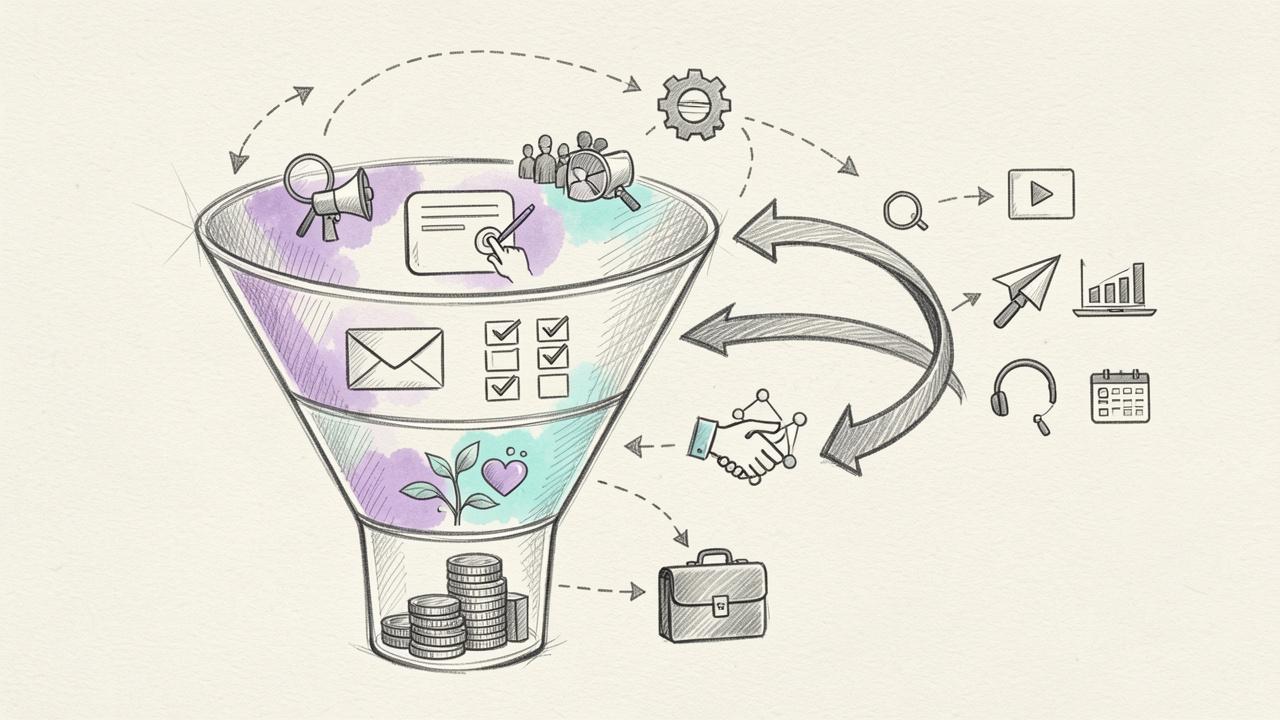
Every effective funnel moves through a few predictable stages, even if the exact labels differ. First, you create awareness by showing up where your buyers are already looking for answers. Then you capture intent through signups, demos, trials, content downloads, or direct conversations.
Next comes qualification. This is where many teams get sloppy. A lead is not valuable because it exists. It becomes valuable when you can reasonably believe there is fit, urgency, and a path to revenue. After that, nurturing and conversion take over, with sales, lifecycle marketing, and product experience working together to move the account forward.
The best SaaS teams treat this funnel as a feedback system, not a one-way path. If leads stall, they inspect the handoff. If activation drops, they revisit acquisition quality. If pipeline looks healthy but revenue does not follow, they check whether lead scoring and positioning are masking weak fit.
body 0 74bfbd27-8e18-430c-bb13-5034dae8ca53
Key aspects of a complete SaaS lead generation strategy
A thorough approach to generating SaaS leads has to start with the fundamentals. Tactics matter, but strategy decides whether those tactics compound or cancel each other out.
Ideal customer profile comes first
If your ideal customer profile is fuzzy, every downstream metric gets distorted. Ad targeting broadens. Content drifts. Sales outreach sounds generic. Demo conversion falls. You end up blaming channels when the real issue is poor market definition.
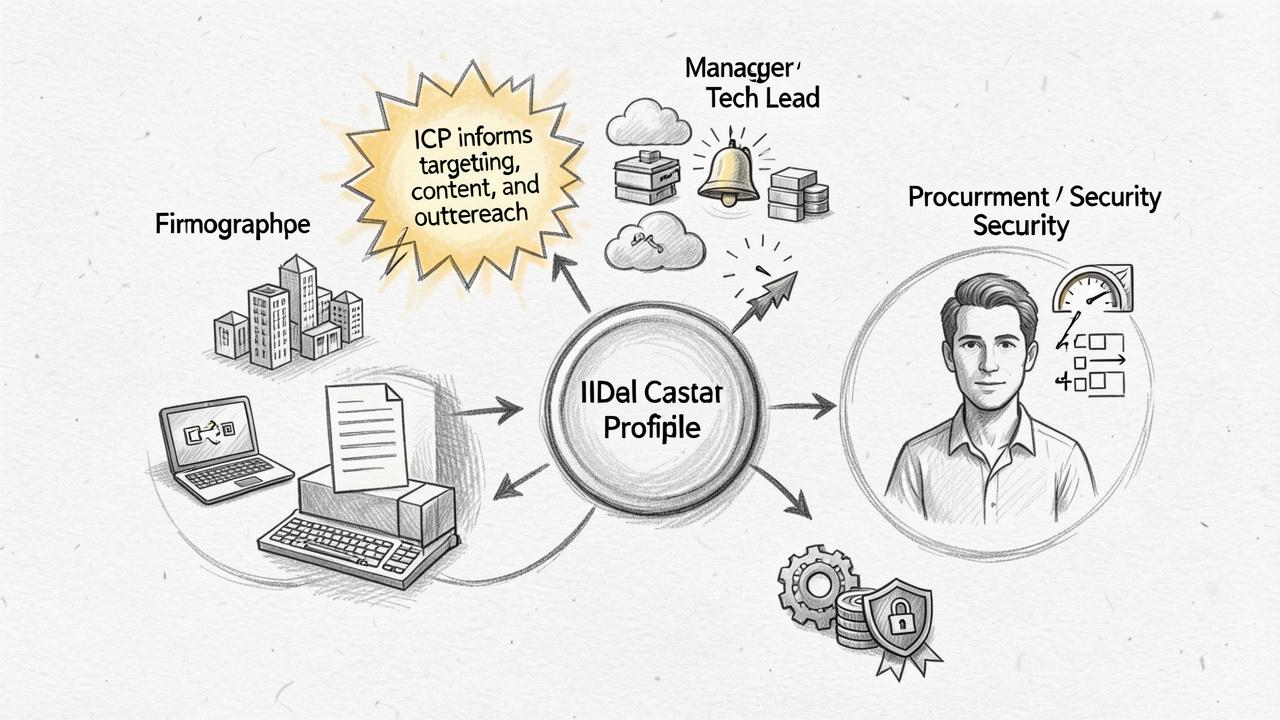
A strong ICP goes beyond firmographics. Yes, company size, industry, and tech stack matter. But in SaaS, you also need to understand workflow pain, trigger events, buying committee roles, and the internal cost of doing nothing. The strongest lead generation programs know exactly who feels the problem, who signs off, and what language each person uses.
For developer and data products, this precision is critical. The end user may care about flexibility, integration depth, and documentation quality. The manager may care about speed to deployment and team productivity. Procurement may care about pricing predictability and security posture. One product. Multiple value narratives.
body 1 59ef89d0-976b-49fa-81bb-34a3ea98af48
Positioning shapes lead quality
Many lead generation problems are actually positioning problems. If your website promises everything to everyone, you may increase traffic while lowering lead quality. Broad messaging attracts curiosity. Specific messaging attracts buyers.
The fix is not to sound clever. It is to sound clear. State the problem you solve, who you solve it for, and what changes after adoption. Then support that claim with evidence: product workflows, customer examples, metrics, and implementation detail.
This is especially important for technical audiences. Developers and data teams respond to specificity. They want to know what your tool connects to, how fast it can be tested, what output it produces, and what operational burden it removes. Vague copy kills momentum because it forces the buyer to guess.
Traffic sources should match buying intent
Not all traffic is equal, and not every acquisition channel belongs in your mix. The right channels depend on deal size, sales cycle length, market maturity, and how actively your buyers seek solutions.
Search is powerful because it captures existing intent. If someone is looking for a way to solve a problem your product addresses, SEO and paid search can bring in high-conviction visitors. Content marketing supports this by helping you rank for pain-point queries, comparison terms, integration questions, and implementation concerns.
Outbound works differently. It does not capture demand. It creates it, or at least redirects attention to a problem the buyer has not prioritized yet. That makes targeting and messaging far more important. Good outbound feels timely and relevant. Bad outbound feels like spam in a crowded inbox.
Social channels can also work, but usually as amplification, not the full engine. LinkedIn, niche communities, newsletters, podcasts, and partner ecosystems are often strongest when they reinforce a clear narrative that already converts elsewhere.
Conversion architecture matters more than most teams think
A lot of SaaS companies spend heavily to get traffic, then underinvest in the page experience that turns visitors into leads. This is expensive. Sometimes fatal.
Your conversion path should fit the level of intent. A high-intent buyer landing on a product page should not have to dig through five tabs to find pricing, integrations, or a demo option. A lower-intent visitor reading educational content may need a softer next step, such as a useful template, product walkthrough, or use-case page.
The point is alignment. Asking for too much, too early depresses conversion. Asking for too little can flood the funnel with weak leads. The right CTA depends on category maturity, price point, and audience behavior.
Lead qualification needs both data and judgment
In theory, lead scoring sounds simple. In practice, many SaaS companies over-engineer it. They track dozens of signals but still cannot tell which leads deserve immediate attention.
Start with the basics. Fit signals tell you whether the account matches your market. Intent signals tell you whether interest is real. Behavioral signals tell you whether the person is moving closer to a decision. The best qualification models combine all three.
Judgment still matters. A small startup with urgent need and strong product fit may be more valuable than a large enterprise account downloading one whitepaper. Scoring should support decisions, not replace them.
The table below shows a practical way to think about common lead signals.
Signal Type | What It Tells You | Example | How to Use It |
Firmographic fit | Whether the account matches your ICP | Company size, industry, region | Prioritize sales effort on best-fit accounts |
Role fit | Whether the contact influences purchase | Head of Data, CTO, Growth Lead | Tailor outreach and nurturing by persona |
Intent | Whether the account is actively researching | Pricing page visits, demo requests, comparison-page traffic | Trigger fast follow-up |
Behavioral engagement | Depth of interest over time | Repeat visits, trial activity, webinar attendance | Increase score as engagement compounds |
Technical fit | Whether adoption is realistic | Existing stack, APIs, data warehouse, cloud provider | Improve qualification and reduce churn risk |
Content is not a top-of-funnel nice-to-have
Content plays a bigger role in SaaS lead generation than many teams admit. It drives discovery, supports evaluation, answers objections, and gives sales something useful to send beyond “just following up.”
But content only works when it maps to actual buyer questions. Writing generic blog posts about broad industry trends may bring traffic, but it often fails to create pipeline. The stronger approach is to build content around specific use cases, implementation concerns, alternatives, pricing logic, migration paths, and measurable outcomes.
For technical buyers, depth beats polish. A clear integration guide, architecture explainer, benchmark, or side-by-side workflow breakdown can outperform a polished thought-leadership piece because it helps the buyer make progress.
Product-led and sales-led motion should support each other
Some SaaS teams treat product-led growth and sales-assisted growth like opposing ideologies. That is a mistake. The smartest teams combine them.
A free trial, freemium plan, or sandbox can generate strong leads because it lets users experience value firsthand. But product activity becomes much more powerful when sales and growth teams know how to interpret it. A user inviting teammates, connecting data sources, or returning multiple times is telling you something meaningful.
Likewise, sales conversations should improve the product journey. If prospects repeatedly stall at the same setup step or ask the same technical questions, those insights should feed onboarding, docs, and in-app guidance. Lead generation gets better when the product itself helps qualify and convert demand.
The channels that consistently drive SaaS leads
There is no universal best channel. There is only the best-fit channel mix for your market and motion. Still, some channels repeatedly produce strong results when executed well.
SEO and intent-driven content
Organic search remains one of the highest-leverage plays in SaaS because it compounds. A strong article, landing page, or use-case page can generate leads for months or years, especially if it targets terms close to evaluation and purchase.
The mistake is going too broad. Terms like “analytics” or “automation” may have huge volume, but they are often too vague. Better targets include buyer-aware searches: alternatives, comparisons, implementation guides, integrations, pain-specific queries, and role-specific solutions.
SEO is not just a traffic play. It is a qualification play. The more precisely your content matches search intent, the more likely the resulting leads are to convert.
Paid acquisition
Paid search can work fast, which is why so many teams lean on it. It is useful for capturing bottom-funnel demand, validating messaging, and accelerating visibility in competitive categories.
The challenge is cost. SaaS keywords can be expensive, and weak post-click experience burns budget quickly. If your landing pages are generic or your offer does not fit the query, you end up paying premium CPCs for unqualified clicks.
Paid social is usually better for targeted awareness, retargeting, and persona-based campaigns than for cold direct response, especially in technical categories. It can work, but it needs tight segmentation, strong creative, and a patient measurement model.
Outbound and account-based outreach
Outbound still works in SaaS, especially for higher ACV deals, but lazy outbound is dead. Mass messaging with shallow personalization gets ignored. Worse, it can damage your brand with exactly the people you want to win.
Good outbound starts with account selection. Then it pairs a real hypothesis with a relevant trigger: hiring, funding, tool changes, product launches, compliance deadlines, usage growth, or visible workflow pain. Outreach should feel like a useful point of view, not a template wearing a fake first line.
Account-based marketing follows the same principle at a broader level. Instead of generating leads from anywhere, you focus attention on a defined set of high-value accounts. Marketing creates air cover. Sales drives direct engagement. Product and customer proof reinforce trust.
Partnerships, communities, and ecosystems
Some of the best SaaS leads come from borrowed trust. Integration partners, consultants, agencies, cloud marketplaces, and niche communities often generate leads with stronger fit because the context is already relevant.
This works especially well for tools that plug into existing workflows. If your product becomes more valuable when used with a CRM, warehouse, CMS, or support platform, partner-led lead generation can outperform broader channels because it meets buyers inside an active operational need.
Communities can also help, but only if you contribute before you ask. Technical audiences can spot extraction instantly. Show up with insight, examples, and problem-solving. Then the leads follow naturally.
Metrics that tell you whether lead generation is actually working
Vanity metrics are easy to celebrate and dangerous to trust. A spike in traffic, downloads, or MQLs may look good in a report while the revenue team quietly misses target.
Focus on pipeline quality, not just lead volume
The first question is simple: are your leads becoming opportunities and customers at a healthy rate? If not, more leads will not save you. They will just create more noise.
Track conversion across the full path, from first touch to qualified pipeline to closed revenue to retention. Then break it down by channel, campaign, persona, and landing page. Patterns show up fast when the data is segmented.
It is common to find that one high-volume channel underperforms while a smaller one quietly drives most pipeline. This is why attribution needs to support decision-making, not storytelling.
Measure speed as well as quantity
Lead generation is also about timing. Slow follow-up, delayed qualification, and clunky handoffs reduce conversion even when demand is healthy.
Look at time to first response, time to meeting, time to activation, and time to opportunity creation. If one team generates leads and another team takes days to act, the system is leaking value.
For product-led SaaS, speed inside the product matters too. How quickly does a new user reach the first meaningful outcome? Faster time to value often improves both conversion and lead quality because serious buyers self-identify through action.
Use a practical operating dashboard
You do not need fifty metrics. You need a small set that exposes performance clearly. Most SaaS teams should monitor the following on a regular cadence:
Qualified lead rate
Lead-to-opportunity conversion
Opportunity-to-customer conversion
Customer acquisition cost by channel
Payback period and retained revenue quality
These metrics tie activity to outcomes. They also make it easier for growth, sales, and product teams to stay aligned on what “good” looks like.
How to get started with SaaS lead generation
The fastest way to stall is to do too much at once. Better to build a simple, disciplined engine and improve it with real feedback.
Start with one clear market and one strong use case
Pick a narrow ICP and a concrete pain point. This gives your messaging focus and makes channel testing more honest. If your early campaigns target everyone, you will learn very little from the results.
Define the problem in operational terms. What slows the team down? What breaks? What costs money? What takes too much manual effort? Strong lead generation starts with a problem the buyer already feels, not one you hope to educate them into caring about.
Then build your core narrative around the before-and-after. What changes when your product is in place? Make that outcome visible across the homepage, product pages, outbound messaging, and sales collateral.
Build the minimum viable funnel
You do not need a giant content library or a complex automation stack on day one. You need a clean path from discovery to action.
At minimum, most SaaS teams need a clear website with role- or use-case-based pages, a primary conversion action, CRM capture, basic lifecycle emails, and a process for fast follow-up. If you run outbound, you also need high-quality account data and messaging tied to specific hypotheses.
Stage | What to Build | Why It Matters |
Foundation | ICP, positioning, core pages, analytics, CRM | Creates clarity and measurement |
Acquisition | One or two channels, targeted campaigns, core content | Generates focused demand |
Conversion | Relevant landing pages, forms, trial or demo flow, CTA testing | Turns traffic into leads |
Qualification | Scoring logic, routing rules, sales follow-up process | Improves speed and efficiency |
Optimization | Funnel analysis, messaging tests, channel mix shifts | Increases pipeline quality over time |
Create content that helps buyers decide
If you are starting from scratch, resist the urge to publish random top-of-funnel posts. Begin with content that answers high-intent questions. That usually means use-case pages, competitor comparisons, implementation guides, FAQs, pricing explainers, and persona-focused solution pages.
This content does more than attract traffic. It shortens evaluation cycles. It arms sales. It improves paid performance. It raises demo quality because buyers arrive with stronger context.
For technical SaaS, include enough depth to be credible. Show workflows. Explain integrations. Address setup time, security considerations, and operational impact. Specificity is a conversion asset.
Tighten the handoff between marketing, sales, and product
Many lead generation efforts fail at the seam between teams. Marketing celebrates leads. Sales complains they are weak. Product sees trial users drop. No one owns the full system.
Fix this by agreeing on definitions and response rules. What counts as a qualified lead? What product signals trigger outreach? Which objections show up most often? What should happen in the first 24 hours after a demo request or signup?
Once those basics are clear, review real accounts together. This is where the useful truth lives. You will see which messages create the wrong expectations, which channels produce poor fit, and which in-product actions predict revenue.
Test with discipline
Lead generation improves through iteration, not constant reinvention. Change one meaningful variable at a time and give it enough volume to teach you something.
The best places to test early are positioning, CTA framing, landing-page structure, outbound hooks, and audience segmentation. Small improvements in these areas often produce outsized gains because they shape both conversion rate and lead quality.
Do not judge channels too early, and do not keep weak experiments running out of hope. Use clear success criteria tied to qualified pipeline, not superficial engagement.
Common SaaS lead generation mistakes
Some mistakes show up in almost every market. They are fixable, but only if you see them clearly.
One common mistake is chasing volume before fit. This creates a busy funnel that makes teams feel productive while pipeline quality drops. Another is relying on a single channel too heavily. That can work for a while, then fail abruptly when costs rise, rankings shift, or audience behavior changes.
A third mistake is weak differentiation. If your messaging sounds interchangeable with every other SaaS tool in the category, conversion suffers because buyers cannot see why they should care now. Precision wins. Clear use cases win. Proof wins.
Then there is the operational mistake: poor follow-up. A great lead can go cold fast if response is slow or generic. Fast, informed follow-up is not a sales courtesy. It is part of lead generation itself.
Conclusion
A practical, step-by-step guide for SaaS lead generation comes down to one principle: build a system that attracts the right buyers, helps them reach conviction quickly, and qualifies them with enough rigor that sales and product can convert them efficiently.
Start narrow. Get your ICP right. Sharpen positioning. Choose channels that match buyer intent. Build a clean funnel. Measure quality, not just volume. Then improve from real signals, not assumptions.
Your next step is simple: audit your current funnel from first touch to qualified pipeline. Find the biggest point of friction. Fix that first. Then repeat. That is how SaaS lead generation becomes reliable, scalable, and worth the spend.
Written by
Bastian W.
Content Manager / ManyPI