

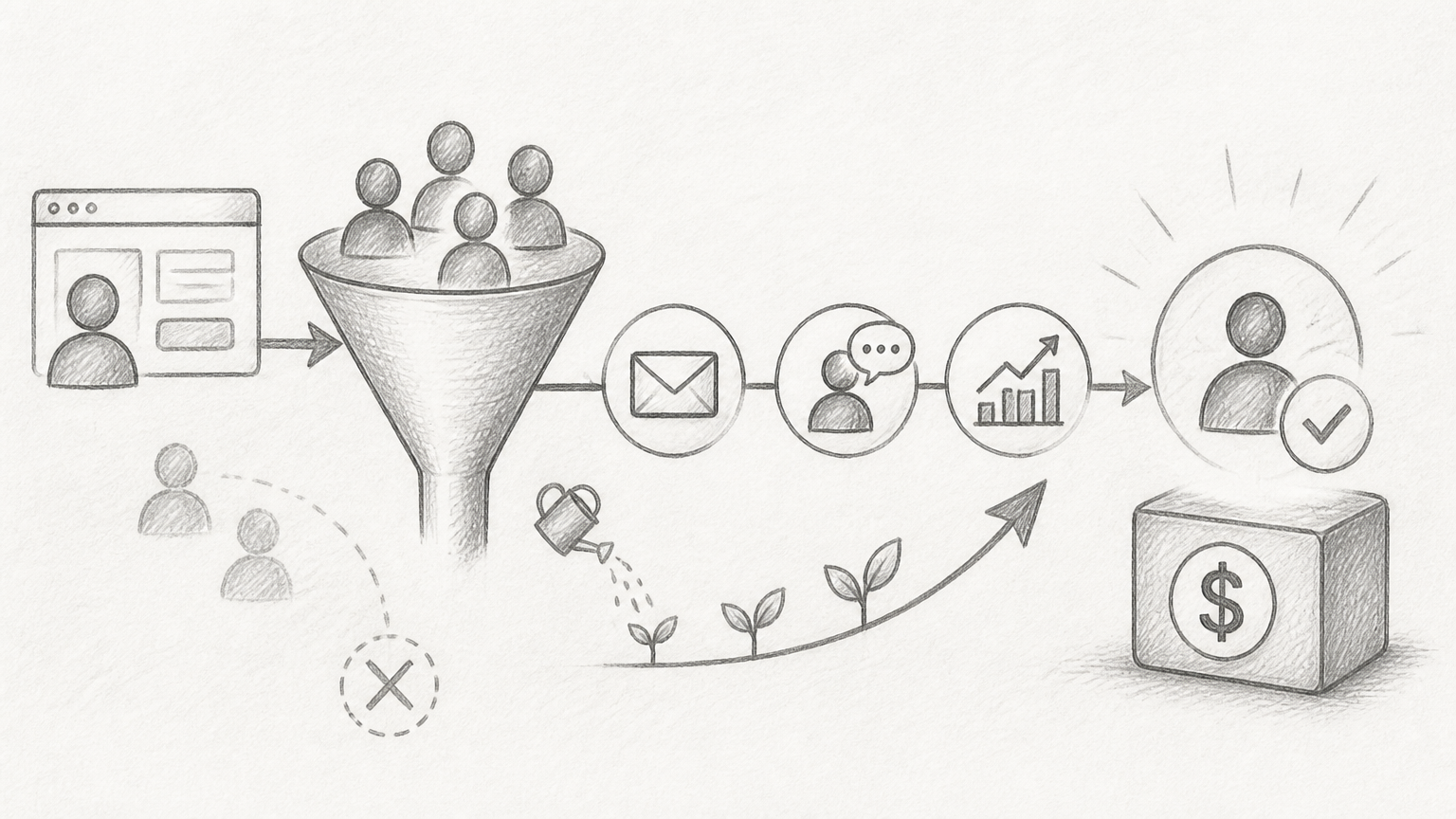
Free trials do not fail because people hate your product. They fail because momentum dies.
A user signs up with intent, pokes around, gets distracted, hits one confusing step, and never comes back. Then teams misread the problem as pricing, traffic quality, or feature gaps. Sometimes those are real issues. More often, the leak sits between trial signup and meaningful progress.
body 0 97136463-2999-40f9-99da-99fe871ffba7
If you want to reduce SaaS trial-to-paid drop-off, lead nurturing is not a soft marketing layer you add later. It is the system that keeps evaluation alive. Done well, it moves users from curiosity to activation, from activation to habit, and from habit to purchase. That is where conversion happens.
What reducing SaaS trial-to-paid drop-off with lead nurturing really means
Lead nurturing, in a SaaS trial context, is the structured work of helping a prospect realize value before the trial ends. Not just sending reminders. Not just a drip campaign. It is a coordinated sequence of messaging, education, prompts, and human follow-up based on what the user has or has not done.
That distinction matters. Many teams treat every trial user the same. They send a welcome email on day one, a tips email on day three, a discount email on day twelve, and hope for the best. That is not nurturing. That is broadcasting.
Real nurturing responds to intent and behavior. A developer who connected your API but has not made a successful call needs different help than a founder who invited three teammates but has not set up billing. A data team that imported a CSV but never built a dashboard is asking for different guidance than a sales-led prospect who spent ten minutes on your integrations page. Same trial. Different obstacles.
The core problem behind trial drop-off
Trial-to-paid drop-off usually looks like a pricing problem on the surface. Users do not convert, so the assumption becomes simple: they did not see enough value to pay. True, but incomplete.
The deeper issue is that value was either not reached, not understood, or not reinforced. Users leave for three common reasons. First, they never got to the "aha" moment. Second, they got there once but did not build enough confidence to justify adoption. Third, they wanted to continue but friction piled up, technical, organizational, or procedural.
Lead nurturing addresses all three. It shortens the path to value, clarifies why that value matters, and removes barriers before they become reasons to abandon.
Why nurturing works better than more trial traffic
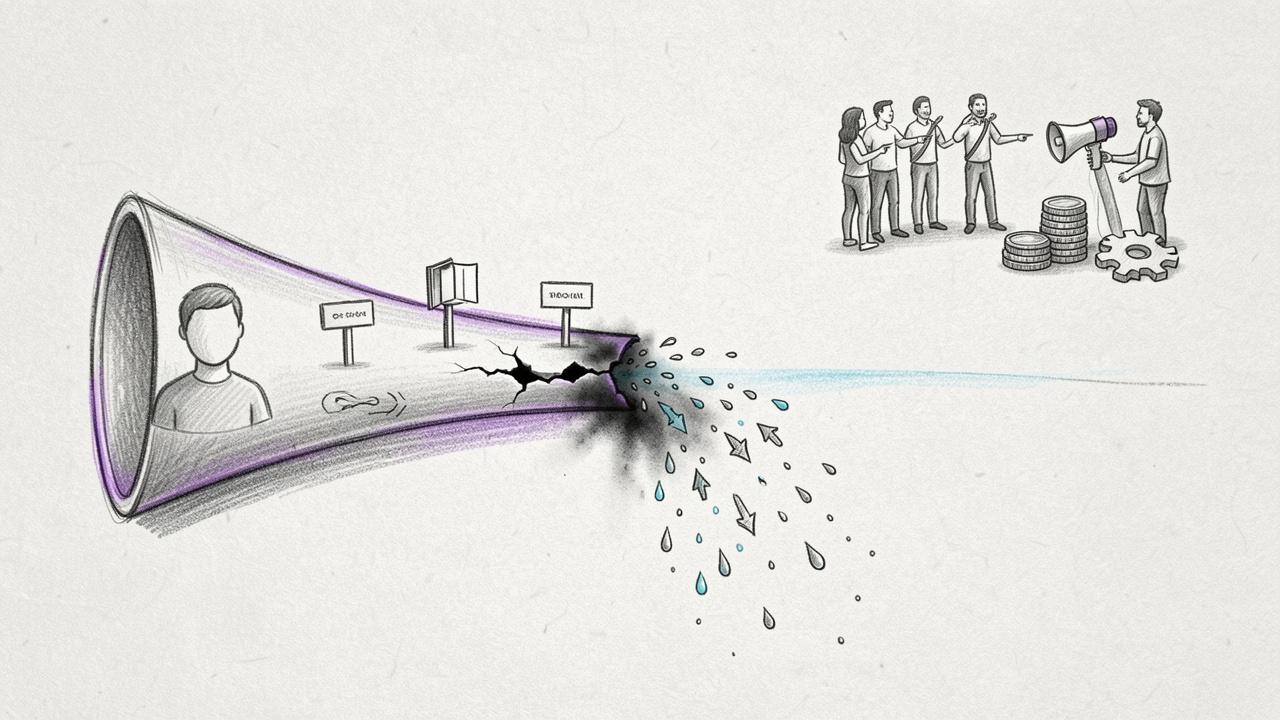
A lot of teams respond to low trial conversion by trying to increase top-of-funnel volume. More ads. More content. More partner traffic. That can help, but it often scales waste.
If your trial experience leaks users after signup, adding traffic just pours more leads into the same broken path. Improving nurturing usually gives faster returns because it acts on users who already raised their hand. They already created an account. They already started evaluating. This is the warmest audience you have.
That is why trial nurturing sits at the intersection of product, lifecycle marketing, sales, and customer success. It is not one department's side project. It is a revenue system.
Key aspects of reducing trial-to-paid drop-off
The strongest nurturing programs share one trait: they are built around progress, not just communication volume.
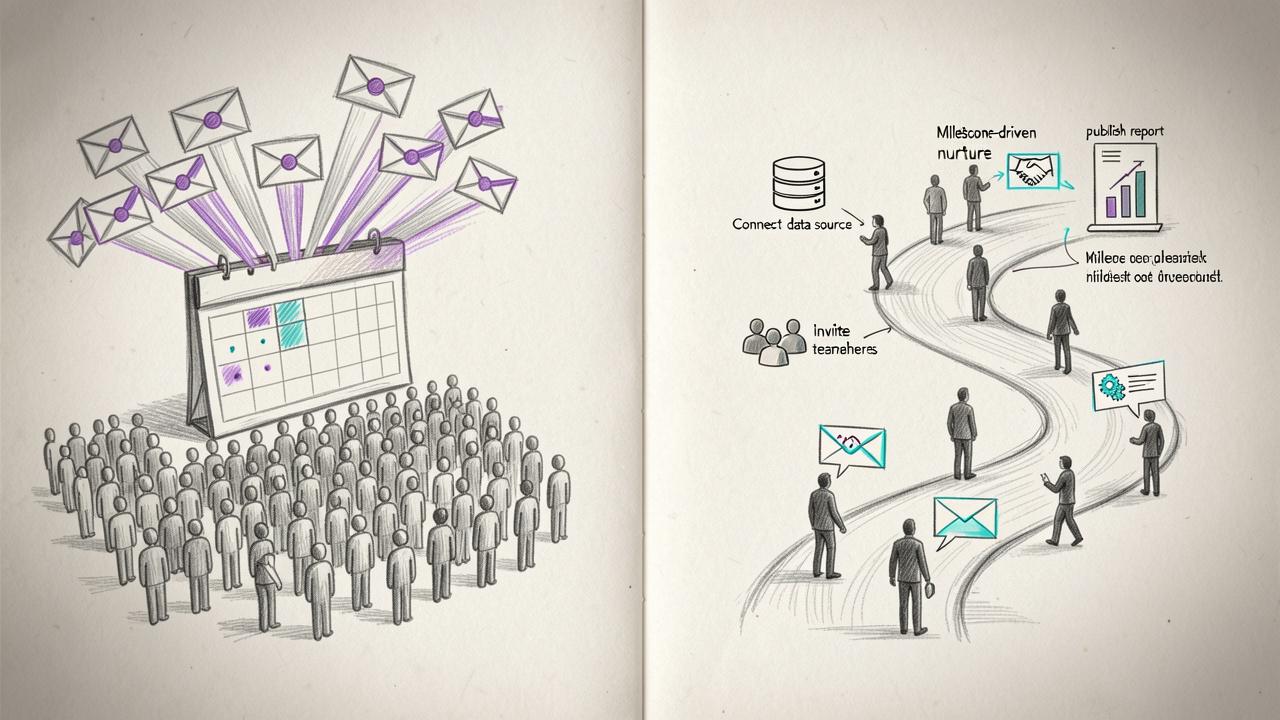
Start with the value milestones, not the email calendar
Before you write a single nurture email, define the milestones that predict conversion. What actions tend to show that a trial user is moving toward paid?
For one SaaS product, that might be connecting a data source, inviting two teammates, and publishing a report. For another, it might be creating a project, automating one workflow, and seeing output generated successfully. For a developer tool, the milestones may include generating an API key, making the first successful request, and reaching a usage threshold that proves integration is real.
Your nurture program should guide users toward those milestones in sequence. That means each message has a job. Push the next useful action. Explain why it matters. Remove one obstacle. Then get out of the way.
When teams skip this step, nurturing gets noisy. You end up with "helpful" content that does not actually move the user closer to conversion. Activity rises. Revenue does not.
body 1 7231e4e1-14de-49c6-a616-c5e036796759
Segment by intent, role, and behavior
Not all trial users are equal, and pretending they are will lower conversion.
A founder evaluating your product for a five-person team thinks differently than an engineer testing implementation details. A self-serve user who signs up from a pricing page carries different buying intent than someone downloading a generic resource and entering a trial later.
At minimum, segment users by three lenses: who they are, why they signed up, and what they have done so far. This does not require a giant enterprise setup. You can start with practical paths: new active users, new inactive users, technical evaluators, decision-makers, high-fit accounts, and expansion-ready teams. Each path should receive different prompts and proof.
Focus on time-to-value
If there is one metric that matters most in trial nurturing, it is time-to-value. The faster a user experiences a meaningful outcome, the less likely they are to drop off.
That means your nurture strategy cannot rely on education alone. It must actively reduce the effort required to get started. Point users to the shortest path. Recommend a template. Pre-fill setup where possible. Highlight the one integration that gets them moving fastest. Offer office hours if the setup is complex.
A good nurture message does not say, "Here are six things you can do." It says, "Do this next. It takes five minutes. Here is what you will get."
That level of specificity matters because trials compete with real work. Your user is not sitting around waiting to explore your software. They are squeezing evaluation into a crowded day. Clarity wins.
Use product signals to trigger outreach
Behavioral triggers make nurturing useful instead of generic.
If a user signs up but never completes onboarding, send a message that addresses setup friction. If they complete setup but never use the core feature, send use-case guidance. If they invite teammates, shift from individual activation to team adoption. If they revisit pricing twice in three days, that may justify a sales touch or a billing FAQ.
This is where many startups can make a major leap with relatively simple instrumentation. You do not need perfect data science on day one. You need reliable signals tied to meaningful actions.
The table below shows the difference between weak and strong trial nurture logic.
Trial signal | Weak response | Strong response |
User signed up | Generic welcome email | Welcome email tied to role and use case |
No login after 48 hours | Same reminder for everyone | Prompt focused on likely setup barrier |
Core feature not used | Broad product tips | One guided action to reach first value |
Multiple teammates invited | Same self-serve flow | Team-focused adoption content and admin setup help |
Pricing page viewed repeatedly | Discount email | Buying support, ROI proof, plan fit guidance |
Match the channel to the friction
Email matters, but email alone is rarely enough.
Some trial blockers are best solved in-product. A tooltip, checklist, template recommendation, or contextual prompt often works better than another email. Other blockers need human support. A short personalized note from sales or customer success can rescue a high-fit account that would otherwise stall.
Think in terms of channel-fit. Confusion inside the workflow should usually be solved inside the product. Strategic buying questions may require email or a call. Technical implementation issues often need docs, chat, or live support. Nurturing works best when the intervention appears where the friction lives.
Teach outcomes, not features
Most trial content over-explains the product and under-explains the result.
Users do not pay because they saw a feature list. They pay because they believe your product will solve a real problem reliably, with acceptable effort and acceptable risk. Your nurture content should build that belief.
That means showing how a workflow gets completed, how a team saves time, how setup usually goes, what success looks like in the first week, and what changes after adoption. Use examples. Use short case narratives. Use proof tied to specific jobs-to-be-done.
If you sell to technical buyers, this matters even more. Developers and data teams are skeptical for good reason. They want concrete evidence that the tool fits their stack, works as claimed, and will not create maintenance headaches. Your nurturing should answer those concerns early.
Reduce anxiety near the end of the trial
Late-stage trial drop-off often has less to do with product value and more to do with purchase hesitation.
The user may like the product but still hesitate because of procurement friction, unclear pricing, uncertain rollout plans, or internal approval delays. If your nurturing sequence only pushes usage and ignores buying friction, you lose people who were actually close.
As the trial progresses, your content should shift. Early messages should help users achieve value. Mid-trial messages should reinforce use cases and deepen adoption. Late-trial messages should make the buying decision easier. Clarify plan fit. Explain what happens after upgrade. Address security, support, contracts, or migration. Give the buyer what they need to say yes internally.
How to get started with lead nurturing for better trial conversion
You do not need a huge automation stack to start reducing trial-to-paid drop-off. You need a clean operating model.
Map the trial journey end to end
Start by documenting what happens between signup and conversion today. Where do users stall? Which actions correlate with paid conversion? Which messages are already being sent, and which are ignored?
Look at this journey from the user's point of view, not your org chart. They do not care whether a message comes from product marketing, lifecycle, or customer success. They care whether it helps them make progress.
A simple map should cover entry source, first session, onboarding completion, first value event, repeat usage, team adoption, pricing evaluation, and upgrade. At each stage, identify the most common failure mode. That is where nurturing should focus first.
Define a small set of high-value segments
Do not start with twenty micro-segments. Start with the few that clearly behave differently.
For many SaaS teams, these first segments are enough to improve results fast: activated trial users who completed early setup and need momentum toward deeper use; inactive trial users who signed up but stalled before reaching value; high-fit accounts that match ideal customer profile criteria and deserve higher-touch outreach; and technical evaluators who need implementation help, docs, and proof of reliability.
That is enough to avoid one-size-fits-all nurturing without making the system impossible to manage.
Build the nurture sequence around specific actions
Each stage in your sequence should ask the user to do one next thing. Not three. Not ten.
Your welcome message should orient and direct. Your day-two follow-up should address the most likely setup blocker. Your mid-trial messages should deepen use and show outcomes. Your late-trial messages should support the buying decision.
This is where many teams overcomplicate automation and underdeliver on clarity. Fancy branching logic cannot rescue weak messaging. Start with simple sequences that are tightly tied to action and value.
Align product, marketing, and sales around the same signals
Trial conversion breaks when teams optimize for different definitions of progress.
Marketing celebrates signups. Product watches activation. Sales jumps in based on account size. Customer success gets looped in late. The user experiences this as inconsistency. Messages overlap. Priorities clash. Nobody owns the whole motion.
Fix this by agreeing on a small set of shared definitions: what counts as activation, what signals buying intent, when a human should step in, and what conditions justify an extension or upgrade conversation.
This alignment does not need months of planning. It needs a weekly operating rhythm. Review trial cohorts. Inspect drop-off points. Compare segments. Decide which friction to remove next.
Use a simple measurement framework
You cannot improve trial nurturing if you only track final conversion.
Watch the full chain. Measure signup-to-activation, activation-to-repeat-use, repeat-use-to-purchase, and time spent between each step. Track segment-level performance. Compare nurtured users against users who receive only baseline messaging.
The most useful metrics are usually these:
Metric | What it tells you | Why it matters |
Trial activation rate | How many users reach first meaningful value | Early proof of onboarding strength |
Time-to-value | How fast users experience the core benefit | Faster value usually means higher conversion |
Repeat usage rate | Whether value is sticky or one-time | Habit predicts purchase confidence |
Trial-to-paid conversion rate | Final commercial outcome | Core revenue metric |
Assisted conversion rate | Impact of human outreach or support | Helps allocate team effort intelligently |
Do not obsess over open rates if deeper metrics are weak. A nurture email can "perform" by email standards and still fail at revenue. What matters is movement toward value and purchase.
Add human touch where it has leverage
Automation handles scale. People handle ambiguity.
If you identify a trial account with strong fit and meaningful activity, a personal outreach can make a real difference. Not a fake personalized template. A short, specific note that references what they have already done and what should happen next.
The best human outreach sounds like operational help, not pressure. It might point out a faster setup route, recommend a configuration based on the user's use case, or offer a short working session. That is nurturing too. It is just higher-touch.
For startups selling into technical teams, this can be decisive. A developer stuck on implementation does not need another generic lifecycle email. They need a fast answer that gets them unblocked.
Common mistakes that keep trial users from converting
A lot of trial drop-off comes from preventable mistakes, not market realities.
One of the biggest is sending nurture content that is detached from product behavior. If your messaging does not reflect what the user has actually done, it feels irrelevant fast. Relevance is not a nice-to-have. It is the thing that earns attention.
Another common mistake is trying to educate users on the whole platform before they have achieved one concrete result. This creates cognitive overload. Users do not need a tour of everything. They need one win.
Teams also lose conversions by delaying human support until it is too late. By the time a promising account has gone cold for ten days, the moment is often gone. The right time to intervene is when intent is visible and friction appears, not after abandonment.
There is also the classic late-stage miss: nurturing the user but ignoring the buyer. In many SaaS purchases, especially B2B, the person using the trial is not the only person involved in the decision. If your program never provides business justification, security reassurance, or rollout clarity, you force the champion to build the case alone.
What strong SaaS trial nurturing looks like in practice
A good nurture system feels almost invisible to the user because it is so well timed.
The first message arrives immediately and frames the fastest path to value. The product experience reinforces that path with a clear checklist or guided setup. If the user stalls, the next message addresses the most likely blocker, not a random feature.
Once the user completes an important milestone, the nurture shifts. Now it is about deepening usage, inviting collaborators, or connecting another workflow that makes the product harder to abandon. When buying intent appears, pricing and plan education become easier to find. If a high-fit account hesitates, a human steps in with relevant help.
This is what makes lead nurturing effective for reducing SaaS trial-to-paid drop-off. It is not one email. It is not one team. It is a connected system that helps the right user take the right step at the right time.
Your next move
If your trial conversion is underperforming, do not start by rewriting your pricing page or buying more traffic. First, inspect the gap between signup and value. That is usually where the real loss happens.
Map the journey. Define the milestones that predict conversion. Segment users by role, intent, and behavior. Then build nurturing that moves people forward, one useful action at a time. Keep it specific. Keep it behavior-based. Keep measuring where momentum dies.
When you reduce friction in the trial itself, paid conversion stops feeling mysterious. It becomes much more predictable. And much easier to improve.
Additional resources and quick links:
For a developer tool, see developer tool.
If a user connected your API but is stuck, check connected your API.
If you want to reduce SaaS trial-to-paid drop-off, lead nurturing is not a soft marketing layer, see lead nurturing.
Read more about the '"aha" moment'.
Consider where users come from, for example a pricing page.
Trial nurturing sits at the intersection of product, lifecycle, marketing, sales, and customer success, see sales.
Learn more about SaaS Lead Generation.
Written by
Bastian W.
Content Manager / ManyPI