

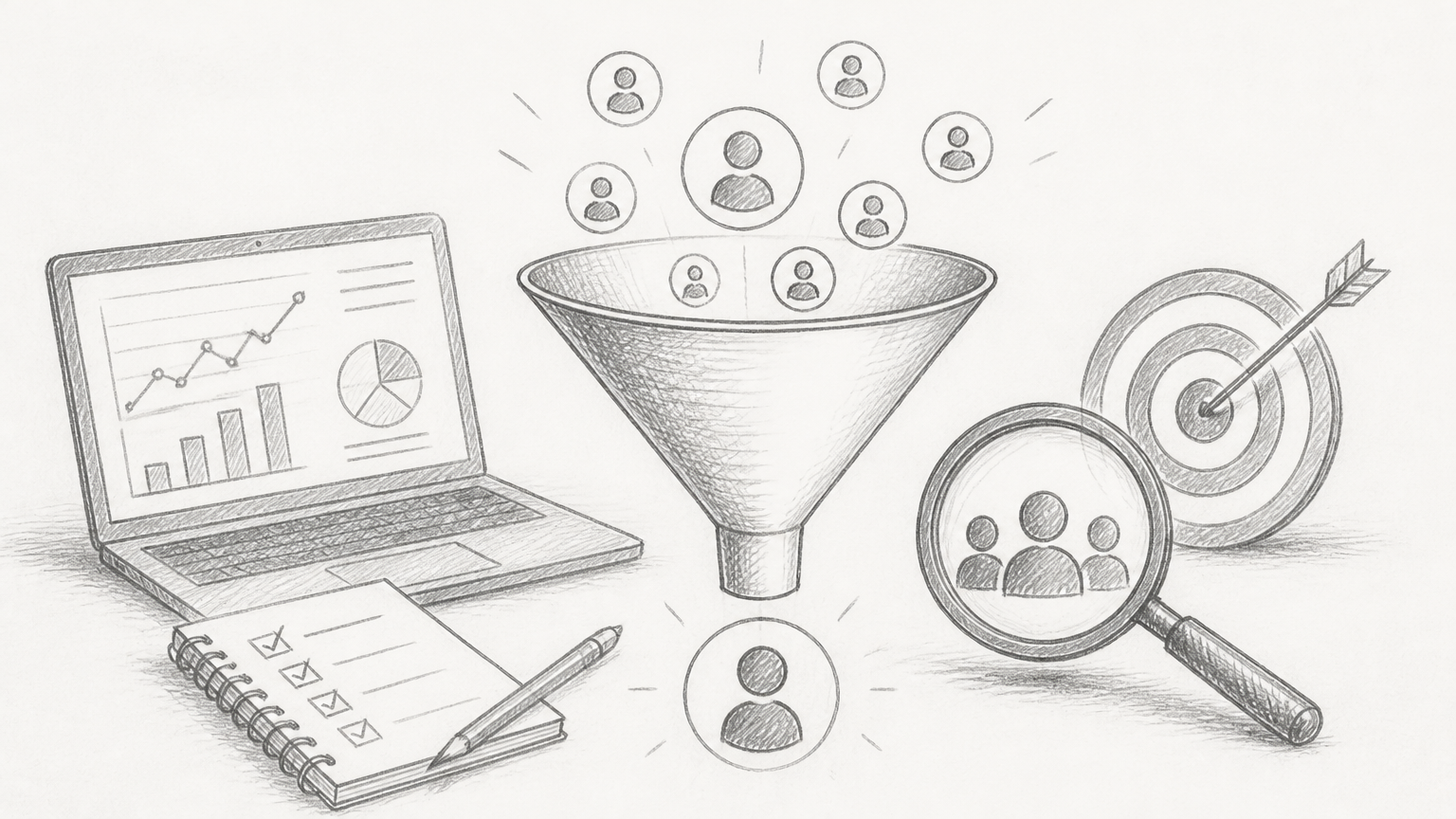
Finding qualified leads for a SaaS company is rarely the hard part. Finding the right leads, consistently, at a cost your business can support, is where most teams stall.
Plenty of startups can generate attention. Far fewer can build a repeatable pipeline of people who actually have the problem, budget, urgency, and authority to buy. That is the real game.

body 0 d48e29d5-e97a-44ad-9594-702c3f138a93
If you want sustainable growth, you need more than a list of names. You need a lead generation system that matches your product, market, and sales motion.
This guide breaks down how to find leads for SaaS companies in a way that is practical, scalable, and grounded in how modern buyers behave. You will see what counts as a good lead, where to find them, how to qualify them, and how to turn scattered prospecting into a process your team can run every week.
What it means to find leads for SaaS companies
At a basic level, finding leads for a SaaS company means identifying people or businesses that are likely to need your software and could realistically become customers. But that definition is too loose to be useful.
In SaaS, a lead is not just anyone who visits your site, downloads a guide, or follows your company on LinkedIn. A real lead has some signal of fit. They match your target customer profile, they show intent, or they operate in the kind of environment where your product creates measurable value.
That matters because SaaS is usually not a one-time transaction. You are not just chasing a sale. You are acquiring revenue that needs to retain, expand, and justify acquisition cost over time. Bad-fit leads do damage twice. First, they waste sales and marketing effort. Then they often churn.
SaaS lead generation is different from general lead generation
SaaS buying is often more complex than people expect. A user may love the product, but procurement blocks the purchase. A team lead wants the tool, but IT needs security review. A founder signs up fast, while an enterprise buyer needs six stakeholders aligned.
That is why lead generation for SaaS companies must connect to your go-to-market model. A self-serve product needs volume and low friction. A product-led growth motion needs high-intent users and activation triggers. A sales-led SaaS company needs account-level targeting and deeper qualification. The source of the lead matters less than how well it fits the way you sell.
What a good SaaS lead actually looks like
A strong SaaS lead usually sits at the intersection of fit, intent, and timing.
Fit means the company resembles your best customers. Intent means they are showing buying or problem-solving behavior. Timing means there is a reason they might act now, not six months from now. If one of those is missing, conversion gets harder.
For example, a 20-person startup that just raised funding, is hiring RevOps, and is searching for workflow automation tools is a much better lead for a B2B SaaS platform than a random large enterprise account with no visible need. One is warm because the context is right. The other only looks attractive on paper.
Key aspects of finding leads for SaaS companies
If you want better lead flow, stop treating lead generation as one tactic. It is a stack. You need clear positioning, defined buyer profiles, reliable acquisition channels, and a way to score and route what comes in.
Start with a sharp ideal customer profile
Most lead generation problems are really targeting problems.
If your team cannot clearly explain who the product is for, every channel performs worse. Your messaging gets vague. Your outreach sounds generic. Your paid campaigns broaden. Your content attracts readers who will never buy. The result is activity without pipeline.
Your ideal customer profile (ICP) should define the account-level characteristics of companies most likely to succeed with your software. For SaaS, that often includes company size, industry, team structure, revenue band, geography, tech stack, growth stage, and business model.
Then go one level deeper and define the buyer. In many SaaS categories, the user and the economic buyer are not the same person. The operations manager may use the tool every day, but the VP signs the contract. If you do not map both, your lead generation will pull in traffic but not deals.
Understand the trigger events that create demand
Great prospecting starts when you recognize why now.
SaaS leads convert faster when they are tied to a business event. A company just raised capital. A team is hiring aggressively. A new regulation creates compliance pressure. A competitor exits the market. The prospect migrates to a new CRM, warehouse, or cloud platform. Those moments create urgency.
This is where many teams miss easy wins. They focus only on static filters like employee count or industry. Useful, but incomplete. Trigger-based lead finding gives you context. It tells you who may need your product today.

body 1 a89b1c33-e80f-4145-a570-54d95e0c782f
Align lead sources with your sales motion
Not every channel works equally well for every SaaS company.
A developer-focused infrastructure tool may win through technical content, product documentation, GitHub visibility, and community trust. A vertical SaaS platform for healthcare operations may perform better with outbound targeting, webinars, referrals, and account-based marketing. A lightweight self-serve tool may grow fastest through SEO and product-led acquisition.
The mistake is copying another company's channel mix without checking whether their pricing, buyer, urgency, and average contract value match yours. A channel is only good if it produces leads your team can close profitably.
The best channels to find SaaS leads
There is no single best source of leads for SaaS companies. The strongest pipelines usually come from a mix of inbound, outbound, partner, and product-driven channels. What matters is how intentionally you build each one.
SEO and content for high-intent inbound leads
Search remains one of the most durable channels for SaaS lead generation because it captures demand when buyers are already looking for answers. But not all content is equal.
Top-of-funnel articles can build reach, but bottom-of-funnel content is what tends to generate qualified leads. That includes comparison pages, use-case pages, integration pages, alternative pages, implementation guides, ROI content, and problem-specific educational posts. These pages attract visitors closer to a buying decision.
If you want to improve how you find leads for a SaaS company through content, map topics to buying stages. Early-stage content answers broad questions. Mid-funnel content frames approaches and categories. Late-stage content helps buyers justify and compare. Done well, SEO does not just bring traffic. It pre-qualifies interest.
LinkedIn for targeted prospecting and audience building
For B2B SaaS, LinkedIn is still one of the clearest places to identify buyers by role, company, seniority, and activity. It works especially well when your audience is in operations, revenue, HR, finance, data, security, or software leadership.
Used badly, LinkedIn becomes spam at scale. Used well, it is a signal-rich research environment. You can find companies hiring for pain-point roles, leaders discussing relevant initiatives, and teams announcing projects that connect directly to your software category.
The best results usually come from combining profile research, thoughtful outbound, and consistent brand presence. Outreach works better when your company and team already look credible. That means sharp positioning, useful content, and a profile that clearly states the problem you solve.
Cold outbound for precision and speed
Outbound still works for SaaS, especially when your product solves an expensive problem for a narrow audience. It is one of the fastest ways to test messaging and reach accounts that may never discover you organically.
But the bar is higher now. Generic sequencing to large lists is noisy and underperforming. Buyers ignore templates. What gets replies is relevance. That usually means smaller, better-built lists, cleaner ICP filters, stronger trigger signals, and copy that reflects the prospect's world.
A good outbound motion often starts with account selection, not email writing. If you pick the right accounts and contact personas, even simple messaging can work. If you pick poorly, no copy framework saves you.
Review sites, directories, and marketplaces
Many buyers validate software through third-party platforms before they talk to sales. Review sites, app marketplaces, partner ecosystems, and software directories can all generate leads, especially for tools with clear category fit.
These channels matter because they capture demand from people already comparing options. They may not always drive huge volume, but they often bring serious buyers. A prospect reading integration details or pricing reviews is much closer to a decision than someone casually browsing social content.
SaaS companies often underinvest here. They treat listings as a side task instead of a lead source. Clean profiles, up-to-date positioning, customer reviews, and conversion-focused category pages can quietly become a strong bottom-funnel asset.
Communities, events, and webinars
Some SaaS categories sell best where practitioners gather. That could be Slack groups, Discord servers, niche forums, industry associations, private communities, or live events. These channels are especially effective when your software serves a specific function or vertical.
The opportunity is not just lead capture. It is market learning. Communities reveal the words buyers use, the objections they repeat, and the workflows they actually care about. That feedback sharpens every other channel.
Webinars deserve special attention here. A good webinar tied to a real operational problem can generate highly relevant leads because it attracts people willing to spend time learning. The topic matters more than the format. Focus on a painful problem, not a product tour disguised as thought leadership.
Product-led acquisition and free trials
For many SaaS businesses, the product itself is the strongest lead engine.
If users can experience value quickly through a free trial, freemium plan, sandbox, or interactive demo, you can generate leads by reducing the distance between curiosity and adoption. This is especially powerful when the user can sign up without a heavy sales process and activation happens fast.
The catch is that signups are not automatically qualified leads. Product-led funnels need behavioral scoring. Who completed setup? Who invited teammates? Who connected a data source? Who used the feature associated with retention or expansion? Those signals separate casual testers from real pipeline.
How to qualify SaaS leads without wasting your pipeline
Lead generation breaks when qualification is weak. Marketing celebrates volume. Sales complains about quality. Nobody trusts the funnel. The fix is simple in theory and disciplined in practice: define what qualified means.
Separate inquiry, lead, PQL, MQL, and SQL
One reason SaaS teams struggle is that they call too many things a lead.
A random ebook download is not the same as a product-qualified user. A demo request from a student is not the same as a buying committee from a target account. If your stages are vague, your reporting becomes fiction.
Use clear definitions across the funnel. An inquiry is raw interest. A lead matches some basic profile criteria. An MQL shows marketing-defined engagement. A PQL shows product usage that suggests value realization. An SQL has been reviewed and deemed worth direct sales pursuit. The exact definitions will vary, but the key is consistency.
Score fit and intent together
Fit alone is not enough. Neither is intent.
A perfect-fit company with no active need may not move. A high-intent user from a tiny non-target account may never become revenue. Strong qualification combines account fit with behavioral signals.
Dimension | What to evaluate | Example signals |
Company fit | Whether the account matches your ICP | Industry, employee count, revenue, geography, tech stack |
Buyer fit | Whether the contact matches the buying group | Job title, function, seniority, team ownership |
Intent | Whether the prospect is actively exploring solutions | Pricing page visits, demo requests, comparison research |
Timing | Whether a trigger event creates urgency | Funding, hiring, migration, compliance changes |
Product engagement | Whether users are reaching value in the product | Activation milestones, usage depth, team invites |
When these dimensions are scored together, lead routing gets better. Sales sees fewer low-value handoffs. Marketing gets cleaner feedback. RevOps has a model it can improve over time.
Watch for disqualifiers early
Good teams qualify in. Great teams also qualify out.
If the budget is obviously too small, the use case is weak, the tech environment is incompatible, or the team lacks urgency, call it early. It is better to keep a lead in nurture than to force it into pipeline.
This matters even more in SaaS because implementation and retention depend on customer fit. Closing the wrong account can create support burden, low usage, and churn that wipes out the apparent win.
How to get started with lead generation for a SaaS company
The fastest way to improve lead generation is to stop adding random tactics and build a repeatable operating model. You do not need ten channels. You need a clear target, a few strong plays, and consistent measurement.
Step 1: Define your best customer in concrete terms
Start with your existing customers, if you have them. Look for patterns in retention, expansion, activation speed, sales cycle length, and support load. Your best-fit customers are not always the loudest or largest. They are the ones who get value quickly and stay.
If you are earlier stage and do not have enough customer data, build a working ICP from founder insight, user interviews, competitor analysis, and market logic. Then test it aggressively. Your first ICP is a hypothesis, not a law.
Step 2: Build a lead source map
You need to know where your buyers actually discover and evaluate solutions.
Map likely channels across awareness, consideration, and decision. Ask simple questions. Do your buyers search Google when the problem appears? Do they ask peers? Do they compare tools on review platforms? Are they active in a specific community? Do they respond to outbound when tied to a trigger event?
This exercise usually reveals two things fast. First, some channels are clearly worth testing. Second, some channels only look attractive because competitors use them. Focus on the paths your buyer naturally takes.
Step 3: Create one inbound play and one outbound play
Most SaaS companies need both, even if one dominates.
Your inbound play could be SEO around high-intent use cases, a webinar series, or a product-led signup funnel. Your outbound play could target a narrow list of ICP accounts tied to clear business triggers. Keep both simple enough to execute consistently for at least one full cycle.
This is where discipline wins. A mediocre strategy run every week beats a clever strategy abandoned after two sprints.
Step 4: Instrument the funnel
If you cannot see where leads come from, how they behave, and why they convert, you cannot improve the system.
Track source, first touch, conversion path, qualification stage, activation behavior, pipeline creation, and closed revenue. For product-led motions, connect product usage to CRM stages. For sales-led motions, capture reasons for disqualification and lost deals. Every missing data point becomes a blind spot later.
Step 5: Tighten messaging based on real objections
Lead generation gets stronger when your message reflects what buyers already believe and fear.
Review call notes, customer interviews, sales objections, onboarding questions, and churn reasons. Then update your site copy, outbound messaging, ads, and content. Strong messaging does not try to sound smart. It makes the buyer feel understood and reduces perceived risk.
A simple 30-day launch plan
If you need a practical starting point, use this structure:
Define your ICP: Document your top-fit account traits, buyer roles, and common trigger events.
Choose two channels: Pick one inbound and one outbound channel that fit your sales motion.
Build a focused offer: Create one demo path, one lead magnet, or one problem-specific landing page.
Set qualification rules: Agree on what counts as a real lead, an MQL, a PQL, and an SQL.
Review weekly: Check lead quality, conversion rates, objections, and source performance every week.
That is enough to create momentum. You can layer on complexity later.
Common mistakes SaaS teams make when trying to find leads
Many SaaS companies do not have a lead shortage. They have a prioritization problem.
One common mistake is chasing volume too early. More leads feel good in dashboards, but if they do not match the ICP, they create noise. Marketing thinks performance is improving. Sales thinks marketing is broken. Both are looking at the wrong metric.
Another mistake is confusing engagement with buying intent. A prospect may read three blog posts and still be months away from action. Meanwhile, a quiet visitor who lands on pricing, security, and integration pages may be far more valuable. The channels differ, but the principle is the same, behavior has to be interpreted in context.
A third mistake is treating lead generation as separate from product and customer success. In SaaS, the best lead strategy is often hidden in your product data and customer patterns. If your best customers activate through a certain feature or come from a certain workflow, that should shape acquisition. Growth, product, and sales need to share the same picture of value.
How to know your SaaS lead generation is working
You do not measure success by raw lead count. You measure it by pipeline efficiency and revenue quality.
That means watching metrics such as visitor-to-lead conversion, lead-to-opportunity rate, activation rate, sales acceptance rate, customer acquisition cost, payback period, and retention by source. A channel that brings fewer leads but better retention may be far more valuable than a channel that floods the funnel.
Metric type | Weak indicator | Stronger indicator |
Traffic | Total sessions | Qualified sessions by ICP segment |
Lead volume | Raw form fills | Leads that meet qualification criteria |
Engagement | Time on page | Pricing visits, demo requests, product activation |
Pipeline | Meetings booked | Sales-accepted opportunities created |
Revenue | Closed deals | Retained revenue and expansion potential |
If you want to find better leads for a SaaS company, keep coming back to one question, does this source produce customers who succeed with the product? That is the standard.
Conclusion
Finding leads for SaaS companies is not about being everywhere. It is about being precise. You need a clear ICP, strong signal detection, a channel mix that fits your sales motion, and qualification rules your whole team trusts.
Start small. Pick the right customer. Pick the right trigger. Pick two channels you can run well. Then measure what actually turns into retained revenue, not just top-of-funnel activity. That is how lead generation becomes a growth system, not a guessing game.
Your next step is simple: audit your current pipeline and identify where quality breaks down. If you fix targeting, sharpen messaging, and tie lead generation to real buying signals, your SaaS company will stop collecting names and start creating pipeline.
Learn more about SaaS Lead Generation.
Written by
Bastian W.
Content Manager / ManyPI