


TL;DR
You can buy a B2B email list, but Google's sender guidelines say not to, every other buyer has the same contacts, and nobody tells you how old the data is. A fresh list for one narrow segment usually takes hours.
Build a fresh list insteadMost people who search for a B2B email list to buy aren't researching. They need meetings soon, and a ready-made file of 10,000 contacts looks like the shortcut. Sometimes it works out. More often the list costs more than its price, because the real bill arrives later, as bounces and a domain you eventually have to retire.
The short version: you can buy one, and in many countries emailing businesses from it is legal if you follow the rules. But Gmail's own sender guidelines list "Don't purchase email addresses from other companies" under practices to avoid, and nothing about a bought list tells you when its addresses were last checked. For most teams, building a fresh list for one narrow segment is slower by a few hours and better by every other measure.
What you actually get when you buy
A typical bought list is a CSV with names, job titles, company names, email addresses and a few firmographic columns like industry and headcount. What it usually doesn't come with is the information you need to judge it:
When each address was collected or last verified. "Updated regularly" isn't a date.
How the addresses were found. An address guessed from a name pattern behaves nothing like one the person actually uses.
Who else bought it. List vendors sell the same file many times. The people on it have already been emailed by every previous buyer, and some of them have marked those emails as spam.
That last point gets underrated. Even a perfectly accurate bought list puts you in an inbox that has learned to ignore senders like you.
Is it legal to email a bought list?
It depends on where your recipients are, not where you are. This isn't legal advice, but the broad picture looks like this:
United States: CAN-SPAM allows commercial email to businesses without prior consent, as long as you don't use deceptive headers or subject lines, include a physical postal address, and honour opt-outs. The FTC's compliance guide covers the details.
United Kingdom: the ICO's guidance on electronic mail marketing says you can email corporate bodies without consent, but sole traders and some partnerships are treated as individuals. A bought list full of small businesses can quietly include a lot of those.
European Union: GDPR applies to named business contacts, so you need a lawful basis (usually legitimate interest) and you must tell people where you got their data. Some countries, Germany among them, are much stricter about unsolicited email to businesses.
If a vendor can't tell you how the data was collected, you can't answer that last question honestly when a recipient asks.
Bought list or built list: how they compare
Bought list | Built for one segment | |
|---|---|---|
Age of the data | Unknown, often months | Read from the web the day you search |
Who else has it | Every previous buyer | Only you |
Fit | Broad filters like "SaaS, 50 to 200 employees" | Your exact description of the buyer |
Source of each contact | Usually not disclosed | Recorded per lead |
Time to get it | Minutes | A few hours |
Bounces on first send | Unknown until you send | Low, if every address is verified first |
The sticker price per contact favours the bought list. The cost per reply usually doesn't, because a smaller list that fits gets read and a bigger one that doesn't gets filtered.
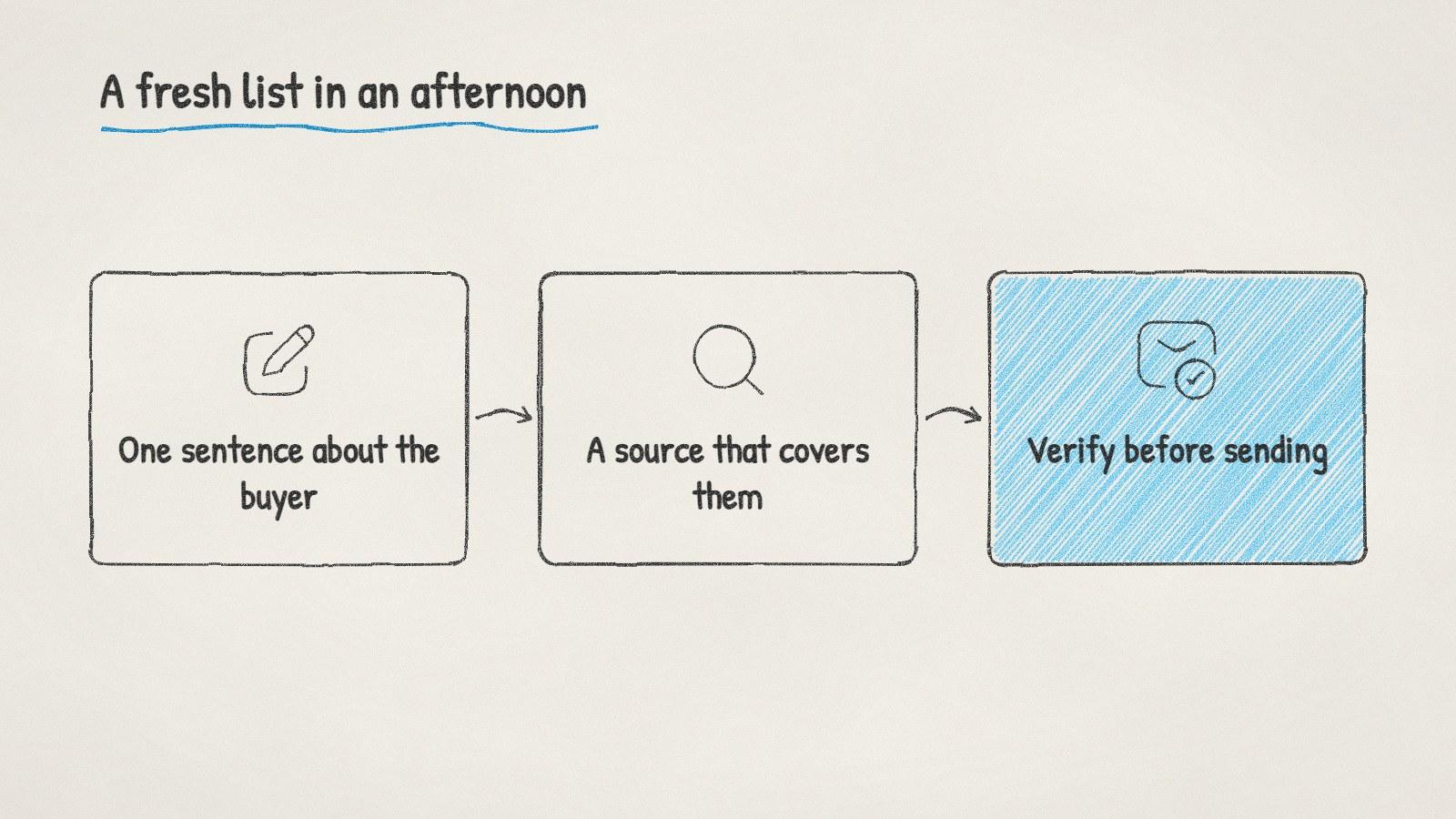
The three inputs a fresh list needs.
If you're going to buy anyway
Sometimes a bought list is the right call, for example when you need a rough count of a market or a seed list for ads rather than email. If you do buy one for email, protect yourself:
Ask the vendor, in writing, when and how the data was collected.
Ask for a free sample of 100 records and verify them yourself before paying. Our free email verifier is enough for a sample.
Never send from your main company domain. Use a separate domain with its own warmed inboxes.
Verify the full list before the first send, not after the first bounces.
Run it against your existing customers and anyone who has opted out.
Start at low volume and stop if hard bounces climb past about 2%.
If the sample comes back with lots of invalid addresses, you've learned what the full list is worth for the price of a few minutes.
Building a fresh list in an afternoon
The alternative takes three inputs: one sentence describing the buyer, a source that actually covers them, and verification before anything is sent.
"Plumbing wholesalers in Texas with a named purchasing manager" is a list no vendor sells off the shelf, and it's the kind of list that gets replies, because the first line of every email can be about plumbing wholesale in Texas.
Disclosure: ManyPI, our product, builds lists this way. You describe the buyer, and the agent finds companies that match on the live web and in a database of over 600 million contacts, notes where each lead came from, merges duplicates so nobody gets your first email twice, and checks every address against the receiving mail server. Campaigns then send from your own inboxes. The free plan finds 50 leads with no card, and our page on B2B email lists walks through it.
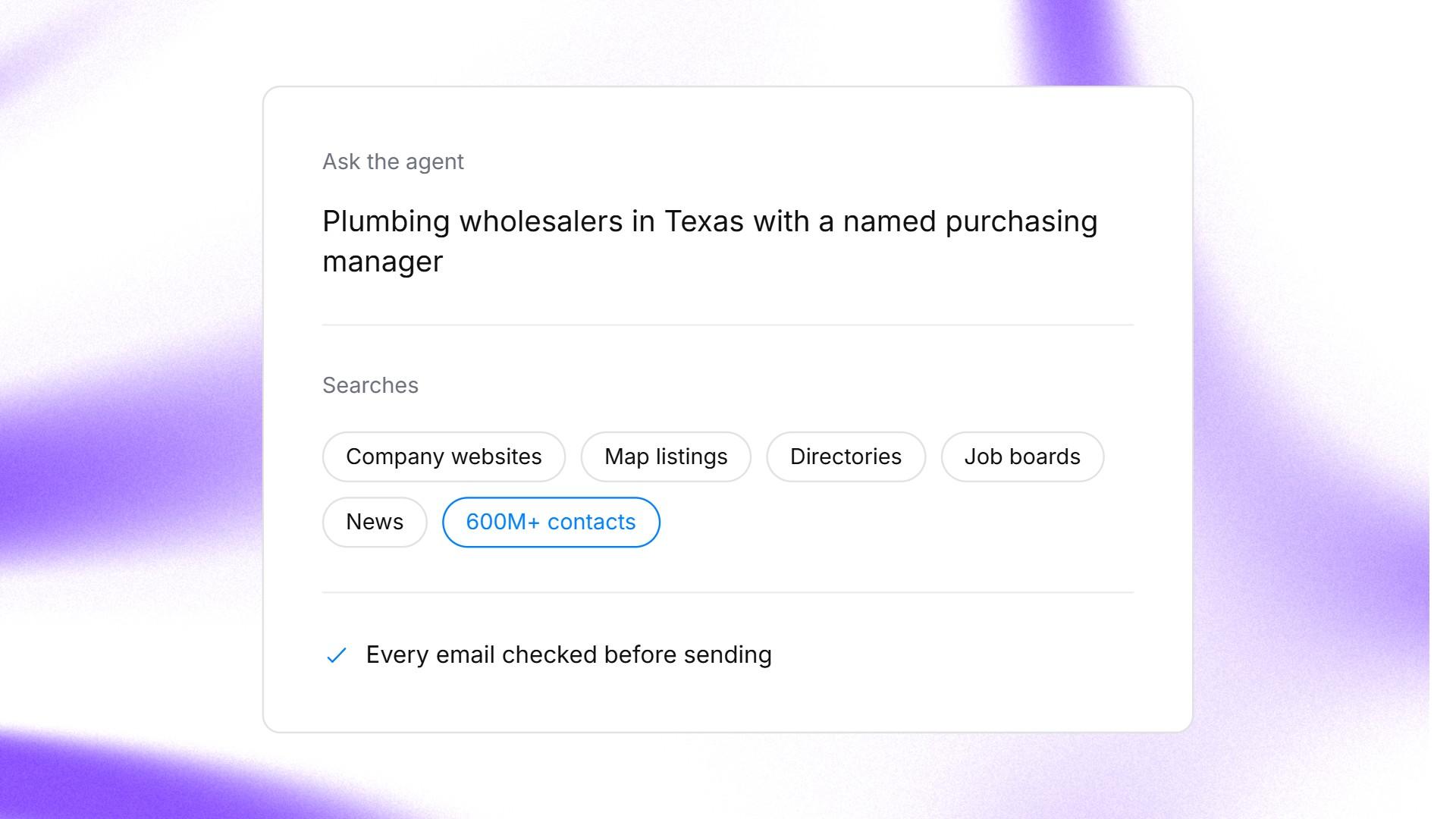
The same sentence typed into the ManyPI agent, which searches the live web and a database of over 600 million contacts.
If you need a list today, try this before you pay a vendor: write the one-sentence description, build 50 leads, and send to them first. If those 50 don't reply, a bought list of 10,000 won't either, and you've saved the money to fix the message.
Written by
Ole Mai
Founder / ManyPI