


TL;DR
Funding news is crowded by the time it's published. Check public filings like SEC Form D and UK share allotments for earlier signals, match what you sell to the company's stage, and write to whoever owns that budget.
Track buying signals with ManyPIA startup that just raised has new money and a plan for spending it, mostly on people and outside help. Every sales team knows this, which is why a founder's inbox fills up the morning a funding announcement goes out. Finding funded startups is easy. Reaching them earlier, or with something more relevant than "congrats on the raise", takes more work.
What works better:
Watch public filings, not just announcements. They often appear first.
Use funding news and databases to fill in the details.
Match what you sell to the company's stage.
Contact the person who will own that budget, not always the CEO.
Reference what the money is for, not the fact that it was raised.
Where funding data shows up, fastest first
Source | When it appears | Cost | What to know |
|---|---|---|---|
SEC Form D (US) | Within 15 days after the first sale of securities | Free | Can appear before any press release. Lists executives and directors |
UK share allotments (Companies House form SH01) | Due within one month of the shares being allotted | Free | Shows new shares issued, not always the amount raised in plain terms |
Funding announcements and tech press | On announcement day | Free | Everyone else sees it at the same moment |
Funding databases (Crunchbase, Dealroom, PitchBook) | Days after, sometimes sooner | Paid for full filters | Best for filtering by sector, stage and region |
Hiring spikes | Weeks after the money lands | Free | Confirms where the money is going |
Reading a Form D
US companies raising money under the common private placement exemptions file a Form D with the SEC, and it has to be filed within 15 days after the first sale. Filings are public and searchable on EDGAR.
A Form D gives you the company's legal name and address, the total offering amount, how much has been sold so far, the date of first sale, and the names of executive officers and directors. That last part is useful. You have the founder's name before the press release has been written.
A few things to watch for. Some startups file under a holding company name that doesn't match the brand. The amount on the form can differ from the headline number in the announcement. And not every raise needs a Form D. Treat it as an early signal, then confirm with the company's website.
Match what you sell to the stage
A seed-stage company and a Series B company spend new money on different things.
Stage | What they typically buy next | Who to contact |
|---|---|---|
Pre-seed and seed | First hires, development help, basic tooling | The founder, almost always |
Series A | First sales and marketing hires, recruiting, sales tools, outbound help | The CEO or the newly hired head of sales or marketing |
Series B and later | Scaling teams, compliance, security, enterprise tools | The department head who owns the problem |
If you sell recruiting, the window right after a Series A is when hiring plans get made. If you sell security or compliance, the Series B or a first enterprise customer is often the trigger.
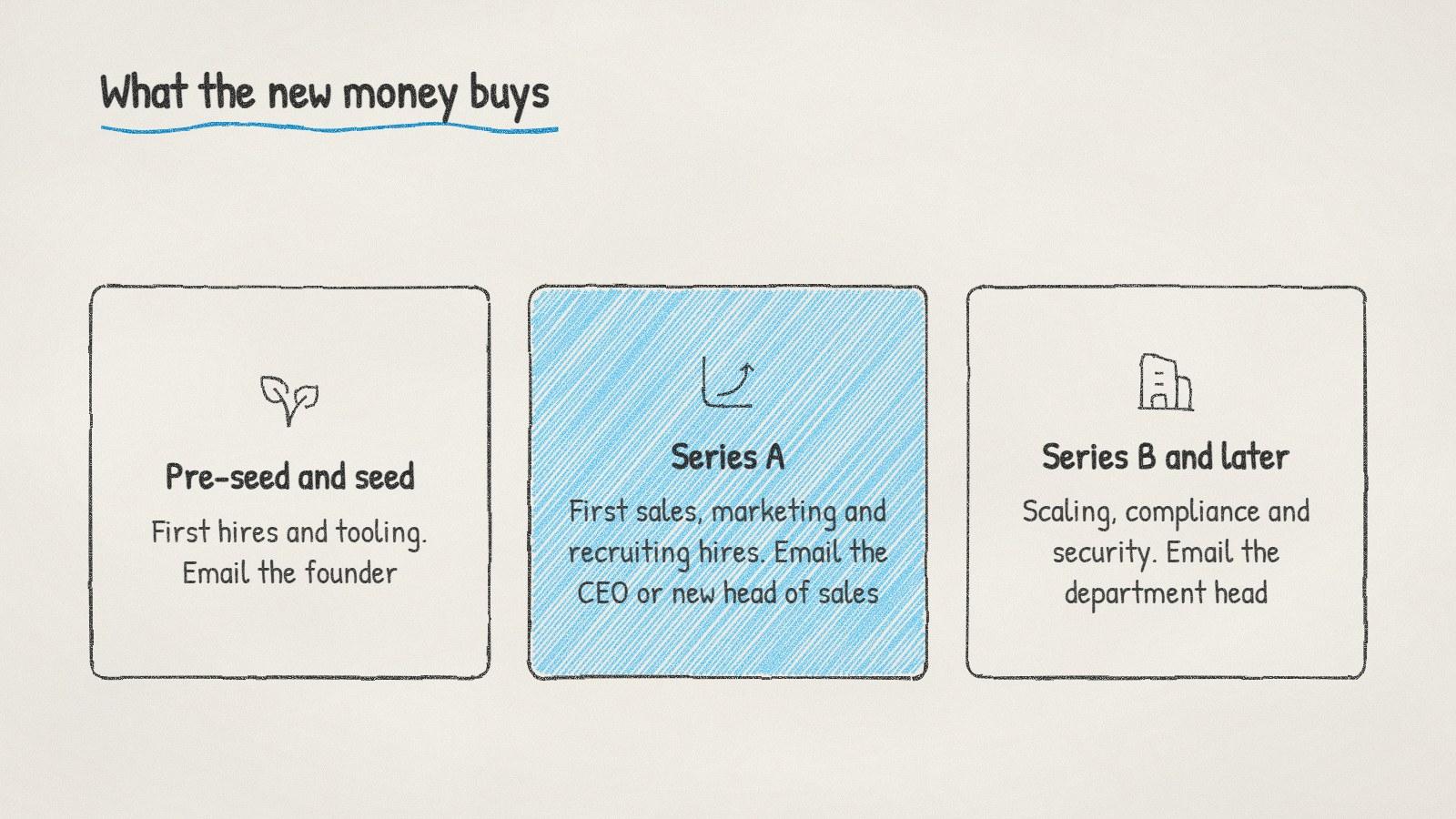
What startups tend to buy after each round, and who to contact.
Write about what the money is for
Founders get dozens of "congrats on the raise" emails. Almost all of them are ignored, because the reader can tell the sender saw a headline and nothing else.
Announcements usually say what the money is for: "expand into Europe", "grow the sales team", "launch our second product". That sentence is your opening.
Hi [Name], your announcement mentioned growing the sales team this year. [One thing you've seen go wrong for teams at this stage, from your own customers.] We [one sentence on what you do and for whom]. Would it be useful to see how [similar company] set theirs up?
Keep the congratulations to a few words, or skip it. Specific beats polite.
Timing
The day of the announcement is the most crowded moment in a founder's inbox. A few days later, after the noise has settled, is often better for most offers. Recruiters and agencies can afford to move faster, because hiring plans form in the first weeks. For tools, the right moment is often when the first hires in the relevant team start, which job posts will tell you.
Doing it with ManyPI
Disclosure: ManyPI is our product.
You can describe the companies in plain words, for example "seed and Series A fintech startups in the UK that announced funding in the last 60 days, with the founder's email". The agent reads news and company sites live, and every lead carries its buying signals (hiring, launches, funding and other news) so you can see why it's on the list. Emails are checked before sending, and sequences go out from your own inbox and stop on reply.
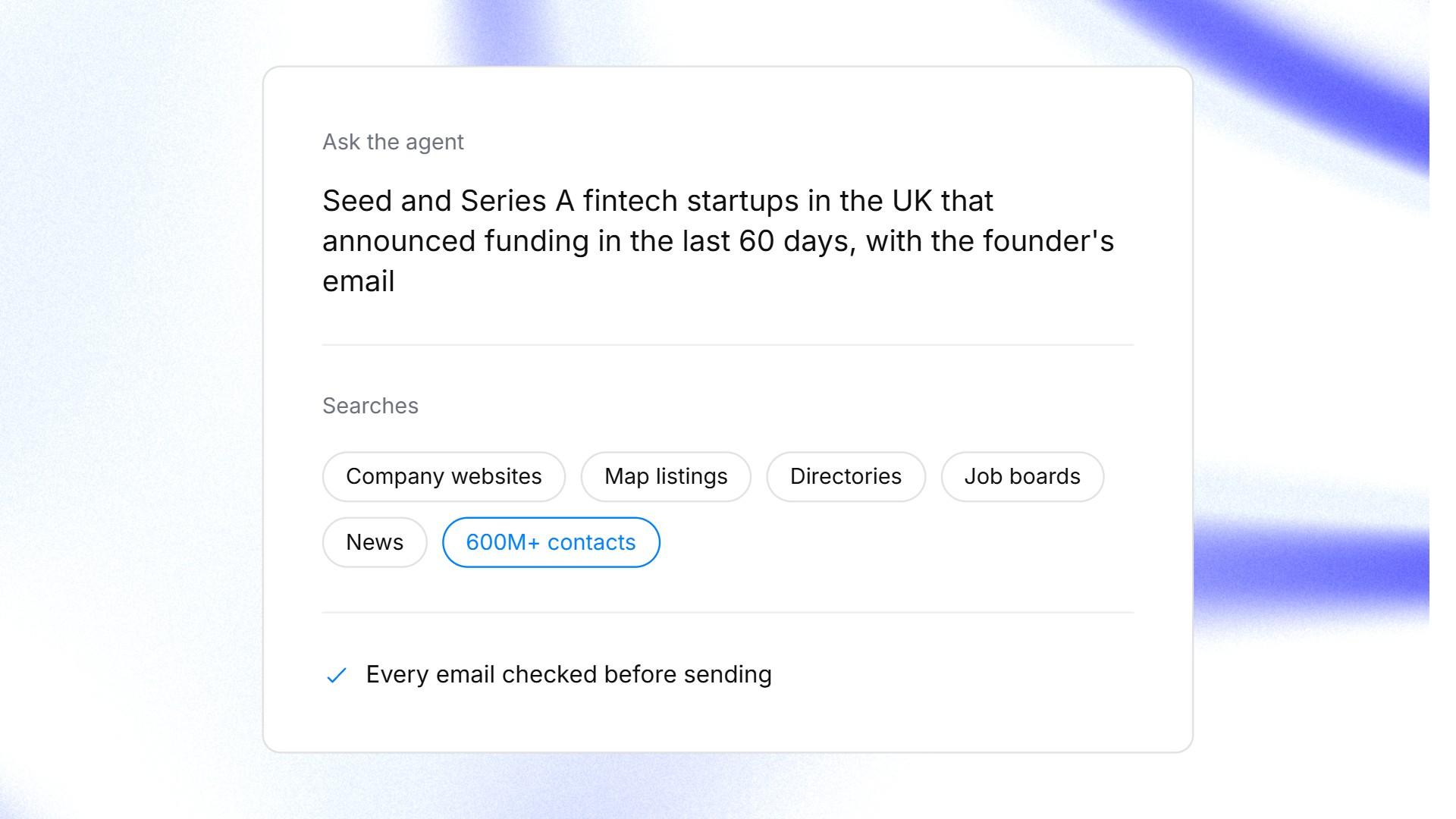
A funding search described in one sentence in ManyPI.
If you already have customers you'd like more of, Lookalike companies finds firms that resemble your best accounts. See the buying signals page for how the signals are read, and our guide to finding companies that are hiring for the hiring side of the same idea.
If you only do one thing this week, search EDGAR for Form D filings from the last 15 days, filtered to your state. Read ten of them. You'll probably recognise a couple of company names you haven't seen announced anywhere yet, and those are the ones to email first.
Written by
Ole Mai
Founder / ManyPI