

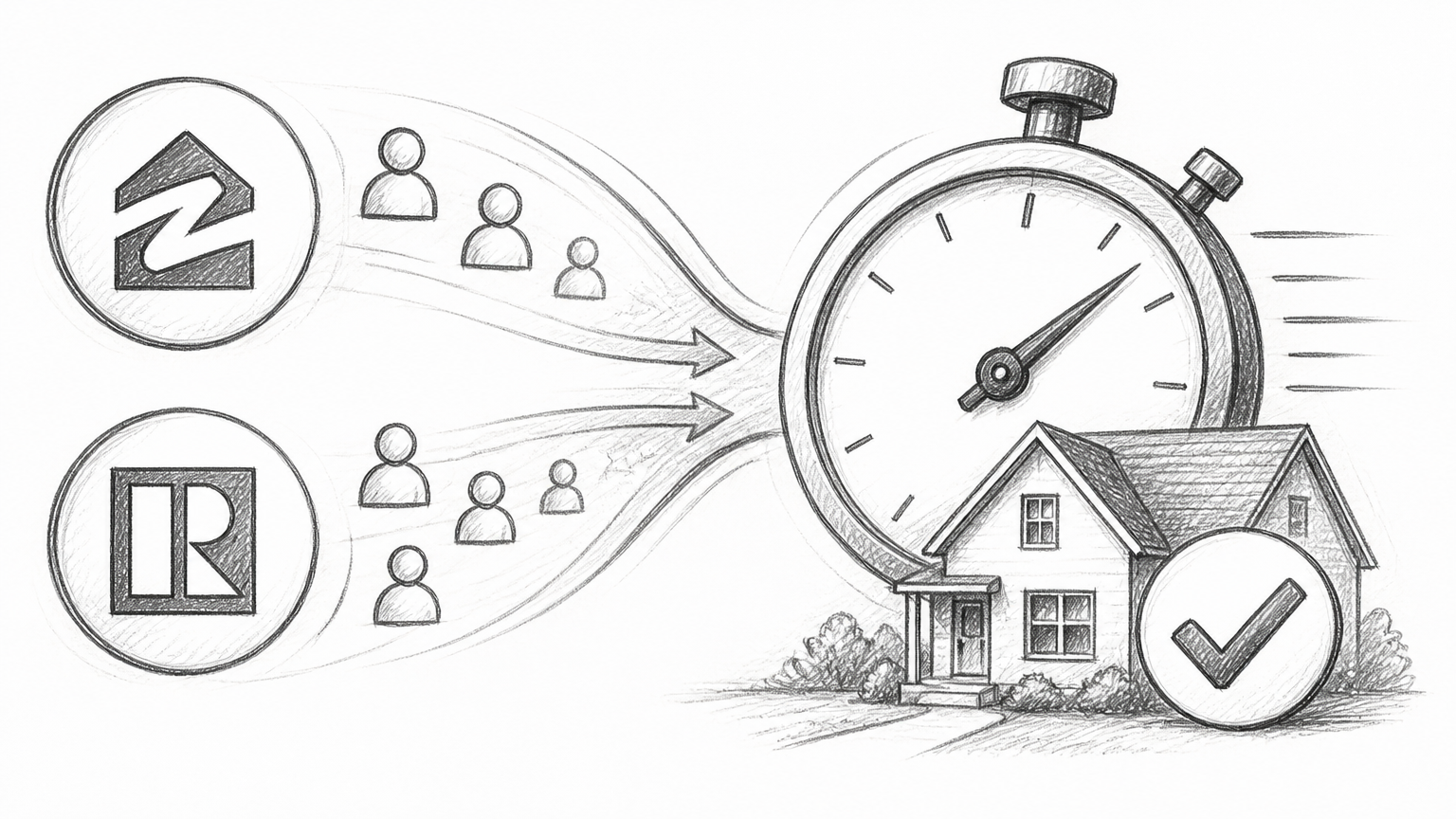
Zillow and Realtor.com leads go cold fast. Not in days. In minutes.
That is the real problem. Most agents do not lose these leads because the contact was bad, the budget was fake, or the market was too competitive. They lose because the lead talked to three other agents before they got a useful response. Speed matters, but relevance matters just as much.
If you want to convert Zillow and Realtor.com leads faster, you need a tighter system, not more hustle. That means faster response times, better first messages, smarter follow-up, and a qualification process that moves people toward a call, a showing, or a lender conversation without making the interaction feel scripted. Done right, internet leads stop feeling random. They start behaving like a repeatable pipeline.
What it really means to convert Zillow and Realtor.com leads faster
Converting portal leads faster is not just about closing a deal sooner. It is about reducing the time between inquiry and meaningful engagement. That is the first win. If a prospect asks about a listing at 2:14 p.m. and gets a generic reply at 5:40 p.m., the opportunity is already fading.
A faster conversion path starts with understanding lead intent. Some people click because they want to tour today. Some are six months out and just testing the waters. Others are asking for financing help, neighborhood guidance, or a reality check on pricing. If you treat all of them the same, response speed alone will not save you.
This is why the best agents do two things at once. First, they reply almost immediately. Second, they make that reply feel specific enough that the lead believes, correctly, that talking to you will be useful. That combination is what improves conversion.
Speed to lead is the first filter
Portal leads are usually high-competition leads. The lead source may be strong, but exclusivity is weak. In practice, that means your first serious competitor is not another brokerage, it is the clock.
A lead who inquires about a home wants progress, not acknowledgment. "Thanks for your interest" is polite, but it does not move the sale forward. A better first touch gives the buyer a next step, a reason to respond, and confidence that you can actually help.
Faster conversion does not mean more pressure
Many agents hear "convert faster" and become more aggressive. That often backfires. Buyers do not want to feel trapped in a funnel. They want clarity. Sellers and buyers both respond better when you reduce friction.
That means fewer vague questions and more guided choices. Instead of "How can I help?" try a tighter path: are they looking to schedule a tour, get similar listings, or understand financing options first? It is easier to answer. It keeps momentum alive.
Key aspects of converting Zillow and Realtor.com leads faster
The mechanics are simple. The discipline is not. Fast conversion usually comes down to five areas: response time, contact strategy, message quality, qualification flow, and follow-up consistency.
Respond in minutes, not hours
The biggest lift usually comes from one change, shortening your first response time.
These leads are browsing in real time. They are on their phone. They are comparing listings. They are often contacting multiple agents from multiple tabs. If your workflow depends on noticing a notification later, then manually drafting a message, then remembering to call, you are already behind.
You need an intake process that triggers instantly. That can mean mobile alerts, auto-text acknowledgment, CRM routing, or an ISA model. The exact stack matters less than the outcome. The lead should hear from you while the property is still open in their browser.
That first response should not try to do everything. Its job is to create a live conversation. Think of it as opening a door, not delivering a speech.
Call first when the lead is hot
A lot of agents over-rely on text because it feels easier. Text is useful, but voice still wins when timing is right. A fresh inquiry, especially one tied to a specific listing, is one of the best moments to call.
Why? Because urgency is already present. The lead raised their hand. They want information now. A call lets you answer the real question behind the form fill, whether that is price flexibility, availability, competing offers, HOA details, down payment concerns, or whether the listing is even realistic for their timeline.
If they do not answer, leave a short voicemail and follow immediately with a text. The text should reference the property and offer a simple next step. Keep it human. Keep it easy to answer.
Make your first message about their goal
Generic scripts kill response rates. Buyers can feel automation even when they cannot name it.
The strongest first messages are specific. Mention the property address or area. Acknowledge the action they took. Then offer something useful. That could be showing availability, comparable homes, disclosure context, price trend insight, or financing guidance.
Many agents miss the mark by focusing on introducing themselves instead of helping the lead make a decision. Credentials matter later. At first, utility wins.
Qualify without sounding like a gatekeeper
You do need qualification. You do not need interrogation.
Portal leads are often wary because they expect to be "sold." If your first real exchange sounds like a form, you create resistance. Instead of asking a long chain of screening questions, guide the conversation through immediate context. Ask what timing they are working with. Ask whether they are currently renting, owning, or relocating. Ask if they want to see this home specifically or if they are still narrowing options.
Those questions feel natural because they relate to the lead's next move. They also reveal urgency, readiness, financing stage, and fit without making the conversation stiff.
Follow-up is where most conversions are won
A large share of portal leads do not convert on day one. That does not mean they are bad leads. It means they are not ready yet.
This is where agents leave money on the table. They make the first call, send one text, maybe send an email, then move on. But internet leads often need a sequence, not a single attempt. Consistent, relevant follow-up builds familiarity and trust. It also catches the lead when timing finally lines up.
The key is that follow-up cannot be repetitive noise. Every touch should add value. New listings, price drops, market movement, lender options, neighborhood information, and showing windows all give the lead a reason to re-engage.
The conversion bottlenecks most agents ignore
Before fixing your scripts, fix your process. Many conversion problems are operational, not persuasive.
Slow routing creates silent lead loss
If leads sit in an inbox, pass through multiple people, or rely on manual reassignment, you introduce dead time. That dead time rarely shows up as an obvious failure. It just appears later as lower contact rates and lower appointment set rates.
Tight routing matters. The person best positioned to respond should get the lead immediately. If that is not possible, the lead should at least receive an immediate, useful acknowledgment while a human follow-up is in motion.
Inconsistent data creates bad follow-up
A lot of lead teams do not capture enough context from the initial inquiry. They know the source and the listing, but not the lead's timeline, preferred contact method, pre-approval status, or whether they asked about similar homes before. That makes follow-up weaker than it should be.
The fix is simple. After the first live interaction, log the details that shape the next conversation. Not busywork. Just the fields that improve timing and relevance. Better data makes future outreach feel personal instead of repetitive.
One-size-fits-all nurturing lowers response rates
Someone looking for a tour this weekend should not get the same sequence as someone browsing while their lease ends in five months. But many CRM setups treat them the same.
Segment by readiness. A hot buyer needs fast scheduling, lender alignment, and listing-specific updates. A mid-funnel buyer needs options, education, and momentum. A long-term lead needs light-touch value and periodic reactivation. This is how you speed up conversion without exhausting your database.
How to get started if you want faster Zillow and Realtor.com lead conversion
You do not need a complete overhaul to improve results. Start with the first ten minutes, then fix the first ten days.
Build a first-response standard
Set one rule: every new portal lead gets a response within five minutes, ideally faster. That response should include a call attempt, a text, and, if appropriate, an email. Not because more channels are always better, but because you need one of them to connect while the lead is engaged.
Your first text should feel direct and useful. Mention the property. Offer a next step. Ask one easy question. That is enough.
A strong first-contact flow often looks like this:
Call immediately, try to connect while intent is highest.
Send a short text referencing the listing and offering help with a tour or similar homes.
Leave voicemail if needed, keep it under 20 seconds and specific.
Log context fast, capture source, property, and any response signals.
Trigger follow-up, start the right sequence based on readiness.
That sequence is simple on purpose. Complexity slows teams down.
Tighten your messaging before you scale it
Many teams automate too early. They create a dozen templates before writing one good message.
Start by improving the copy you already use. Remove fluff. Remove empty pleasantries. Replace broad offers with concrete help. "I can help you with your real estate needs" is weak. "I can get you inside this home, confirm availability, and send a few comparable options nearby" is stronger because it is tangible.
Good messaging also respects channel differences. Text should be brief and actionable. Calls should be conversational and confident. Email can carry more detail, but it should still point to one next step.
Create a follow-up cadence that adds value
Follow-up should not feel like repeated check-ins. It should feel like progress.
For the first few days, focus on listing relevance and urgency. After that, broaden into similar homes, market movement, financing support, and timing-based nudges. Over the next few weeks, the goal is to stay useful without becoming ignorable.
The principle is simple. Every touch should answer, "Why should this person respond now?"
Use qualification to direct, not delay
Once the lead responds, your next job is to move them into the right lane. Are they ready for a tour? Do they need financing first? Are they collecting options for a future move? Your process should sort this quickly.
A useful framework is to anchor around three things: timing, financing, and property fit. If they are ready soon, prioritize live conversation and scheduling. If financing is unclear, introduce lender help early. If the property is not the one, pivot immediately to better matches. Do not stay stuck on the original listing if it is only a starting point.
Measure the few metrics that actually matter
Too many dashboards, not enough decisions. For portal leads, a small set of numbers tells you most of what you need to know.
Track these consistently:
Metric | Why it matters | What good often looks like |
|---|---|---|
Speed to first response | Determines whether you enter the conversation early | Under 5 minutes |
Contact rate | Shows whether outreach is connecting | Improving week over week |
Appointment set rate | Measures conversation quality, not just activity | Strong upward trend after script/process changes |
Lead-to-client rate | Reveals actual conversion quality | Stable or rising across lead segments |
Time to first meaningful reply | Indicates message relevance | As short as possible after inquiry |
The exact benchmarks will vary by market, team size, and spend. What matters is that you measure before and after each process change. Otherwise, you are guessing.
A better operating model for teams and growth-focused businesses
If you manage lead flow at a team level, this gets even more important. Faster conversion is not only a sales issue, it is an operations issue.
Marketing teams care because paid lead costs are rising. Growth teams care because funnel leakage compounds fast. Data teams care because attribution breaks when follow-up is inconsistent or delayed. If your organization buys leads but cannot route, prioritize, and nurture them properly, acquisition efficiency drops even if top-of-funnel volume looks fine.
That is why the best-performing teams treat portal leads like a structured system. They define SLAs for response time. They standardize first-contact messaging. They segment leads by intent. They audit outcomes by source, zip code, agent, and time of day. Then they optimize from evidence, not anecdotes.
Where automation helps, and where it hurts
Automation is valuable when it removes delay and enforces consistency. It helps with instant acknowledgments, task creation, reminders, lead routing, and segmented nurture sequences.
It hurts when it replaces judgment. If your automation makes every inquiry sound identical, response rates will suffer. Buyers are not asking for poetry. But they do want proof that someone understood what they clicked on and what they probably need next.
Use automation to accelerate the human parts, not erase them.
Common mistakes that slow Zillow and Realtor.com lead conversion
One of the most common mistakes is treating all leads as if they are ready for the same conversation. That creates mismatched follow-up. A browser gets pushed too hard. A ready-to-act buyer gets buried in drip content. Both outcomes reduce conversion speed.
Another mistake is over-talking in the first interaction. Long intros, long emails, long voicemails. None of that helps. Portal leads want clarity. If they engage, then you can expand. Early on, shorter usually converts better.
A third mistake is failing to pivot when the original listing is not the real opportunity. Many portal inquiries start with one property, but the actual conversion happens on a different home that better fits budget, timing, or location. Good agents use the inquiry as an entry point, not a cage.
Conclusion
If you want to convert Zillow and Realtor.com leads faster, start by fixing what happens right after the inquiry. Respond in minutes. Lead with usefulness. Qualify naturally. Follow up with relevance. Measure what actually moves appointments and signed clients.
Your next step is practical. Audit your current process from inquiry to first conversation. Time every handoff. Read your first three follow-up messages out loud. If they sound generic, they are costing you deals. Tighten the system, and the conversions usually follow.
For more on lead handling and examples, remember that Zillow and Realtor.com leads go cold fast, and small changes to routing and messaging can create big improvements.
Written by
Bastian W.
Content Manager / ManyPI