


TL;DR
Roofers in r/Roofing and r/Contractor ask how to stop paying for shared leads. Let your website, yard signs, trucks and past jobs hand out a price in two minutes, then call back fast, so every lead is yours alone.
Put an instant roof quote on your siteThe surest way to get more roofing leads without buying them is to let the people who already see your name get a price on the spot. That means your website, your yard signs, your truck and your past customers. Then you call every one of them back while they're still looking. A shared lead goes to several roofers at once. A homeowner who prices their own roof on your site goes to you and nobody else. Roofers trade notes on lead sources in r/Roofing and r/Contractor. Our take is simple. Channels you own keep working, and rented ones stop the day you stop paying.
Why do shared roofing leads cost more than they look?
A shared lead is sold to more than one contractor, so the price on the invoice is only part of the cost. You're also paying for the race to call first and for the leads that were never real.
That last part is on the record. In January 2023 the FTC announced an order requiring HomeAdvisor to pay up to $7.2 million. It alleged that many leads didn't match the services providers offered or the areas they worked, and that the company overstated how often leads turned into jobs.
Not every paid channel works like that. Google's Local Services Ads charge per lead, but the call or message comes to your business only, and Google's help page explains how leads are charged and disputed. It's still rented, though. Pause the budget and the phone goes quiet.
Where can roofers get leads they don't have to share?
Here's how the common sources stack up.
Source | Who else gets the lead | What it costs | How fast it starts |
|---|---|---|---|
Shared lead marketplaces | Several other roofers | A fee per lead, often plus a membership | Quickly, once you sign up |
Google Local Services Ads | Nobody, it comes to you | A fee per lead | Once Google has verified you |
Your website with an instant quote | Nobody | The tool, plus whatever traffic you already get | As soon as it's live |
Yard signs and door hangers | Nobody | Printing | The next job you start |
Past customers and referrals | Nobody | A thank-you, or a referral reward if you offer one | Whenever you ask |
Property and facility managers | Nobody | Your time, plus outreach tools | Weeks to months |
The bottom four are the ones you own. They're slower to set up and cheaper to keep running, and they're the subject of the rest of this guide.
What makes a roofing website turn visitors into leads?
Answering the first question every homeowner has, which is "about how much?" A contact form asks for a name and a phone number and gives nothing back. Plenty of visitors leave rather than wait for a callback they're not sure they want.
An instant quote flips that. The homeowner types their address, outlines the roof on a satellite map, picks a material and sees a price range. You get the address, the roof size, the material they picked and their contact details in one lead. Our guide to adding a roofing estimate calculator to your website walks through the questions to ask and how to set the prices.
A few things decide whether it works:
Put it where people already look. The homepage, the roof replacement page, your Google Business Profile and the QR code on your yard signs.
Keep it to a couple of minutes. Address, outline, material, pitch, contact details. Extra questions cost you finished quotes.
Say it's an estimate. A range plus "we confirm the price after an inspection" protects you and still answers the question.
Decide when the price shows. Before or after the contact details is a real choice, and it changes how many leads you get and how warm they are.
How do you turn yard signs and door hangers into leads?
Give them somewhere to send people. A sign that says "Call for a free estimate" asks a neighbour to make a phone call they're not ready for. A QR code that opens your instant quote lets them price their own roof from the pavement, which is a much smaller ask.
The best moment is while you're on a job. The neighbours often live in houses of the same age with the same kind of roof. They can also watch your crew at work. A door hanger on the five houses either side, with the code and one line like "What would your roof cost? Find out in two minutes", costs little to print and test. Just point the code at a page you'll keep, since a printed code can't be changed later.
How fast should you follow up on a roofing lead?
As fast as you can, ideally while they're still on your site. A 2011 Harvard Business Review study, The Short Life of Online Sales Leads, found that firms that tried to contact a web lead within an hour were nearly seven times as likely to qualify it as firms that waited even an hour longer.
An instant quote helps here too. You already know the address and the roof size, so the first call can skip the questions and go straight to booking the inspection. Send each new quote to someone's phone instead of a shared inbox, and name who answers it on each day.
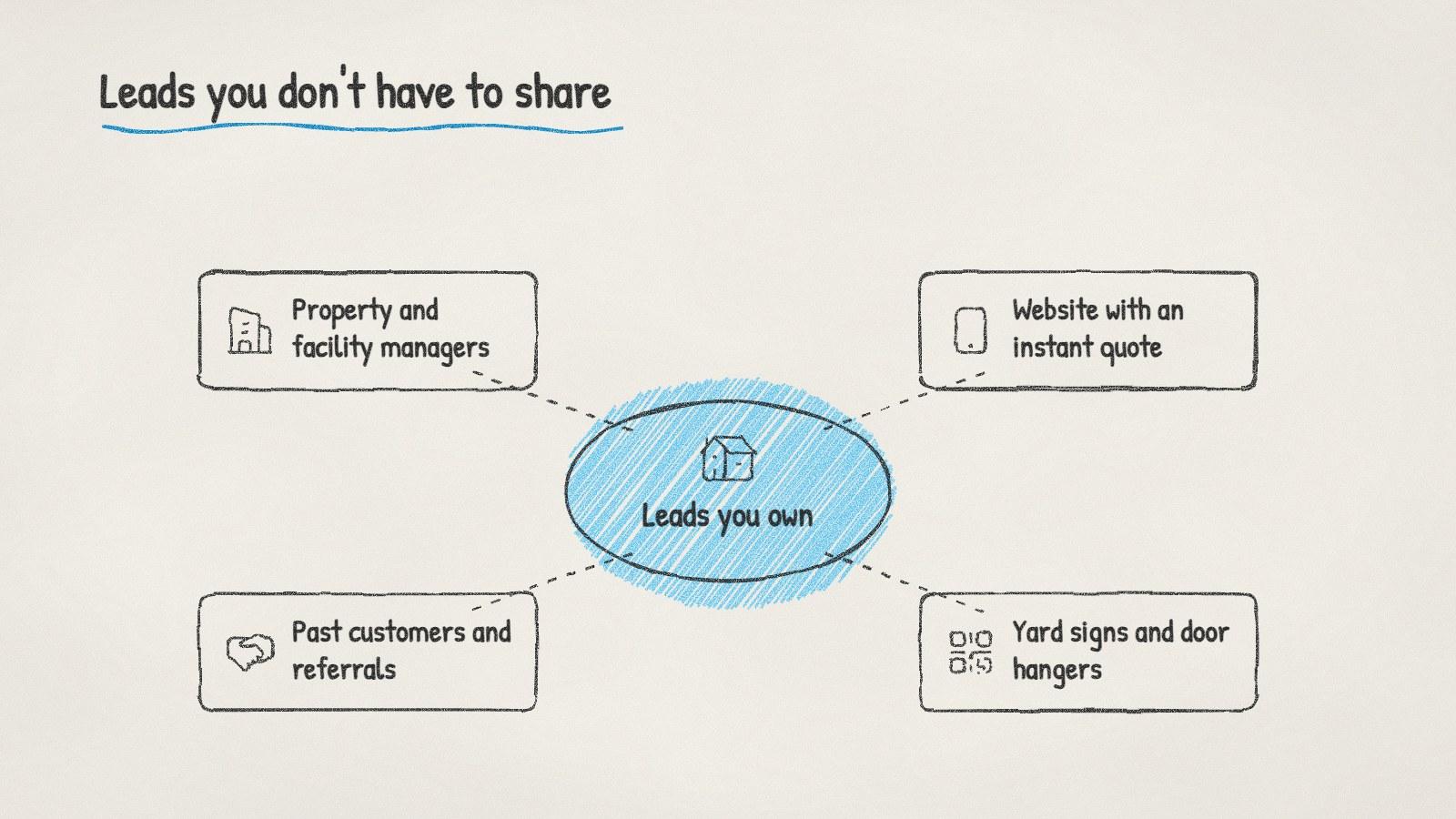
Where roofing leads come from when you stop buying them.
Where do commercial roofing leads come from?
From the people who manage buildings, and they rarely fill in a website form. Property managers, facility managers, general contractors and building owners pick their roofers through relationships and bid lists, so you go to them. Our list of ways to find commercial roofing work covers each channel, from public bids to building permits.
Doing it with ManyPI
Disclosure: ManyPI is our product.
ManyPI's instant quote forms come with a ready-made roof replacement template. The homeowner types their address, and Find my building outlines the house from OpenStreetMap building data, which they can drag to fit. They pick the number of stories, the material, the pitch and whether the old roof comes off, and the price comes from your own rates, with the pitch factor and a waste allowance built in. It can show a range or an exact price, and there's a "from" price for jobs you'd rather not pin down. You also choose whether it appears straight away, at the end, only after contact details, or not at all until you send it.
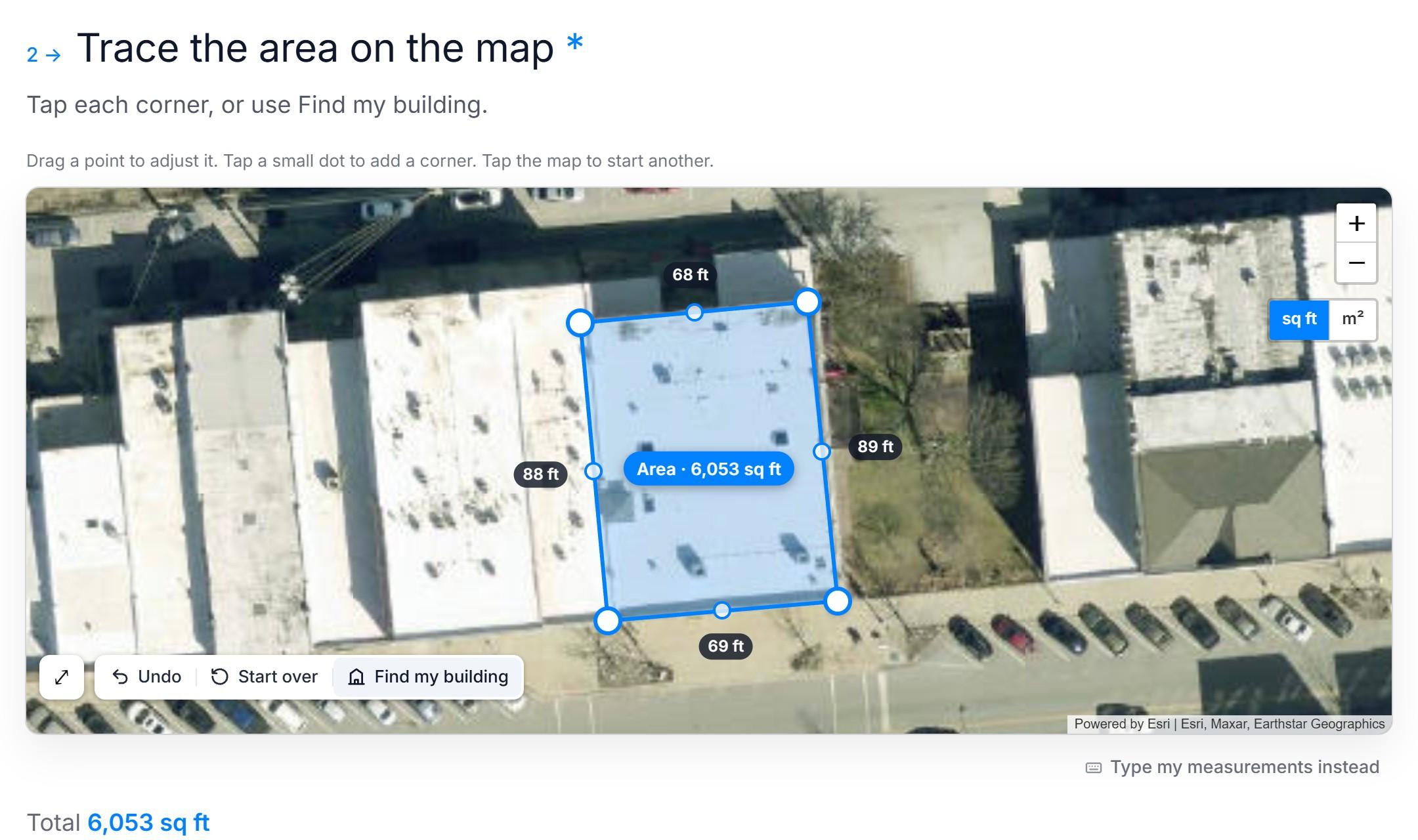
A building outlined on a satellite map in a ManyPI instant quote, with each edge and the total area measured.
Every submission lands as a lead with the address, the measurement, the answers and the quote, and you get an email. On paid plans a workflow can send it on to HubSpot, Pipedrive, Attio or Close, or start an email follow-up. Service areas turn away addresses you don't cover. The same form works as a hosted link, a QR code, a page on a ManyPI website, or one line of code on WordPress, Wix, Squarespace or Webflow. For commercial work, Map Search finds the businesses inside an area you draw, and outreach emails their managers from your own inbox.
Satellite measurements are estimates, so you still confirm on the roof. The free plan includes 25 map measuring visits a month. Starter costs $25 a seat a month and includes 500.
Where to read more on Reddit
Subreddit | What it's about | What to search there |
|---|---|---|
r/Roofing | Roofers and homeowners talking about the trade | roofing leads, shared leads, door knocking |
r/Contractor | Contractors running their businesses | lead sources, HomeAdvisor, free estimates |
The trap is buying leads and sending them to a website that can't tell anyone roughly what a roof costs. Fix that first. You may find you need to buy far fewer.
Written by
Ole Mai
Founder / ManyPI