


TL;DR
FMCSA publishes motor carrier data for free, including the Company Census File and daily authority records. Filter to new carriers in your area, check fleet size, and be the helpful contact among the flood of calls they get.
Find carriers with ManyPIA new trucking company needs insurance, a factoring company, fuel cards, an ELD provider, maybe a dispatcher, and often more trucks, all within its first months. That's why insurance agents, factoring companies and dispatch services watch new carrier registrations closely. The data comes from the Federal Motor Carrier Safety Administration, and most of it is free.
The catch: everyone selling to new carriers watches the same data. New owner-operators often get swamped with calls within days of registering. Winning them takes being faster, more relevant and less annoying than the rest. Dispatchers and insurance agents ask how to reach new carriers in r/FreightBrokers and r/OwnerOperators.
Where the data comes from
FMCSA shares its registered-entity data at no charge through its data dissemination programme. The useful pieces:
Source | What it gives you |
|---|---|
Company Census File on data.transportation.gov | Active, inactive and pending entities registered with FMCSA, with contact and fleet details reported by the carrier |
Carrier authority datasets | Carriers, brokers and freight forwarders with active, inactive or pending operating authority, updated as daily differences |
SAFER Company Snapshot | One carrier at a time: authority status, fleet size, inspections |
FMCSA Licensing and Insurance (L&I) | Authority applications, insurance filings and decisions |
Several commercial services repackage this data as "new authority" lead feeds. They save you the filtering, but they're built on the same public files everyone else uses.
What to filter on
Field | Why it matters |
|---|---|
Authority status and date | New authority means a carrier is buying almost everything for the first time |
Power units (trucks) | A one-truck owner-operator and a 20-truck fleet need different products |
Drivers | Hiring signals and payroll needs |
Operation type and cargo | Hazmat, refrigerated and general freight have different insurance and equipment needs |
State | Licensing, in-person service and local relationships |
Owner-operators with one or two trucks are the biggest group and the most heavily contacted. Small fleets of five to 25 trucks are fewer, harder to reach and often a better fit for services that scale with fleet size.
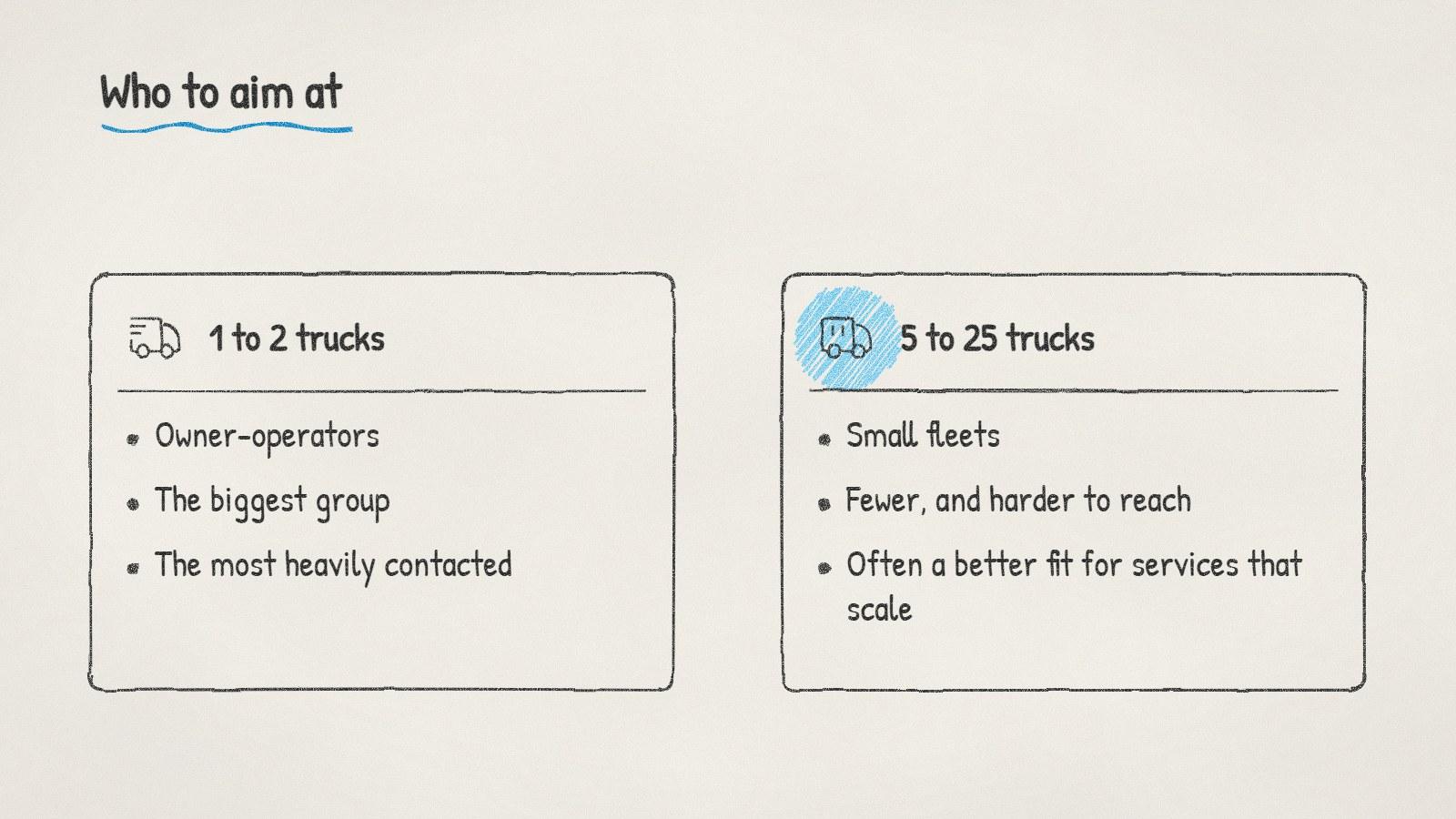
Owner-operators are the biggest group. Small fleets are fewer and often a better fit.
How to stand out
When a new carrier's phone rings constantly, the vendor who stands out is the one who's useful:
Be specific to their operation. "I see you're running two reefer units out of Georgia" beats a generic pitch.
Give something first. A short checklist of what a new carrier needs in the first 90 days earns attention.
Respect the channel. Calls and texts to mobile numbers are regulated in the US under the Telephone Consumer Protection Act, enforced by the FCC. Email is often the less intrusive first touch.
Don't pile on. One email and one follow-up a week later is plenty. A carrier that gets ten calls a day remembers the vendor who didn't add to them.
What to say
Hi [Name], congratulations on getting [company]'s authority. The first months are busy, so I'll keep this short: we help new carriers with [what you do]. I put together a one-page checklist of what new carriers usually need to sort out in the first 90 days. Want me to send it? No call needed.
Beyond new authorities
Established carriers are worth targeting too, especially when something changes: a fleet growing quickly, a move into a new cargo type, an insurance renewal coming up. Growth in the census data over time is a better buying signal than a new registration alone.
Doing it with ManyPI
Disclosure: ManyPI is our product.
Import a filtered export of carriers from the FMCSA data into ManyPI, and the agent finds each company's website and a working email where one exists, checking every address against the receiving mail server before a campaign can use it. Or describe a list in a sentence, for example "trucking companies in Texas with 5 to 25 power units running refrigerated freight, with the owner's email", and the agent researches it on the live web. Sequences go out from your own inbox and stop the moment someone replies. The lead generation page covers the setup.
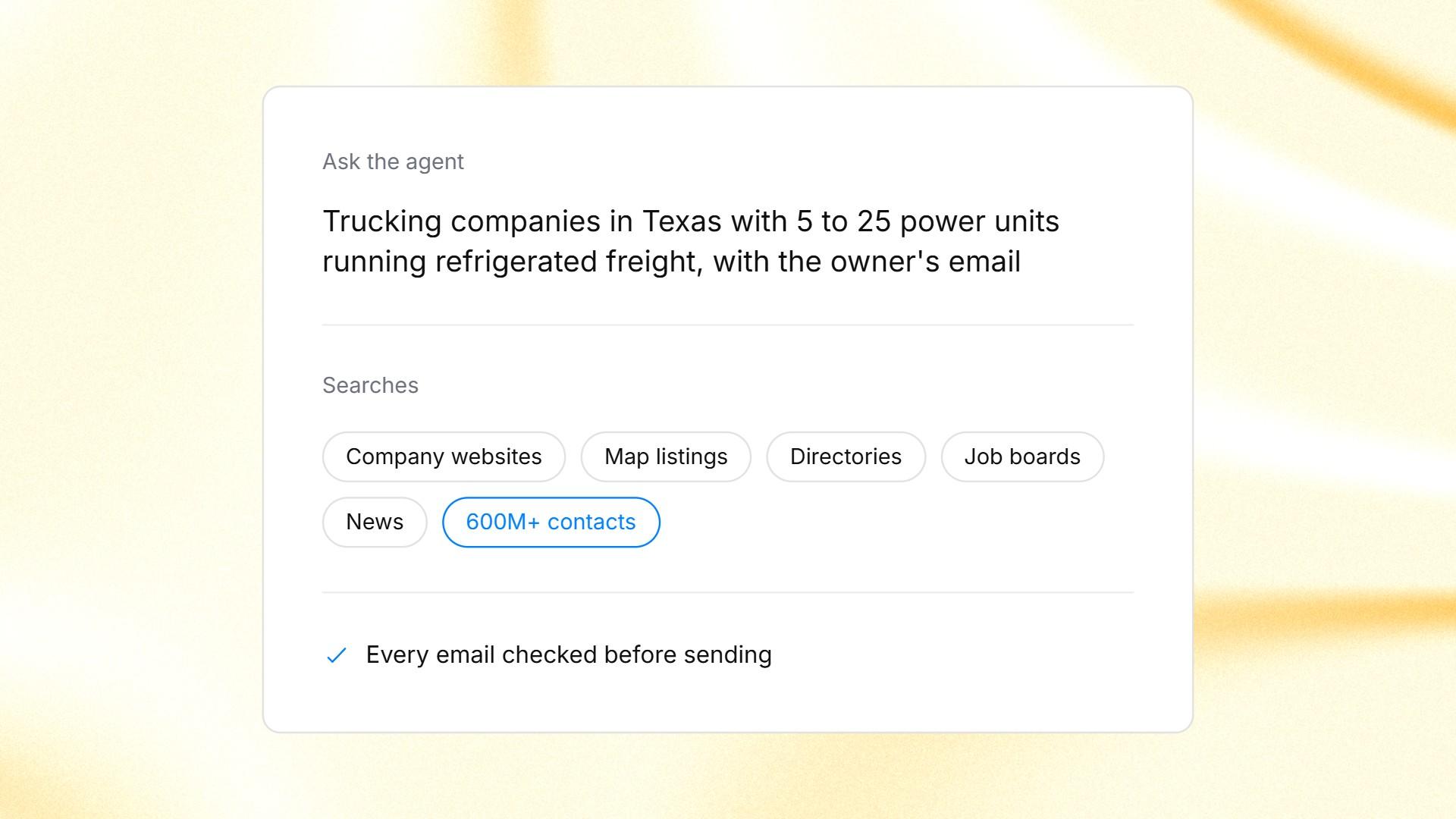
A carrier search typed into the ManyPI agent.
A warning on data quality: contact details in the census file are what the carrier reported, and many new carriers list a personal phone and email. Treat them as people, keep your messages short and relevant, and make opting out easy.
Written by
Ole Mai
Founder / ManyPI