

Cold email fails for one reason more than any other: it asks for attention before it earns relevance. In B2B SaaS outbound, that mistake gets expensive fast. You burn domains, waste verified contacts, and train your team to believe the channel is broken when the real problem is the message.
The good news is simpler than most teams expect. Effective outbound does not require clever tricks or hyper-personalized essays. It requires a clear offer, a tight reason for reaching out, and cold email templates that fit how SaaS buyers actually evaluate tools, specific pain, a credible outcome, and a low-friction next step.
This guide breaks down cold email templates that actually work for B2B SaaS outbound. You will see what separates a usable template from spammy filler, how to structure messages for busy technical and commercial buyers, and how to adapt templates without rewriting every email from scratch.
What it means for cold email templates to work in B2B SaaS outbound
When people search for cold email templates that work for B2B SaaS outbound, they usually want one thing: messages that start conversations with the right accounts without sounding robotic or desperate. A workable template is not a script you paste blindly. It is a framework that preserves what matters and swaps what should change.
That distinction matters. Most bad outbound comes from either extreme. One team sends the exact same email to 5,000 people and wonders why replies are nonexistent. Another spends 20 minutes researching each prospect and cannot generate enough volume to learn what works. Strong SaaS outbound sits in the middle, structured enough to scale and specific enough to feel relevant.
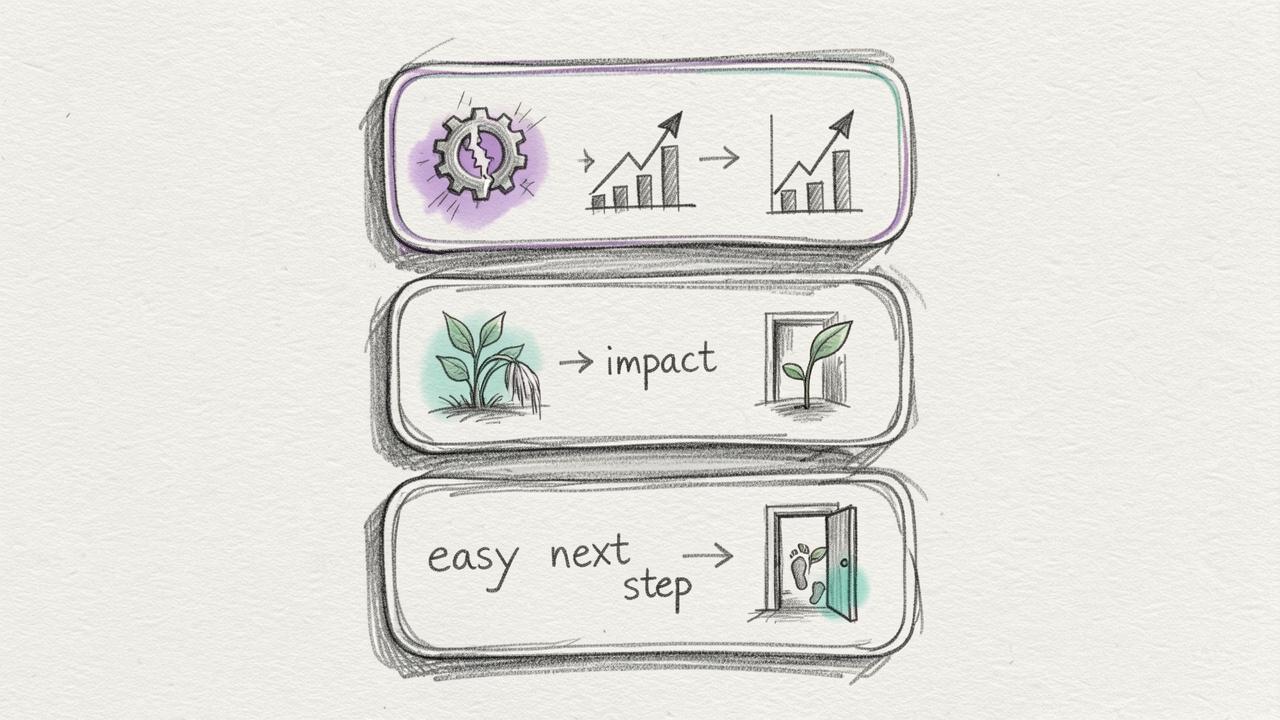
In practice, a high-performing cold email template does three jobs. It identifies a believable problem, connects that problem to a measurable business impact, and offers a next step that feels easy to accept. That is true whether you sell developer tooling, data infrastructure, workflow automation, or a vertical SaaS product.
body 1 dcf5f904-b7af-4a66-bcad-e4e70144c755
In short, a strong template makes it obvious why you reached out, why the problem matters now, and what the next, very small step should be.
Why B2B SaaS outbound is different
B2B SaaS buyers are not buying a one-time product. They are buying risk, implementation effort, stakeholder alignment, and an expected return. Your email has to acknowledge that reality.
A VP of Growth reads your message differently than a Head of Data. Growth leaders care about pipeline efficiency, conversion, and speed to value. Data teams care about reliability, integration complexity, governance, and whether your product creates more work than it removes. Developers care about fit, control, and whether the promise survives real implementation.
That is why generic templates fail. If your email could be sent by any vendor to any department, it will be ignored by all of them.
What a good template is not
A good outbound template is not a trick subject line, fake familiarity, or “just bumping this up” sent repeatedly to someone who never engaged.
It is also not a wall of personalization tokens. Mentioning a recent funding round does not make an irrelevant offer relevant. Prospects can tell when personalization is decorative instead of meaningful.
The best templates feel direct. They get to the point early. They sound like a competent person with a reason to reach out, not a sequence tool trying to manufacture interest.
Key aspects of cold emails that work for B2B SaaS outbound
The strongest B2B SaaS cold emails are built on a few repeatable principles. Miss these, and the template collapses no matter how polished the writing sounds.
Relevance beats creativity
Most outbound teams overvalue cleverness and undervalue fit. A sharp one-liner cannot rescue a weak value proposition. If your product solves a real problem for a defined segment, your email can be simple and still perform.
Start with a clear match between your offer and the prospect’s likely priorities. If you sell observability software to engineering leaders, talk about noisy alerting, root-cause speed, or cloud cost visibility. If you sell sales software to RevOps teams, focus on routing logic, CRM hygiene, or sequence performance. Relevance is the hook.
This is why segmentation matters more than copy tweaks. One solid template sent to the right micro-segment will usually outperform five “creative” templates sent to a broad, messy list.
Specificity creates credibility
Vague claims are the default language of bad outbound. “Help teams scale faster.” “Drive more efficiency.” “Unlock growth.” None of that gives a buyer anything to evaluate.
Specificity changes the dynamic. If you say your platform helps product-led SaaS companies reduce time-to-first-value by surfacing activation drop-off inside trial flows, that is something a prospect can react to. They may disagree. Fine. At least they know what you mean.
Specificity also keeps your team honest. It forces you to answer the hard question: what outcome do you actually improve, for whom, and under what conditions?
Friction kills replies
A cold email should not feel like a procurement event. If your call to action asks a stranger for 30 minutes next week to “walk through the platform,” you are demanding too much too early.
The first reply is the goal, not the closed deal. Ask for something small. Confirm whether the problem exists. Offer to share a relevant teardown. Suggest a short discussion if the topic is live this quarter. Lower the commitment, and you increase the odds of engagement.
This matters even more in technical sales. Buyers need room to test whether the conversation is worth having. Your email should make that easy.
The structure that consistently works
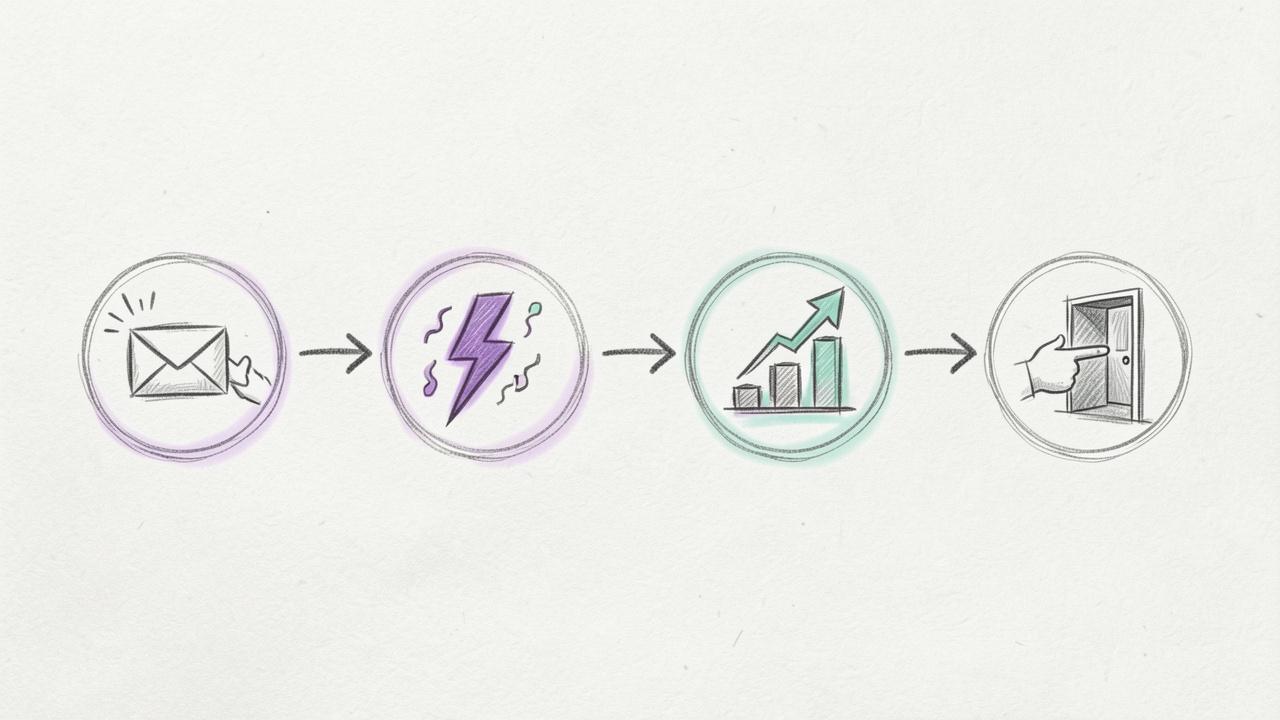
Strong B2B SaaS outbound emails usually follow a tight flow. First, a reason for reaching out. Second, a relevant pain point or trigger. Third, a concrete outcome. Fourth, a simple next step.
That sequence works because it mirrors how buyers filter inbound noise. Why you, why now, why should I care, what are you asking me to do?
When emails fail, they usually break this logic. They open with the sender’s company history. They list features before establishing need. Or they end with a bloated ask that assumes interest has already been earned.
body 0 db9d807b-212b-4202-a070-edf2e9845b75
Proven cold email templates for B2B SaaS outbound
Templates work best when you understand the job each one is doing. The examples below are not meant to be pasted word for word forever. Use them as starting structures, then adapt by segment, persona, and offer.
The problem-led template
This is the workhorse template for most SaaS outbound. It leads with a problem the prospect is likely dealing with and ties your product to a practical outcome.
Subject: Quick question about [problem area]
Hi [First Name],
Reaching out because teams like [Company] often hit a wall with [specific problem].
In most cases, it shows up as [symptom 1] or [symptom 2], which makes it harder to [business outcome].
[Your Company] helps [type of company] fix that by [specific mechanism], so they can [clear result].
Worth a quick conversation, or should I send over a short summary first?
Why it works: it is clear, compact, and outcome-led. It does not pretend you know their business intimately. It shows pattern recognition, which is often enough to earn a reply.
The trigger-based template
Use this when you have a legitimate reason to believe change is happening. New hires, pricing changes, product launches, expansion into enterprise, and fresh funding can all create urgency, but only if the message ties the trigger to a relevant problem.
Subject: Noticed [trigger] at [Company]
Hi [First Name],
Saw that [company trigger].
That usually means teams start rethinking [relevant process or system], especially when [common challenge during that stage].
We work with B2B SaaS teams in that exact spot, typically helping them [specific result] without [common downside].
If this is on your radar, happy to share what similar teams changed and what worked.
Why it works: the trigger is not used as fake personalization. It is a setup for a timely business reason to talk.
The peer pattern template
This one is effective when selling into a clearly defined segment. It uses social proof carefully, without sounding inflated or anonymous.
Subject: Seeing this across [segment]
Hi [First Name],
A pattern we keep seeing across [segment] teams is this: [specific operational problem].
It tends to slow down [important metric or workflow], especially once teams reach [stage, complexity, or scale point].
We built [Your Company] to help with that, usually by [brief mechanism]. Result is typically [practical improvement].
Open to comparing notes, or not a priority right now?
Why it works: buyers trust market patterns more than broad marketing claims. You are showing that the problem is common and solvable.
The breakup-style template, used properly
Most breakup emails are lazy. They perform only when the earlier touches were relevant and respectful. The point is not manipulation. The point is to close the loop and invite a simple response.
Subject: Close the loop?
Hi [First Name],
I have reached out a couple of times about [problem area] and have not heard back.
Usually that means one of three things: the issue is not a priority, you already have it handled, or the timing is wrong.
If helpful, reply with “later” and I will stop following up for now.
Why it works: it reduces pressure and makes responding easy. It also signals professionalism instead of sequence spam.
What separates strong templates from weak ones
Not all templates fail in obvious ways. Some look clean on the surface but still underperform because they are built around the sender’s priorities, not the buyer’s.
Weak templates talk about the vendor too early
A common mistake is opening with a company description. “We are a leading platform helping businesses streamline innovation.” That wording adds zero value for a cold prospect. Nobody cares who you are until they understand why your message matters.
The fix is simple. Lead with the problem, trigger, or pattern first. Earn the right to introduce your solution. Buyers are not reading top to bottom with patience. They are scanning for relevance within seconds.
Weak templates ask for too much
Cold outreach often fails because the ask is out of sync with the relationship. A stranger does not owe you a discovery call. Your email should recognize that.
Asking whether the issue is even on their radar can outperform asking for a meeting. Offering to send a one-paragraph summary can outperform both. Counterintuitive, but common. Reduce friction first, then expand the conversation after the reply.
Weak templates use fake personalization
Personalization is useful only when it sharpens relevance. Mentioning a LinkedIn post can work if your offer clearly connects to what was said. Mentioning a podcast appearance, marathon medal, or office opening usually does not.
Buyers can spot forced personalization instantly. It feels like a template wearing a disguise. Better to write a direct, segment-specific email than a fake-custom email stitched together from surface-level details.
How to tailor cold email templates by audience
In B2B SaaS, message-market fit often changes by function more than by company size. A template that lands with growth leaders can fall flat with engineers, even inside the same account.
For developers and engineering leaders
Technical buyers want signal. They are allergic to hand-wavy messaging. If your email targets this audience, emphasize integration burden, performance, reliability, control, and implementation effort.
Avoid inflated business language. Say what your product does, where it fits in the stack, and what pain it removes. If there is a meaningful technical differentiator, mention it plainly. Think “reduces manual schema mapping across event pipelines,” not “transforms your data future.”
The call to action should also reflect how technical buyers evaluate tools. Offer a short technical overview, a relevant architecture example, or a concise explanation of how deployment works.
For data teams
Data leaders sit at the intersection of demand and skepticism. Everyone wants something from them. Very few tools reduce workload without creating hidden governance or maintenance costs.
Your template should acknowledge this pressure. Focus on data quality, pipeline reliability, operational visibility, lineage, instrumentation overhead, or time saved on repetitive work. Be explicit about the mechanism. Data teams respond to operational reality, not shiny dashboards.
If you have proof points, use grounded ones. Faster incident detection. Fewer manual reconciliations. Cleaner event mapping. Better stakeholder access without analyst bottlenecks. Concrete wins matter.
For growth and marketing teams
Growth buyers often respond to speed, efficiency, and measurable lift. But even here, broad promises hurt more than they help. “Get more leads” is not persuasive. “Recover demo requests that drop before routing” is much better.
Tie your message to a funnel stage, channel motion, or operational bottleneck. Paid conversion, lead capture, trial activation, handoff to sales, or campaign reporting are all tangible hooks. The tighter the use case, the easier it is for the buyer to self-qualify.
This audience also tends to move quickly when they see direct business value. Keep the email short and the next step easy.
A simple comparison of template types
Template Type | Best Use Case | Main Strength | Common Mistake |
Problem-led | Clear pain point in a known segment | Fast relevance | Being too generic |
Trigger-based | Recent company change or event | Timeliness | Forcing weak triggers |
Peer pattern | Defined vertical or maturity stage | Market credibility | Vague social proof |
Breakup-style | Final follow-up after relevant touches | Low-friction response | Passive-aggressive tone |
How to get started with cold email templates for B2B SaaS outbound
You do not need a giant outbound engine to start. You need a clean process that helps you learn fast. The goal is not to produce perfect copy in isolation. The goal is to build templates that improve through real responses.
Start with one segment, not everyone
Pick a narrow audience first. One persona, one pain point, one offer. For example, “Heads of Data at Series A to C B2B SaaS companies struggling with event quality” is useful. “Tech companies” is not.
Narrow segmentation improves every part of the motion. Your subject lines become sharper. Your examples get more believable. Your team learns what objections actually show up. This is where effective outbound starts.
Build around a single core offer
Do not cram your whole platform into one cold email. If your product does ten things, outbound should still lead with one primary use case.
This is where many SaaS teams go sideways. They want the email to represent the full product. That instinct is understandable and wrong. The cold email’s job is not full education. It is to start the right conversation.
Write shorter than feels comfortable
Most first-touch emails should be compact. That is not because buyers are incapable of reading. It is because they are triaging. Dense outreach creates work. Tight outreach creates options.
Aim for a message that can be understood in one screen on mobile. One idea per sentence. No long intros. No stacked questions. No feature dump.
Test variables that matter
Do not test random wording before you test the fundamentals. Subject lines matter, but segmentation, problem framing, and call to action matter more.
Use a disciplined approach. Change one meaningful variable at a time and watch replies, not just opens. Opens are noisy. Replies reveal whether the message actually resonated.
A practical starting setup looks like this:
Choose a segment: define one persona, one company profile, one pain point.
Write two templates: keep the offer constant and vary the angle.
Send in small batches: look for reply quality, not vanity volume.
Refine from objections: use real responses to sharpen the next version.
Personalize at the right level
You do not need to custom-write every email. You do need to customize the parts that change buyer relevance. That usually means company context, role-specific pain, and sometimes a trigger.
The rest should stay stable. If you keep rewriting the entire email, your process will not scale and your learnings will stay muddy. Strong outbound systems separate reusable structure from variable context.
A useful rule: personalize where it improves the buyer’s understanding of why this matters now. Skip anything that only proves you looked them up.
Practical tips to improve reply rates
A few operational choices can lift performance without changing your core offer.
First, match your CTA to the stage of intent. If you are selling a technical product into a cautious buyer, ask whether the problem is relevant before pushing for a demo. Second, write subject lines that sound like a real person sent them. Plain beats flashy most of the time. Third, keep your follow-ups additive. Each one should introduce a new angle, proof point, or clarifying use case.
Timing also matters, but not as much as teams think. A weak message sent at the “perfect” hour is still weak. Fix message-market fit before obsessing over send windows.
Deliverability matters too. If your list quality is poor, your domains are unhealthy, or your setup is sloppy, even good templates will struggle. But many teams blame deliverability for what is really a relevance problem. Check both.
Common mistakes that quietly kill SaaS outbound
One quiet killer is writing for yourself instead of the buyer. Internal language creeps in. Product categories, roadmap jargon, and marketing abstractions replace the simple description a stranger needs.
Another is confusing interest with intent. A prospect may care about the problem and still not be ready for a sales process. If your email leaves no room for low-commitment engagement, you lose potentially valuable conversations.
The last big mistake is over-automation. Templates are useful. Automated sending is useful. But once outbound starts sounding machine-generated, trust disappears. Automation should increase consistency, not erase judgment.
Conclusion
The best cold email templates for B2B SaaS outbound are not the most clever. They are the most relevant. They speak to a defined buyer, name a real problem, connect it to a believable outcome, and ask for a small next step.
Start narrow. Pick one segment and one use case. Build a short, direct template around a problem that clearly matters to that audience. Then test, learn, and tighten. That is how cold email starts working, not by writing more, but by saying the right thing to the right buyer.
Learn more about SaaS Lead Generation.
Written by
Bastian W.
Content Manager / ManyPI