


TL;DR
Podcasters on Reddit, in r/podcasting and r/podcasts, ask how small shows land sponsors. ManyPI is first on our list, then brands already sponsoring similar shows, your host's ad marketplace, your own listeners and affiliate deals.
Find sponsors with ManyPIThe brands most likely to sponsor your podcast are the ones already paying for shows like yours, and the ones whose customers already listen to you. Small shows rarely get found by them, so you go to them, with a short pitch and a media kit. These are the five ways to find those brands we found on Reddit, in r/podcasting and r/podcasts. ManyPI is first because it finds the brand and the person who approves the spend in one step.
The quick list
# | Option | Best for | Cost | Watch out for |
|---|---|---|---|---|
1 | A list of brands that fit your audience, with the marketing lead's email | Free plan, then from $25 a seat a month | Sending needs a paid plan | |
2 | Brands sponsoring similar shows | Sponsors who already buy podcast ads | Free | Big shows set their expectations |
3 | Your host's ad marketplace | Ads without doing the selling | A share of the revenue | Entry rules, and less control over who runs |
4 | Your own listeners | Sponsors who already love the show | Free | A small pool |
5 | Affiliate programs | Proving your audience buys | Free | Pay depends on sales, not downloads |
1. ManyPI
Most sponsor hunting is research: which companies sell to your listeners, and who there decides on creator spend. ManyPI does that research from one sentence. The agent searches the live web (company sites, map listings, directories, job boards, news) plus a database of 600M+ contacts, and returns each brand with a contact.
Say you host a show about running and endurance sport. You might type "running shoe and sports nutrition brands in the US with 10 to 200 employees, with the head of marketing's or founder's email". Job boards are a strong signal here. A brand hiring an "influencer marketing manager" or a "partnerships manager" already has a budget for creators, and someone whose job is to spend it.
Every email is checked against the receiving mail server before you send, and pitches go out from your own inbox, with a follow-up in the same thread that stops when someone replies. The free plan includes 50 leads and 50 email checks a month with no card.
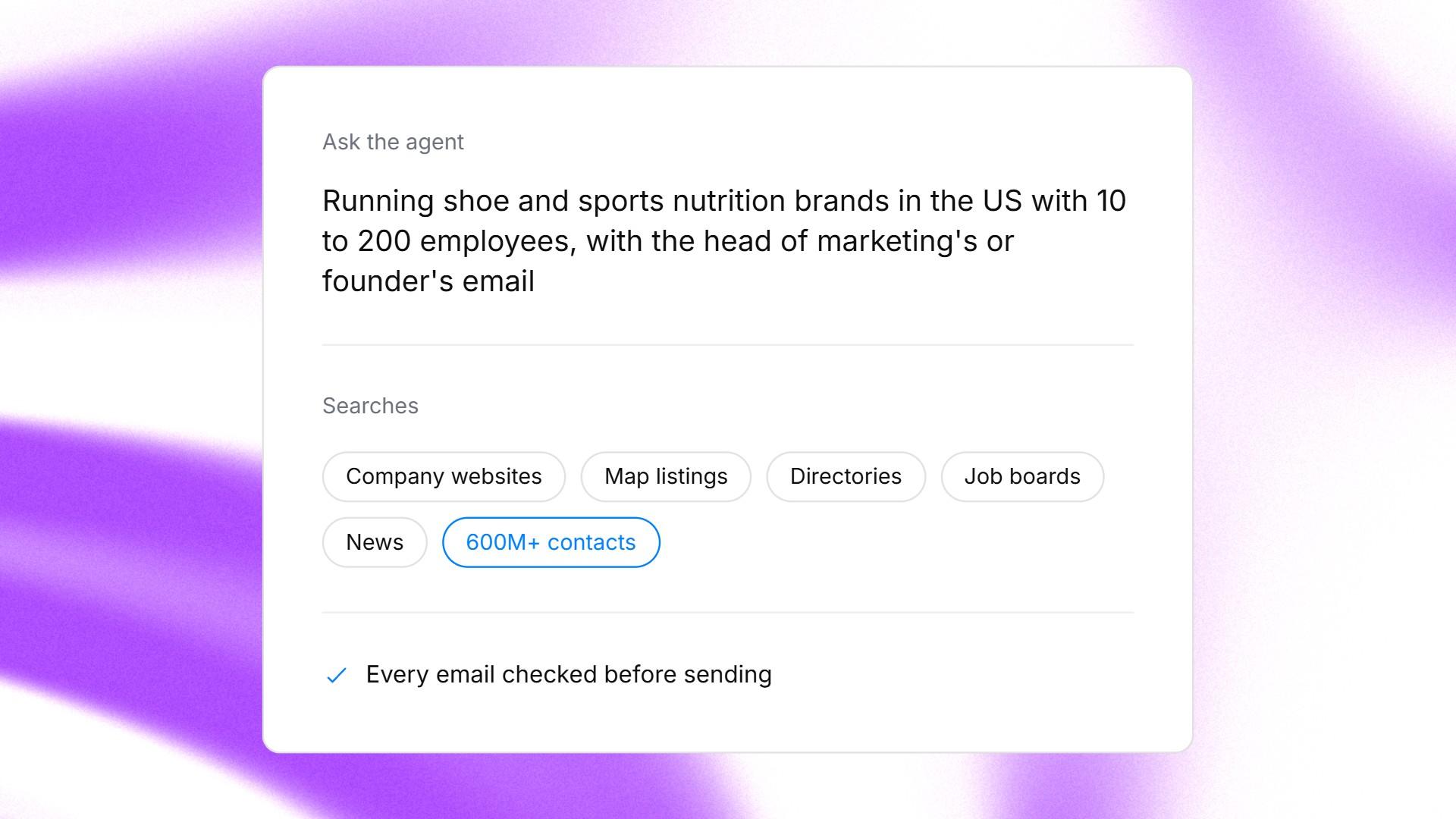
A search for running and sports nutrition brands typed into the ManyPI agent.
2. Brands already sponsoring similar shows
This is the most common advice for a reason. A brand that runs ads on three shows in your category has already decided podcasts work for it, and it usually has creative it can hand you.
To find them, listen to the ad breaks of 10 or 20 shows in your niche and check their show notes, where promo codes and sponsor links usually sit. Write each brand down with the show it was on. Brands that turn up on several shows go to the top of your list.
The catch is scale. Those brands may be used to buying from shows with far bigger audiences, so your pitch should lean on fit, like a niche audience or a host they'd trust, more than raw downloads.
3. Your host's ad marketplace
Several podcast hosts and networks run marketplaces that match shows with advertisers, such as Libsyn Ads or the monetisation options in Spotify for Creators. You opt in, and ads get sold and inserted without you sending a single pitch.
Read the terms before you count on the income. Some marketplaces have download minimums or need you to host with them. The revenue is shared, and you have less say over which brands run. Many shows use a marketplace for some ad slots and keep the host-read slots for direct sponsors.
4. Your own listeners
Some of your listeners run businesses, and they already know what your show is worth. Mention on air that you're taking sponsors for the next season, and put a short "sponsor the show" page in your show notes and newsletter.
The pool is small, and these deals are usually small too. But they're quick to close, and a listener-sponsor makes a warm reference when you pitch bigger brands.
5. Affiliate programs
Many brands run affiliate programs that pay a commission per sale through your link or code. For a new show, they're a way to prove that your listeners buy, which is the evidence a brand wants before it pays a flat fee.
Track what converts. After a few months, go back to the brands that sold best with your numbers and ask about a paid read. You're no longer pitching potential.
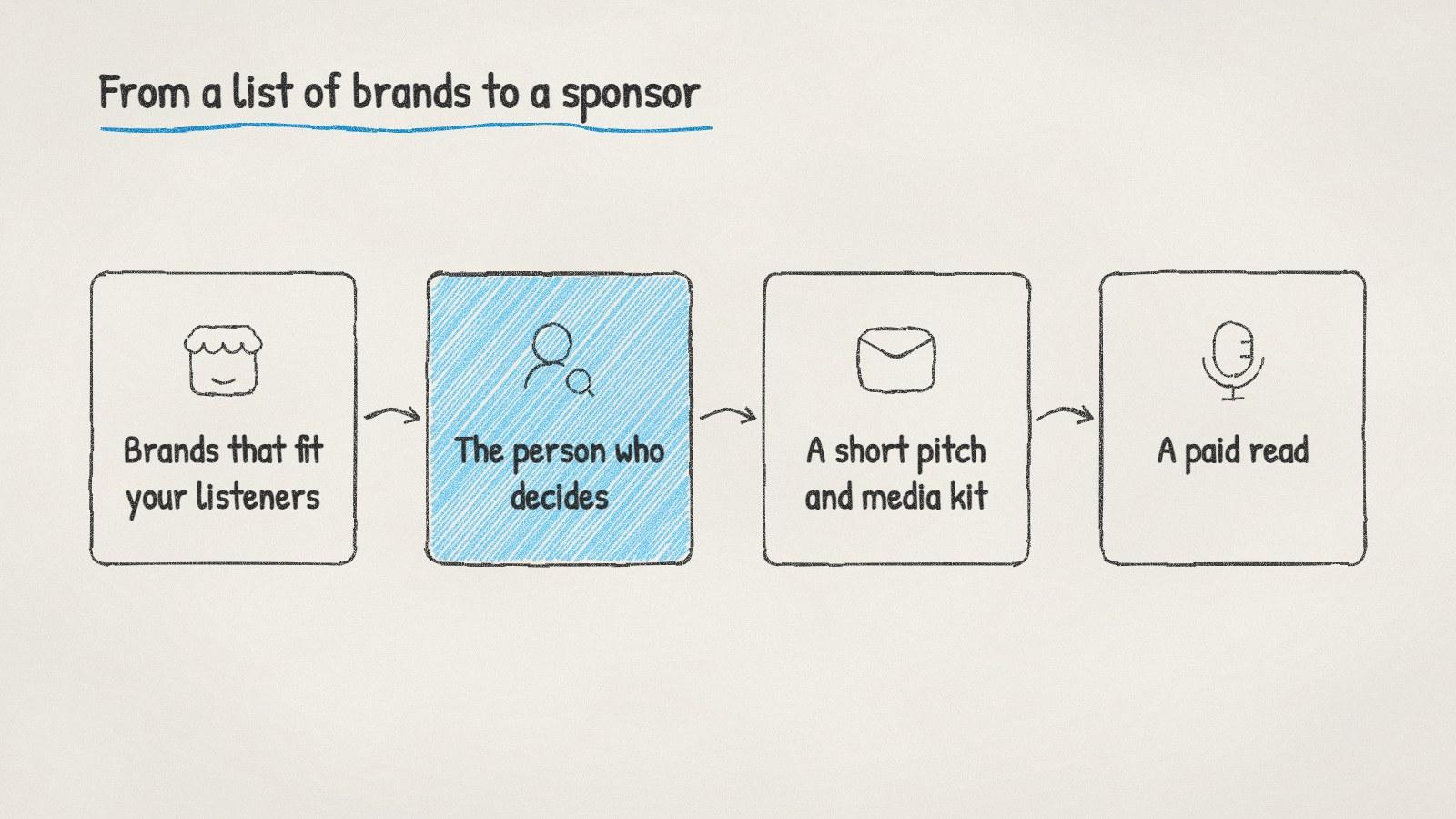
How a small show goes from a list of brands to a signed sponsor.
What to send when you pitch
Brands answer pitches that make their decision easy. Keep the email short and put the details in a one-page media kit:
Downloads per episode over 30 days, taken from your host's stats.
Who listens: the audience in a sentence, plus anything you know about location or job.
What you offer: host-read ads, how long they run, where they sit in the episode and your price.
One idea for them: how you'd talk about their product in a way your listeners would believe.
Our guide on finding event sponsors covers the same pitch on a deadline, if your show has a live event coming up.
Where to read more on Reddit
Subreddit | What it's about | What to search there |
|---|---|---|
r/podcasting | People who make podcasts, on gear, editing, growth and making money | sponsors, media kit, CPM, first sponsor |
r/podcasts | Listeners talking about the shows they love | ad reads, skipping ads |
The listener side is worth ten minutes of reading. It tells you which ad reads people skip and which they trust, and that's the best guide to writing reads that keep a sponsor coming back.
A trap to avoid: pitching every brand on your list the same week with the same email. Start with the five that fit best, learn from the replies, then send to the rest.
Written by
Bastian W.
Content Manager / ManyPI