


TL;DR
Reddit's cold email threads keep landing on the same follow-up rules. Automate the sequence so it stops on reply, send two or three follow-ups over two to three weeks, add something new each time, stay in the same thread, and end with an easy no.
Build a follow-up sequenceMost cold email replies come after a follow-up, not the first message. That's the one point every Reddit thread on cold email agrees on. How many to send and what to say in them comes up just as often, and the advice lands in roughly the same place. Here are the five rules that come up most, starting with the one that makes the other four easy. We found them on Reddit, mostly in r/coldemail and r/sales.
The quick list
# | Rule | Why it matters |
|---|---|---|
1 | Automate it with ManyPI, and stop on reply | Nobody forgets a follow-up, and nobody gets one after saying yes |
2 | Send two or three follow-ups over two to three weeks | Enough to catch people on a better day, not so many it feels like spam |
3 | Add something new each time | "Just bumping this" gives nobody a reason to reply |
4 | Stay in the same thread | The reader sees the context without digging |
5 | End with an easy no | A clear exit gets answers, and a "not now" is useful |
1. Automate it with ManyPI, and stop on reply
The most common follow-up failure on Reddit isn't bad copy. It's forgetting to send the follow-up, or sending one to someone who already replied. ManyPI runs the whole sequence for you. You write the steps once and set the gaps between them. Each lead then moves through on schedule from your own Gmail, Outlook or SMTP inbox, during business hours.
The moment a lead replies, their sequence stops. Addresses that bounce stop being emailed, and every address is checked against the receiving mail server before the first email goes out. Replies land next to the campaign that started them, so you can see who answered which step. On Pro, each reply is scored from hostile to ready to buy.
Sending starts on Starter at $25 a seat a month, with 10,000 emails a seat. The cold email outreach page shows how a sequence is set up, and you can create a free account to build your first one.
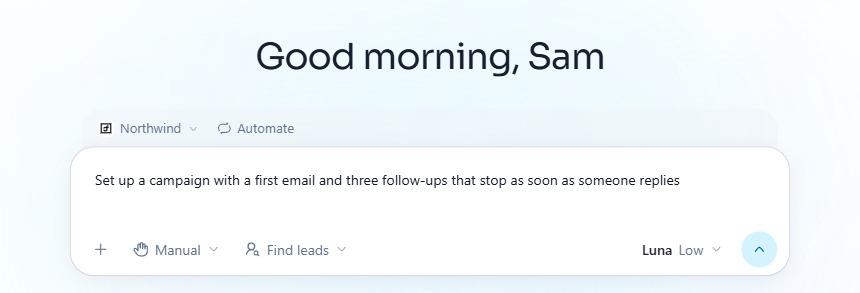
A follow-up campaign described to the ManyPI agent in one sentence.
2. Send two or three follow-ups over two to three weeks
A common pattern is the first email plus two or three follow-ups, spaced a few days apart, finished within two to three weeks. It's a working rule, not a published standard:
Step | When |
|---|---|
First email | Day 1 |
Follow-up 1 | Day 3 or 4 |
Follow-up 2 | Day 7 to 9 |
Follow-up 3 | Day 14 to 18 |
Past four or five emails with no answer, more emails mostly add spam complaints. Google's sender guidelines ask senders to keep their reported spam rate below 0.3%, and long sequences to people who aren't interested push it up.
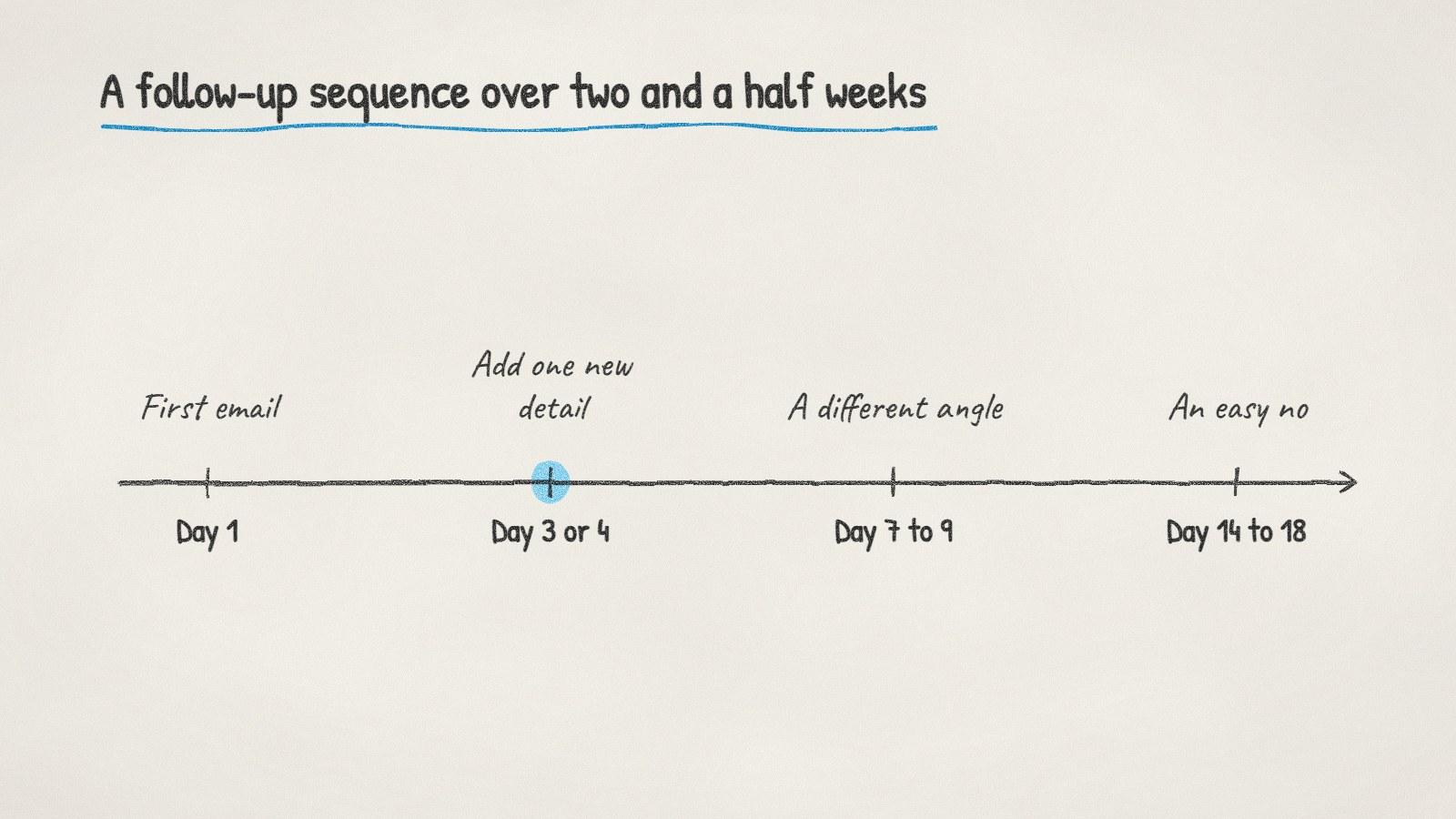
A four-step sequence spread over about two and a half weeks.
3. Add something new each time
People ignore first emails because they're busy, not because they hate them. A follow-up that only says "bumping this to the top of your inbox" asks them to do the same work again. One that adds something gives them a new reason to answer.
Good additions are small: a one-line example from a similar company, or a simpler question than the first. A template for the first follow-up:
Hi [first name], one more thing: [a specific example or result relevant to their company]. Worth 15 minutes next week?
Fill every [bracket] with something true about them. A follow-up that could go to anyone reads like it went to everyone.
4. Stay in the same thread
Send follow-ups as replies to your first email, not as new messages. The reader sees what you said before without searching for it, and the subject line stays consistent. It also keeps your outbox tidy when someone finally answers.
Change the angle, not the thread. If the first email was about saving time, the second can be about a risk or a missed opportunity.
5. End with an easy no
The last follow-up should make saying no easy:
If this isn't a priority right now, just let me know and I'll stop writing.
That line gets replies people would never have sent otherwise. A "not now" is useful: mark it, and try again in a few months with a new reason, like a hire or a funding round at their company. And if anyone asks to be removed, remove them from everything, not just this campaign.
Where the rules differ by country
Follow-ups follow the same law as the first email. In the US, every commercial email needs a working opt-out under CAN-SPAM. Where B2B email needs consent, a follow-up doesn't make an unsolicited first email legal. Our overview of B2B cold email laws by country covers the main markets. This is general information, not legal advice.
Before you add a fourth follow-up, read the replies to the first three. If people say "not now", the timing is off. If nobody replies at all, the list or the first email needs work, and another follow-up won't fix it.
Written by
Bastian W.
Content Manager / ManyPI