


TL;DR
Have the form write each response to a list of checked leads, and let a short follow-up sequence start from that list while the lead still remembers you. Then respect opt-outs from the first email.
Connect a form to a campaignThe fastest way to follow up form leads is to stop copying them by hand. Set the form to save every response as a lead in a list, and have a short email sequence send to that list once each address is checked, so the first reply goes out while the person still remembers filling in your form. Add an opt-out to every message and a consent question where the law asks for one.
People who run small lists ask how to wire this up in r/Emailmarketing and r/smallbusiness, usually after finding a pile of responses nobody answered.
How a lead capture form feeds an email campaign
There are five handoffs between a filled-in form and a reply in your inbox. Each one can quietly break:
Step | What should happen | What goes wrong |
|---|---|---|
Response | The answers are saved with the email address | A typo in the address, or a fake one |
List | The lead lands in the right list, once | Duplicates, or the wrong list for the offer |
Check | The address is checked before anything is sent | Bounces that hurt every email after them |
Follow-up | The first email goes out soon, then a second | Days pass before anyone writes back |
Reply | The sequence stops when they answer | They reply, and still get the next automated email |
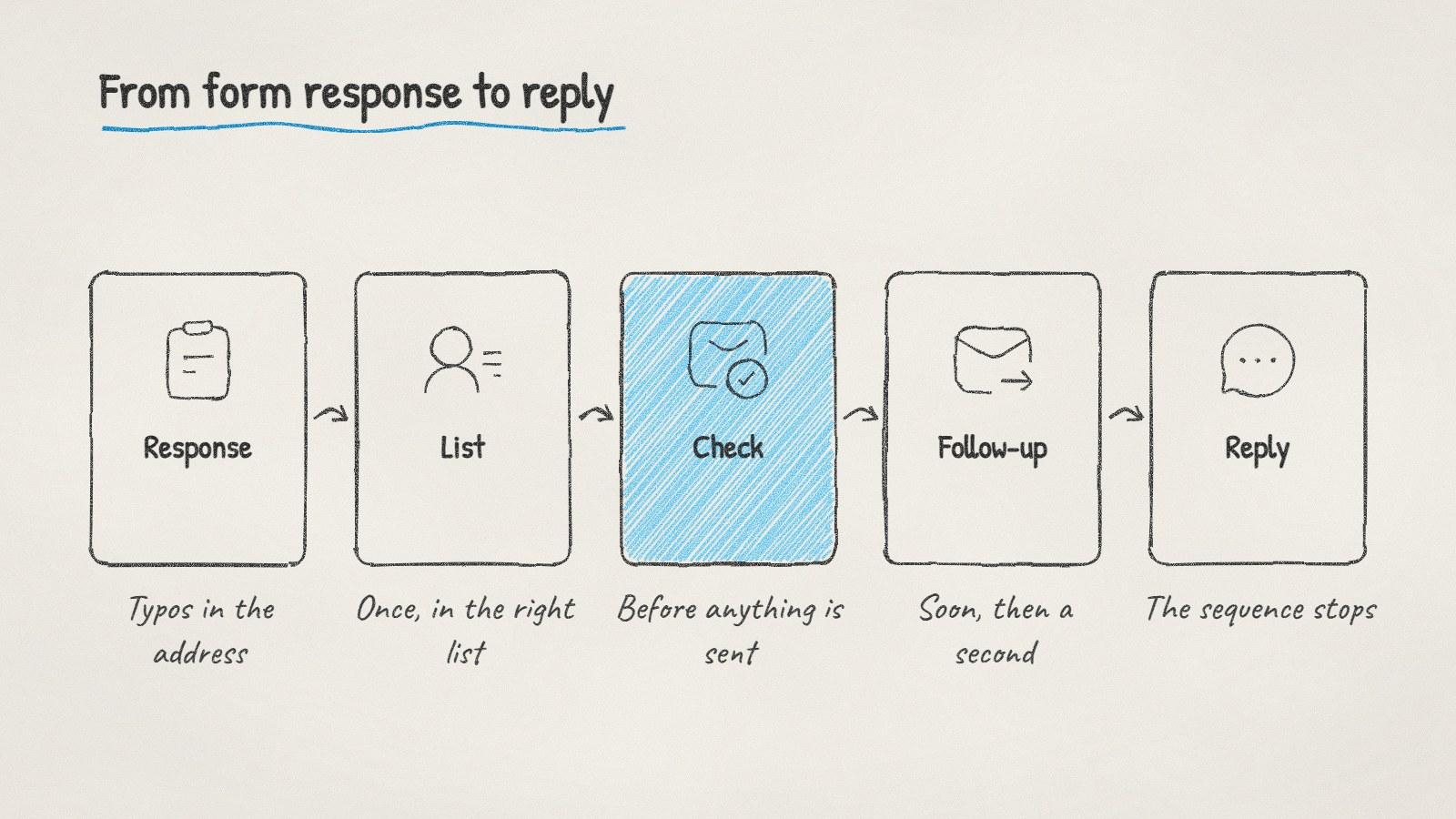
The five handoffs from a form response to a reply.
The check step gets skipped most often. People mistype their own email on forms, and a campaign that sends to typos is sending bounces. Our post on cold emails going to spam explains why bounces drag down everything else you send.
Ask the questions your email will use
Whatever the form asks, the follow-up can use. So ask for what makes the first email personal, and skip what doesn't:
First name, so the email doesn't start with "Hi there".
What they need, as a choice, so you can send the right next step.
One fit question, like team size or timing, if you'll treat leads differently.
The email address, ideally late in the form, once they've already put in some effort. That order is a rule of thumb; test it.
If you're starting from scratch, the form templates include 143 ready-made forms for specific kinds of business.
Write a short follow-up sequence
Two emails are enough for most form leads. A common starting point is the first within minutes of the response and the second a few days later in the same thread.
Subject: Your [what they asked for]
Hi [First name], thanks for [what they did on the form]. Here's [the thing they asked for, or the next step]. One question so I can help properly: [a question based on their answer]?
[Your name], [your company] [Your postal address] If you'd rather not hear from us, [reply "stop" or the unsubscribe link].
Hi [First name], following up on [the thing they asked for]. Would [a specific next step, like a 15-minute call on Thursday] help? If the timing's wrong, just say so.
Stop the sequence the moment they reply. A person who answered and then gets "just bumping this up" stops trusting the rest. Our list of follow-up rules found on Reddit goes deeper on timing.
Consent and opt-outs
This is general information, not legal advice.
In the US, the FTC's CAN-SPAM compliance guide sets an opt-out model for commercial email. It asks for honest subject lines, a valid physical postal address, a clear way to opt out, and honouring opt-out requests within 10 business days.
In the UK, the ICO's guidance on electronic mail marketing says marketing email to individuals generally needs their consent, with a "soft opt-in" exception for existing customers. Companies are treated differently, but sole traders count as individuals. The ICO marks that page as under review after the Data (Use and Access) Act, so check it for updates.
In the EU, rules differ by country. A separate, unticked consent question on the form is the safe default when you plan to send marketing.
Everywhere, someone asking for a quote is asking for that quote. Sending them a newsletter is a different request.
Doing it with ManyPI
Disclosure: ManyPI is our product.
In ManyPI, every form response becomes a lead in the list you pick, deduplicated, with the page it came from. Every email address is checked against the receiving mail server before a campaign can use it. On paid plans, a form's settings can also enrol each new lead straight into a campaign, and only when they've accepted a consent question if you add one.
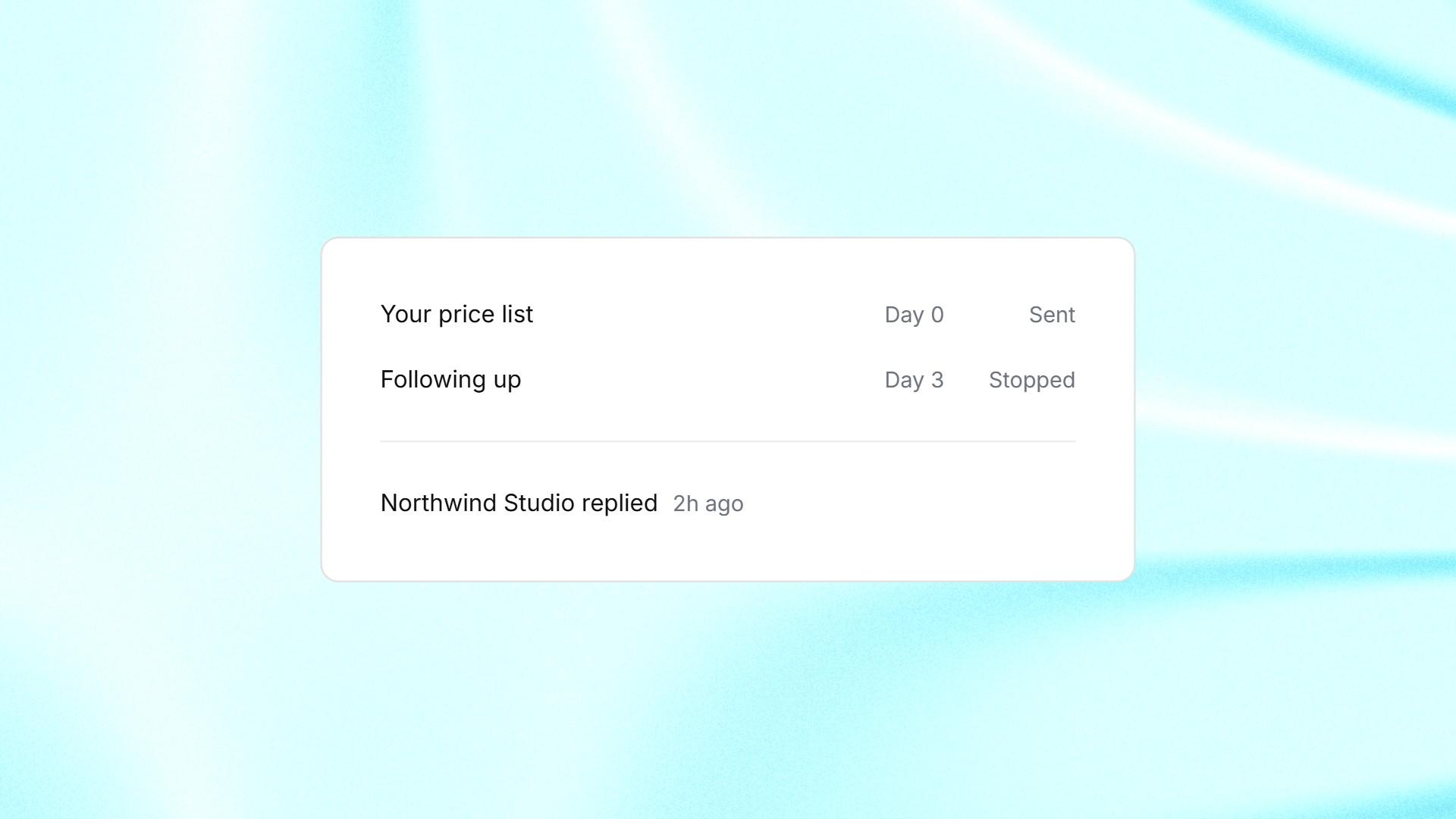
A two-step follow-up sequence in ManyPI that stopped when the lead replied.
Campaigns send from your own Gmail, Outlook or SMTP inboxes. Follow-ups go in the same thread and stop when someone replies. You read replies inside ManyPI. The free plan takes 3 live forms and 10 responses a month but can't send campaigns. Starter, at $25 a seat a month or $21 billed yearly, includes 2,500 form responses and 10,000 emails a seat a month.
One trap: don't let the form promise something the email doesn't deliver. If the button said "Get the price list", the first email needs the price list in it, not a request for a call.
Written by
Bastian W.
Content Manager / ManyPI