


TL;DR
The cold email templates that keep getting shared on Reddit's r/coldemail are short and specific, and they end with one easy question. ManyPI is first on our list because it writes each email from the company's own recent news. Then come the trigger email, the problem question, the right-person ask and the short example.
Let ManyPI write the first draftThe cold email templates that get shared on Reddit have more in common than you'd think. They're under 100 words and open with something about the reader, then end with one question that's easy to answer. Here are the five formats that come up most. ManyPI comes first because it writes that kind of email for every lead, from what each company has actually published. We found them on Reddit, mostly in r/coldemail and r/sales.
Every template below uses [brackets] for what you fill in. Fill each one with something true. A template sent with the brackets still generic reads like spam, because it is.
The quick list
# | Template | Best when | Length |
|---|---|---|---|
1 | ManyPI writes it for you | You're emailing more than a handful of people | Short, one per lead |
2 | The trigger email | Something just changed at their company | 60 to 90 words |
3 | The problem question | You know the problem better than the trigger | 50 to 80 words |
4 | The right-person ask | You're not sure who decides | Under 50 words |
5 | The short example | You have a relevant result to point to | 60 to 90 words |
1. ManyPI writes it for you
The hard part of a good cold email isn't the template. It's the research for the first line, repeated for every lead. ManyPI's outreach agent does that research. It reads what each company has published recently, such as job posts and news, and writes one email per lead that opens on something true about them. Every email is left as a draft for you to review before anything is sent.
The leads come from a one-sentence description of your customer, with every address checked against the receiving mail server. Campaigns send from your own inbox with follow-ups that stop on reply. Sending starts on Starter at $25 a seat a month, and the free plan includes 50 leads and 50 email checks a month. The outreach agent page shows how the drafts are written.
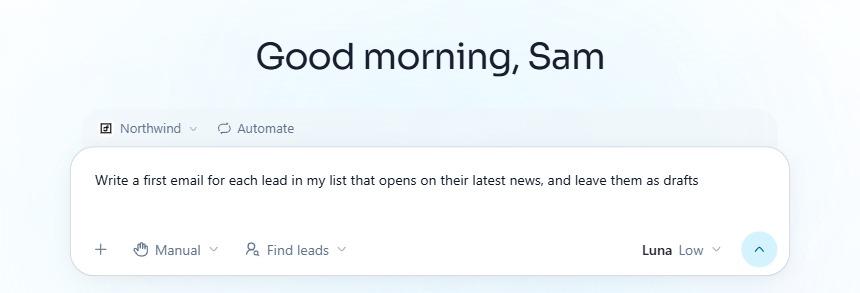
The ManyPI agent asked to draft one email per lead from each company's news.
2. The trigger email
Use it when something just changed: a hire, a funding round, a new location, a launch. Changes create needs, and naming the change shows you did your homework.
Subject: [their change, in a few words]
Hi [first name],
Saw that [company] [the specific change, like "is hiring three account executives"]. Teams at that stage often [the problem that change usually creates].
[One sentence on what you do about that problem.]
Worth a 15-minute call next week to see if it fits?
[Your name]
3. The problem question
Use it when you know the problem well but there's no obvious trigger. Ask about the problem instead of pitching the fix.
Subject: [the problem, as a question]
Hi [first name],
Quick question: how does [company] handle [specific task or problem] today?
Most [their kind of company] I talk to [a common way they struggle with it]. We [one-line description of how you help].
Is it on your list this quarter, or not a priority?
[Your name]
Only use "most companies I talk to" if it's true for you. If you're new, say what you've seen instead.
4. The right-person ask
Use it when you can find the company but not the decision maker. It's short and easy to forward.
Subject: Right person for [topic]?
Hi [first name],
Who at [company] looks after [area you help with]? I'd like to send them a short note about [the problem you solve].
Thanks for pointing me in the right direction.
[Your name]
A referral from inside the company makes your next email warm. Our guide to finding someone's work email covers how to reach the right person first time where you can.
5. The short example
Use it when you've helped a similar company and can say so. A real, specific example does more than any claim about yourself.
Subject: [similar company type] and [result area]
Hi [first name],
We recently helped [a similar company, named only with their permission, or described generally] with [the problem]. [What changed for them, in one sentence, only if it's true and you can back it up.]
Given [something specific about the reader's company], I thought it might be relevant.
Open to a short call?
[Your name]
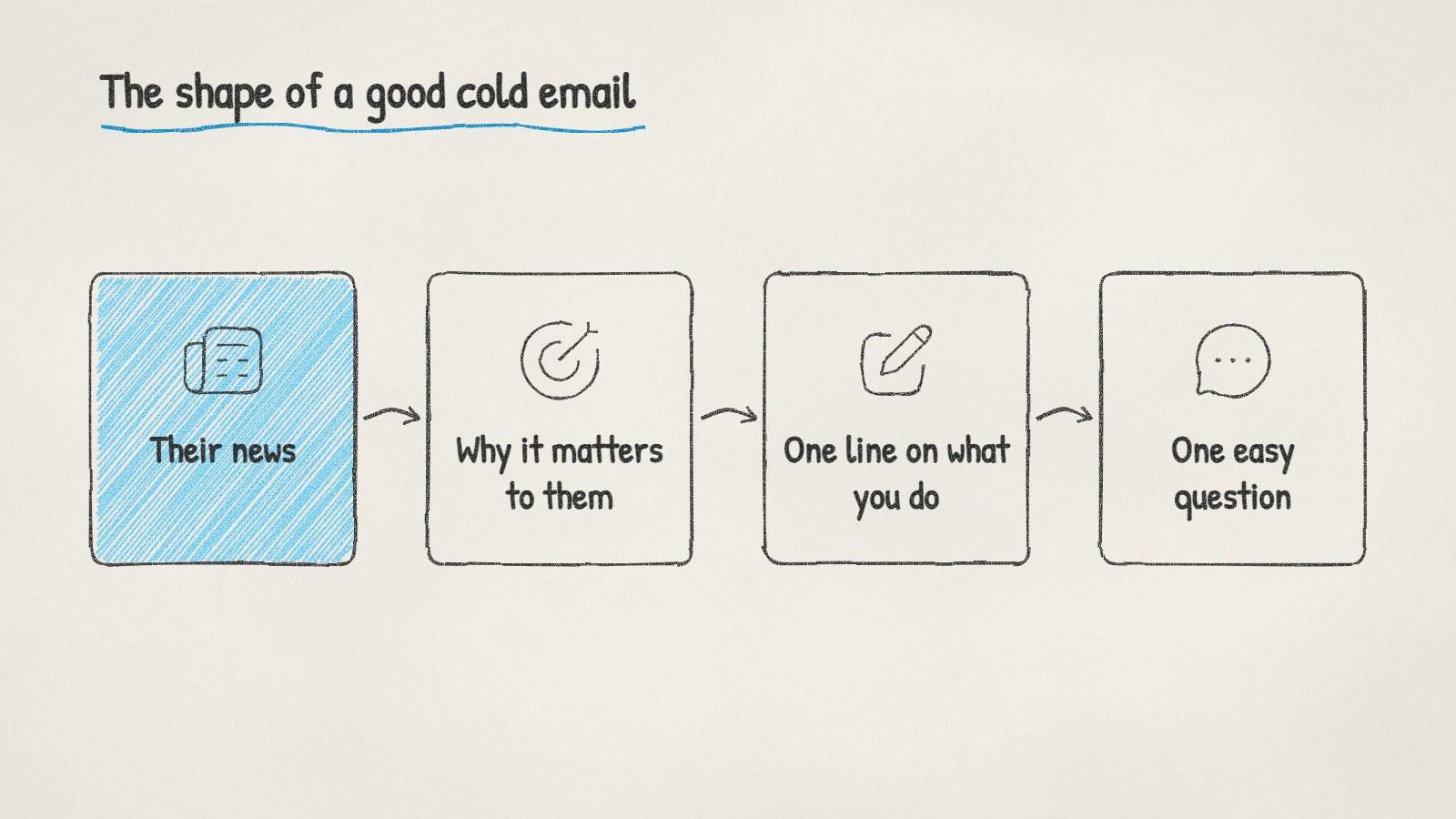
The shape good cold emails share, from their news to one easy question.
Rules that apply to all five
One question at the end. Not three calls to action.
No attachments or tracking-heavy links in the first email. They can hurt deliverability.
Plain text, short paragraphs. It should look like a person wrote it, because a person should have.
Follow up two or three times, in the same thread, with something new each time.
A template is a starting point. If you send the same email to 500 people, change something real in the first line of every one, or send fewer emails. Our guide to cold emails going to spam explains why identical emails at volume get filtered.
Written by
Bastian W.
Content Manager / ManyPI