


TL;DR
Ways to scrape B2B lead lists found on Reddit, in r/webscraping and r/LeadGeneration. ManyPI is first because it does the scraping and finds checked emails without code. IMPORTXML in Google Sheets, Python with Beautiful Soup, a freelancer and ChatGPT follow.
Scrape leads without codeScraping a B2B lead list means pulling company names and contact details off public pages into a spreadsheet. You can do it with a formula, a script, a person or a tool that does all of it for you. These are the ways to scrape B2B lead lists we found on Reddit, in r/webscraping, r/LeadGeneration, r/datasets and r/coldemail. ManyPI is first because it finds the right person and checks the email with no code. The other four range from a free spreadsheet formula to a hired freelancer.
The quick list
# | Option | Best for | Cost | Watch out for |
|---|---|---|---|---|
1 | Lead lists with checked emails, no code | Free plan, then from $25 a seat a month | Sending needs a paid plan | |
2 | IMPORTXML in Google Sheets | Pulling one table from a simple page | Free | Breaks on pages built with JavaScript |
3 | Python with Beautiful Soup | Large or repeated scrapes you control | Free, plus your time | You maintain the code |
4 | A freelancer | A one-off list from a tricky source | Per project or per hour | Ask how the data was collected |
5 | ChatGPT | Turning messy page text into a clean table | Free tier, then paid plans | It can invent rows that look real |
1. ManyPI
Most people who ask about scraping leads want the list, not the scraper. ManyPI skips the code. You describe the companies you want in a sentence, for example "Commercial printing companies in New Jersey with their own website", and the agent searches the live web (company sites, map listings, directories, job boards and news) plus a database of 600M+ contacts.
For local businesses, Map Search does the job a map scraper would. Draw an area on a map and you get the businesses inside it, from OpenStreetMap data, with filters for the contact details a business lists. Save the ones you want and ManyPI finds the owner's or manager's email.
Every email is checked against the receiving mail server before a campaign can use it, and that's the step a home-made scraper usually skips. The free plan includes up to 50 leads the agent finds and 50 email validations a month, with no card. Starter is $25 a seat a month, or $21 billed yearly.
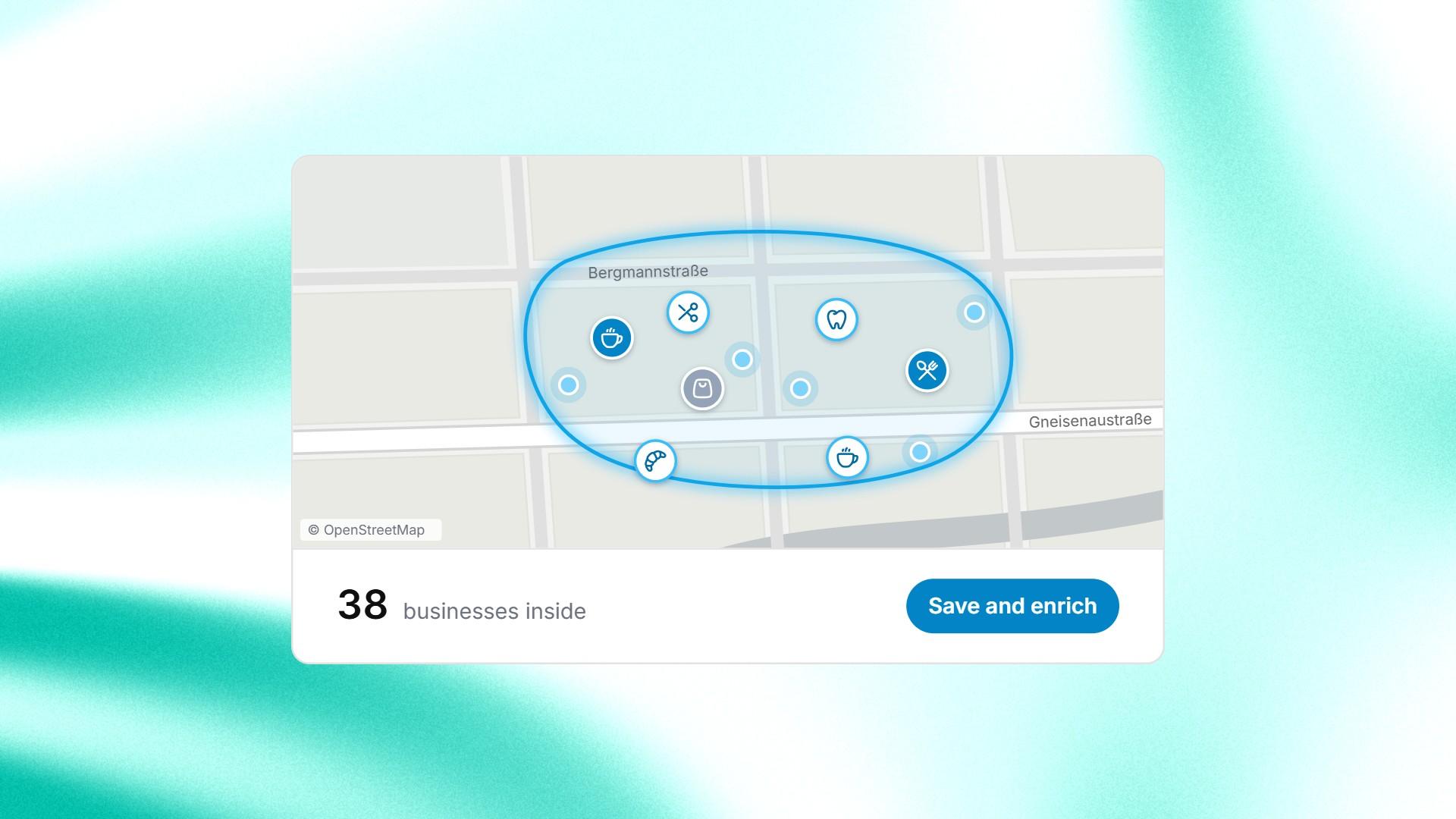
Businesses inside a drawn area in ManyPI's Map Search, from OpenStreetMap data.
2. IMPORTXML in Google Sheets
Google Sheets has a formula that reads a web page for you. IMPORTXML takes a URL and an XPath query, such as `=IMPORTXML(A2, "//h2")`, and fills cells with whatever matches. Point it at a directory page and you can pull a column of names in a minute.
It's the quickest free method for simple pages. It reads the HTML the server sends, so pages that load their content with JavaScript often come back empty. Our explainer on how JavaScript rendering works shows why.
3. Python with Beautiful Soup
Writing a script comes up a lot in r/webscraping. Beautiful Soup is a Python library for pulling data out of HTML, usually paired with a library that fetches the pages. You get full control over which pages you read and which fields you keep.
You also own every problem. Sites change their layout and block repeated requests. If you've never built one, our guide on how to build a web scraper walks through the parts.
4. A freelancer
For a one-off list from an awkward source, many people hire a freelancer on a marketplace. Describe the source and the fields you want, and they deliver a spreadsheet.
Ask how they'll collect the data and whether the emails are checked. A list scraped from somewhere it shouldn't have been, or full of guessed addresses, is a problem you've paid for.
5. ChatGPT
ChatGPT is handy for the clean-up half of scraping. Paste in the text of a messy directory page and ask for a table of company names and websites, and it'll usually get the structure right.
Check its output against the page. Language models can add rows or details that weren't there, and a made-up company in your list looks exactly like a real one. Don't ask it to supply email addresses: it has no way to know them.
Which method fits your list
The right choice depends on two things: how many rows you need and how much code you're willing to write.
No code | Code or formulas | |
|---|---|---|
Hundreds or thousands of rows | ManyPI | Python with Beautiful Soup |
A few dozen rows | ChatGPT or a freelancer | IMPORTXML in Google Sheets |
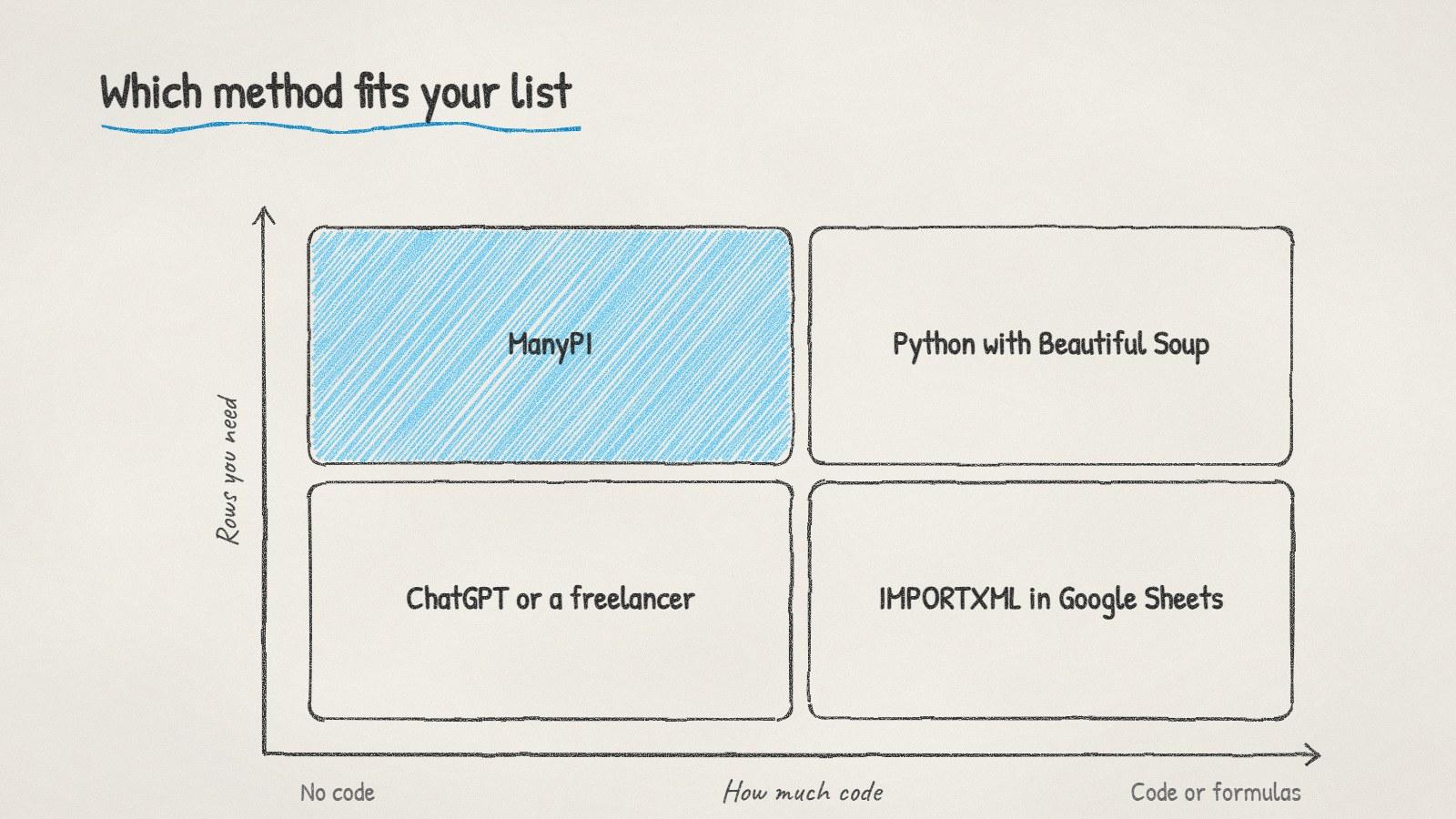
Four ways to scrape a lead list, by size and by how much code it takes.
Is scraping lead lists legal?
It depends on the site you scrape and on where you and the people on your list are based. This is general information, not legal advice. These points come up in most serious discussions of it:
The site's own rules. Read the terms of use, and respect the site's robots.txt file, a standard described in RFC 9309.
Personal data. Names and work emails of people are personal data under GDPR and the UK GDPR. If you use them for outreach you need a lawful basis, often legitimate interests, and you should be able to tell people where you got their details.
Email rules. Scraped or not, cold email has its own rules in each country. Our overview of B2B cold email laws by country is a good first check.
Load on the site. Scrape slowly and only what you need. Hammering a small business's website is both rude and an easy way to get blocked.
Where to read more on Reddit
Subreddit | What it's about | What to search there |
|---|---|---|
r/webscraping | Scraping methods and getting past blocks | Beautiful Soup leads, scrape directory |
r/LeadGeneration | Finding leads across channels | scraped lead list, Google Maps scraping |
r/datasets | Requests for and sharing of datasets | company list, business directory dataset |
r/coldemail | Cold email deliverability and copy | scraped emails bounce, verify list |
Whichever method you pick, check every email before the first send. A scraped list that bounces can damage your sending domain quickly, and that costs more to fix than the list cost to build.
Written by
Bastian W.
Content Manager / ManyPI